Skip to content
First Pour Cocktails First Pour Cocktails
  • About(current)
    About(current) Sample Policy(current) Privacy Policy(current)
  • Bar Setup(current)
    Recommended Bottles for Starting Your Home Bar(current) Recommended Equipment for Starting Your Home Bar(current) Blanco Tequila Rankings(current) Bourbon Rankings(current)
  • Cocktails(current)
    Cocktail List(current) Halloween Cocktails(current) Valentine's Day Cocktails(current)
  • Contact

Author: Nick

Jim Beam Bonded

Posted on June 18, 2020June 21, 2020 by Nick
Jim Beam Bonded

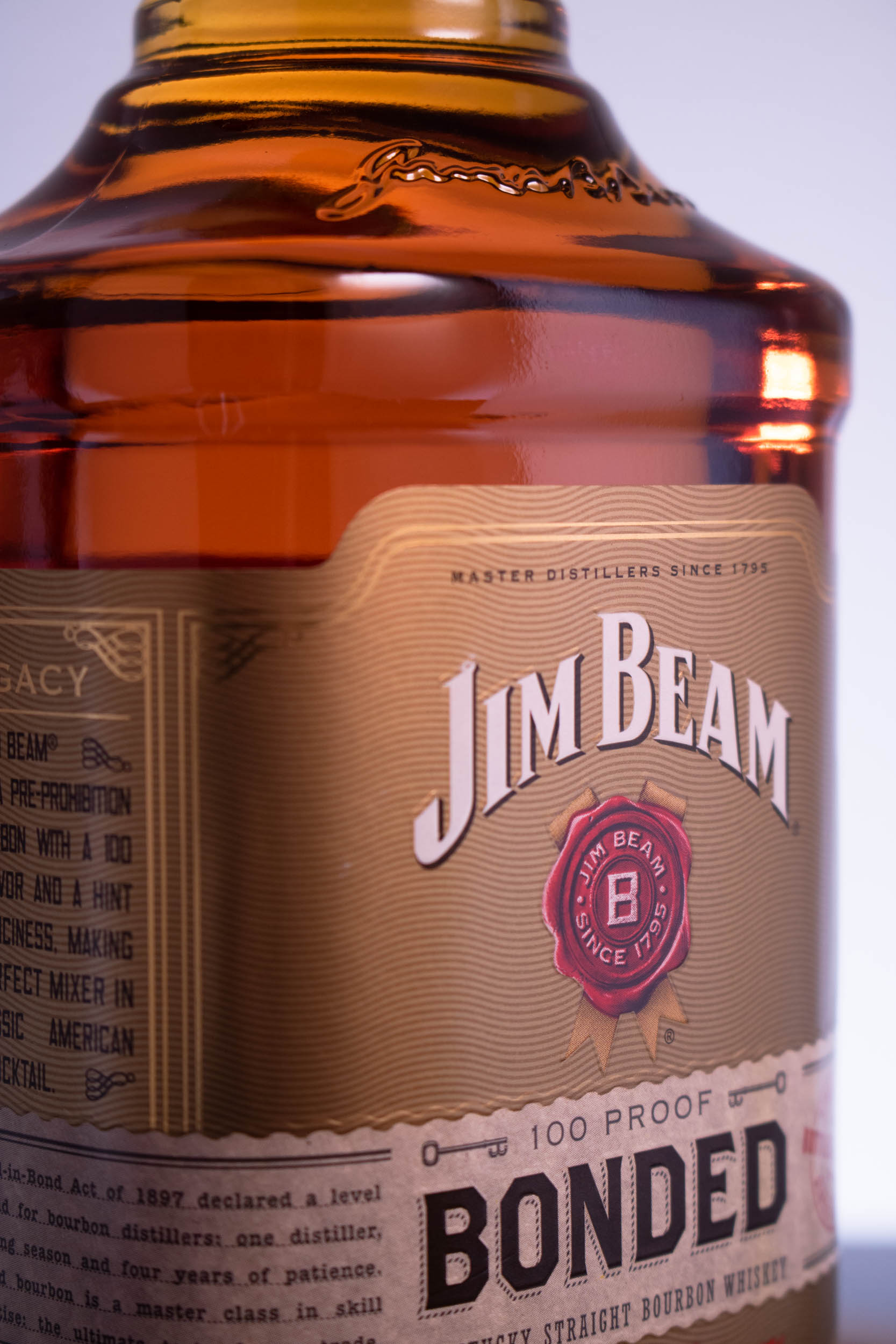
Jim Beam Bonded Label

Among the most popular brands of bourbon is Jim Beam.  Part of the Beam Suntory family of brands – Jim Beam is a standard bearer for the conglomerate.  As  a result, Jim Beam White is ubiquitous.  You’ll see it on planes,  in stadiums,  weddings;  it’s practically everywhere.  Most people will at one point or another have an opportunity to have Jim Beam White Label or have unknowingly had it served to them.  Beyond Jim Beam White Label, Beam Suntory actually produces a number of premium products including Booker’s, Baker’s, and Knob Creek.  Just a step up the ladder from White Label is Jim Beam Bonded.

Bottled in Bond of course means that Jim Beam Bonded is subject to more stringent requirements than ordinary bourbon.  Jim Beam White Label is aged 4 years –  while Jim Beam Bonded provides no age statement, but must be aged a minimum for a bonded bourbon as well.  While there are other differences, the biggest is going to be the proof.  Jim Beam Bonded is bottled at 100 proof compared to the standard White Label  80 proof.  The higher proof is going to be the result of less cutting of the final product and should result in more richness.   Priced in the low $20 range, is it worth paying the upgrade over their ubiquitous white label.

If you need a quick refreshed on how Bottled-In-Bond is different – than check out or review of Rittenhouse Bottled-In-Bond for an overview.

Jim Beam Bonded
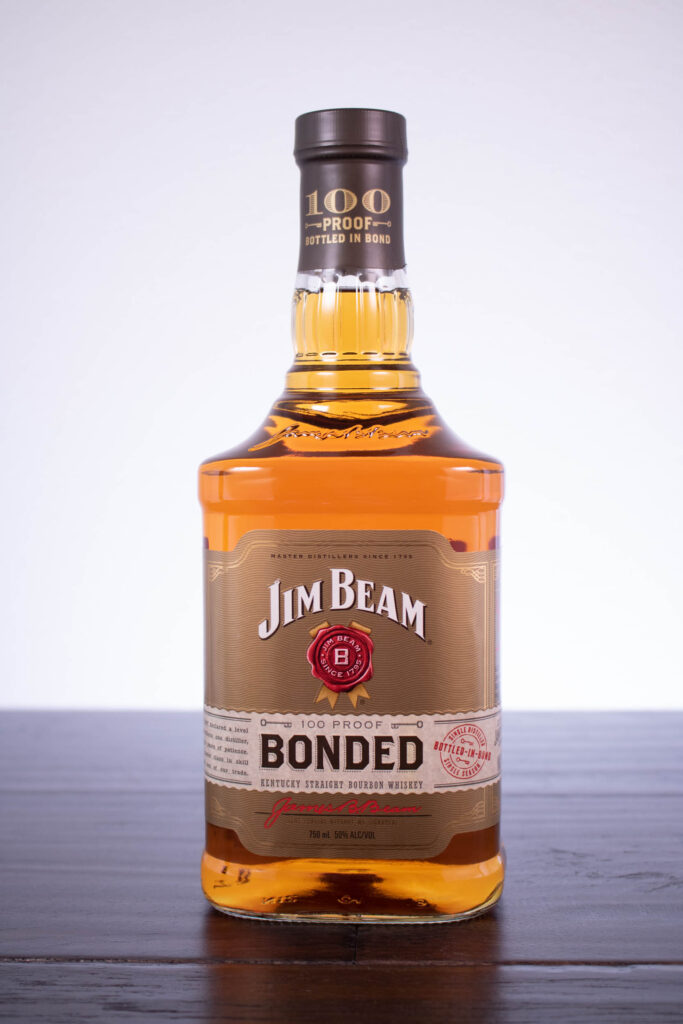
Jim Beam Bonded

Sight: A gorgeous amber brown, bordering into sherry.

Smell:  The nose is a little warm at the start thanks to the bonded nature bringing up the proof.    Peanuts and brittle come forward, mixing with notes of grain and spice.   Subtle caramel and malted milk duds hang out behind the peanuts.

Sip:   The start is warm and bright within seconds, and the mouth feel is solid.  The primary flavors are roasted peanuts, hints of nougat, and touches of preserved cherry, charred oak, and graham cracker waiting for smores.

Savor:  The ending is tannic with a heavy astringency   The finish is laced with peanut, charred oak, and graham crackers.

Reddit’s r/bourbon frequently talks about how Beam Suntory products evoke peanuts – something I’ve never tasted in whiskey.  Jim Beam Bonded is like a whiskey mashing the peanut button on the whiskey flavor wheel.  There are other interesting notes, but it’s clearly not designed for sipping with it’s relative warmth.  That said, the strong backbone and reasonable price tag makes this a potential versatile whiskey for crafting cocktails with.

In Cocktails

The flavor of peanuts is truly remarkable here.  It’s such a predominate flavor that even when paired with sweet vermouth in a Manhattan, it sticks out like someone added Skrewball.   That said, dilution here is bringing in some of the nicer baked cookie notes and a nice toasted brown sugar element.

Jim Beam Bonded Overall

Jim Beam Bonded is thicker and richer thank it’s normal white label counterpart.  There’s a price premium here of about $5-10, and there are some nice flavors that are worth buying up to from the normal white label.  That said – in the same mid $20 price range there’s some strong competition from others like Bulleit and Elijah Craig.  So if you’re a fan of regular Jim, then Jim Beam Bonded is certainly worth it.  For those that are fans of other brands should consider if the flavor profile described fits what you’re looking for – and make a decision from there.

Want to read more:
  • Check out The Whiskey Jug’s Review
  • Jim Beam’s Website
  • Beam Suntory’s Website 
Posted in Bourbon, Spirits, WhiskeyTagged Beam Suntory, Bottled-In-Bond, Clermont, Jim Beam, Kentucky2 Comments on Jim Beam Bonded

The Classics: The Daiquiri

Posted on June 15, 2020June 21, 2020 by Nick
The Classics:  The Daiquiri

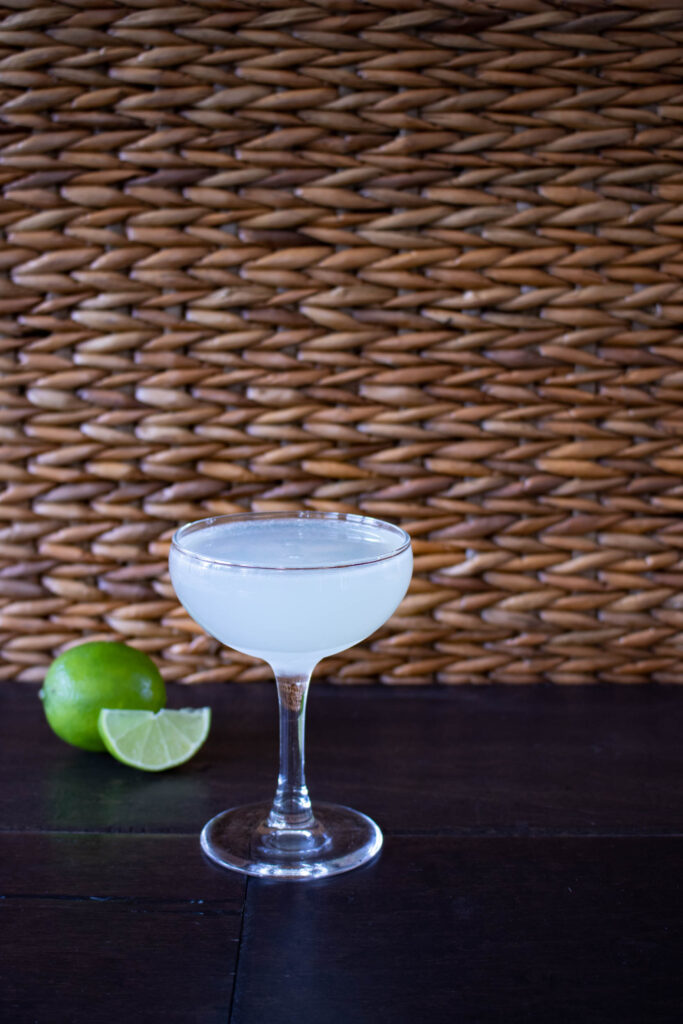
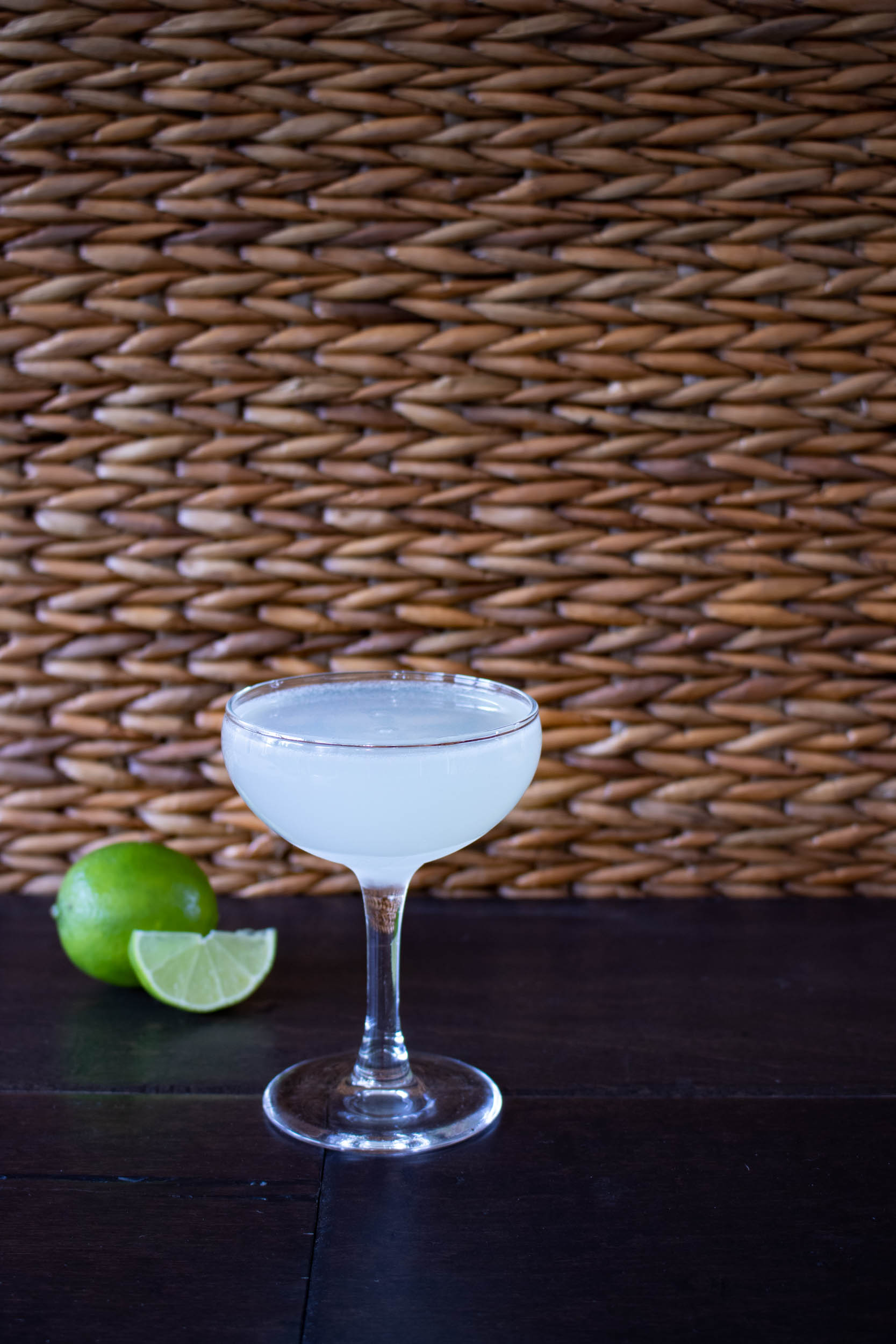
The Daiquiri

When it comes to making a cocktail, no template is quite so acutely tuned as the Daiquiri.  Balancing sweet, sour, and boozy, the Daiquiri when made correctly becomes transformative, displaying the individual characteristics of the rum with the brightness of lime and a smooth sweetness.   Add too much sweetness – and the daiquiri becomes cloying and washed out.  Too much lime and it’s overwhelmingly tart with no hint of the rum notes.    Too much rum, and it loses the smoothness and brightness of the acidity.

A balanced daiquiri is a master class in cocktail creation.

Daiquiri


Daiquiri
2 oz
Rum
1 oz
Lime Juice
3/4 oz
Simple Syrup
Combine all ingredients in a shaker. Add ice and shake. Double strain into a chilled coupe. No Garnish.


As you may notice – there’s no specific rum listed.  To start with, try a lightly aged rum like Plantation 3 Star or El Dorado 3.  These will give you a very traditional – light and easy going flavor.  From there, feel free to play change the rum to your favorite or anything you find interesting to see how it changes the Daiquiri.  For example,  adding an aged rum like El Dorado 12 or Plantation XO will impart woody aged notes and hints of caramelized sweetness.   Change a lightly aged rum for a young rhum agricole, and you’ll experience some of the grassy funk balancing with bright lime and sweet sugar.     The template is a great playground.

One word of caution – high proof rums will be difficult to balance.  So avoid high proof offerings like O.F.T.D. or Gosling’s 151.  As a final thought, feel free to adjust the simple and lime juice according to the sweetness of your rum and the acidity of your limes.  This template should get you most of the way there – needing a 1/4 oz tweek here or there.

Got a riff on the Daiquri you want to share?  Send it to us on Twitter!

Posted in Classic Cocktails, Cocktails19 Comments on The Classics: The Daiquiri

Appleton Signature Blend

Posted on June 11, 2020June 21, 2020 by Nick
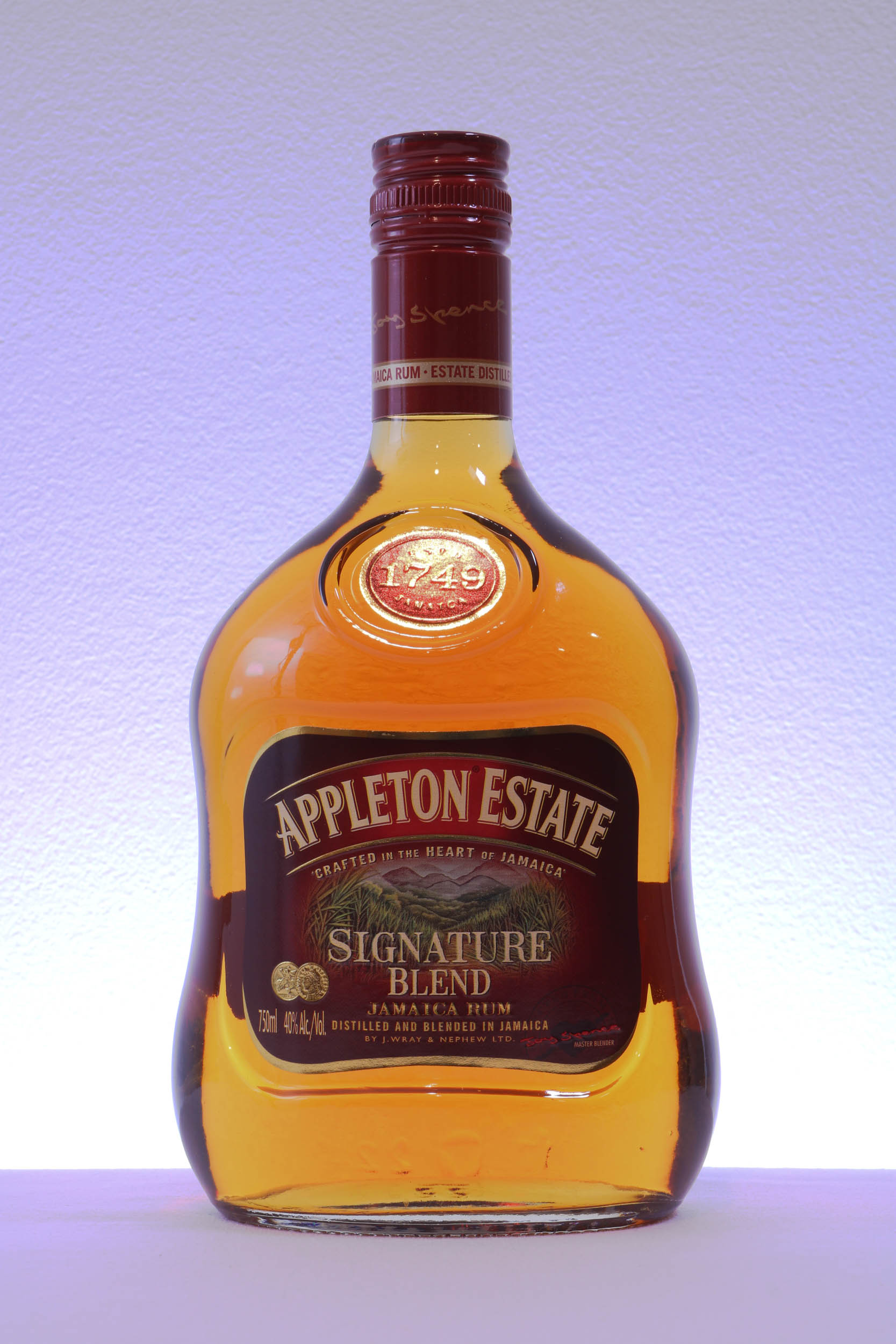
Appleton Signature Blend

Appleton Signature Blend

I remember when I was going to try ‘real’ rum.  No, no, not that stuff from college – with the wonderful vanilla or cherry flavor that you could suck down and was flavored like some kind of demented cough syrup.  The real stuff – something dark, mysterious, and tropical.  Something like Appleton Signature Blend.

The shocking thing about going from Cruzen to Appleton is someone pulling the sugar out from under you.  It’s not a particularly gradual thing – like going from soda to white zinfandel or a sweet riesling.  It’s more like a full stop – sprite to club soda.   Don’t let that strike you as a bad thing though, without the cloying sweetness – and thanks to the production methods, you’ll find something much more complex and versatile for cocktail creations.

Appleton Signature Blend

Appleton Signature Blend is a blended Jamaican rum that formally claims no age statement (though the website suggests an average of 4 years).  Although there is no mention of added sugar, they claim this to be a medium-sweet rum on Gruppo Campari’s website (whatever this means).  Overall, you can typically find it for under $20 for a 750ml, but is it worth the price of admission?

Sight: A pale coppery-golden brown that hints a touch more orange.

Smell:  There’s a hint of heat that comes up on the nose, but there are some wonderful candied fruit like aromas that waft out. Hints of banana, molasses, caramel, dark brown sugar, and a bit of vanilla extract all come out.  The burn can get aggressive if you hold too long – bordering into acetone and rubbing alcohol.

Sip:  On the palate it has a moderate-heavy weight to the body.  It opens with a lot of molasses, a hint of oak and cedar, moving into raw vanilla bean, nuts, and a light caramel.  Some tropical fruit seems present, but gets a bit muddled in some of the wood and hints of spice.   The funk is low here.

Savor:  On the ending, the woodiness and astrigency comes forward.  It’s not a particularly sweet finish, but not entirely dry either.  The flavors that remain are some of banana and molasses notes.

Appleton Signature Blend is an introductory rum at a good price that can function as a workhorse.  There’s nothing here that’s particularly offensive, and it manages to bring some good flavor despite the rougher edges.   There’s also very little to suggest this rum is overtly sweet or dry – it’s more in line with what you’d expect of a rum.   It’s also clearly not the style of rum that’s meant to be sipped – rather it’s almost quintessentially what you might think of when thinking of a rum.  With that same flavor in drinks it makes.

In Cocktails

Appleton Signature Blend works well in cocktails thanks to it’s balance between wood, sweetness, and tropical fruit notes.  While nothing is particularly distinguished, this helps it play a great role in the background without upstaging other elements.  The one shortcoming here is it’s same strength, a lack of complexity.  Due to the relative simplicity – you’ll find Appleton Signature Blend works better when used a split base with another more complex rum – such as Pusser’s.

Appleton Signature Overall

Appleton Signature Blend typically runs around $20 or less.  At this price point, it’s really not easy to make an argument here against Appleton.  If you’re trying to build a bar on a budget – then Appleton Signature Blend offers good value for money that will play well in cocktails ranging from daiquiri’s to tiki drinks to Rum and Cokes.

Other’s Sharing a Dram of Appleton Signature Blend:

  • The Fat Rum Pirate Has Another Bottle
  • Drinkhacker Takes a Stab Post Branding Change
  • Appleton’s Site
  • Gruppo Campari’s Page
Posted in Jamaican - Lightly Aged, Rum, SpiritsTagged Appleton, Campari Group, Jamaica2 Comments on Appleton Signature Blend

Oligan Vodka

Posted on June 2, 2020June 21, 2020 by Nick
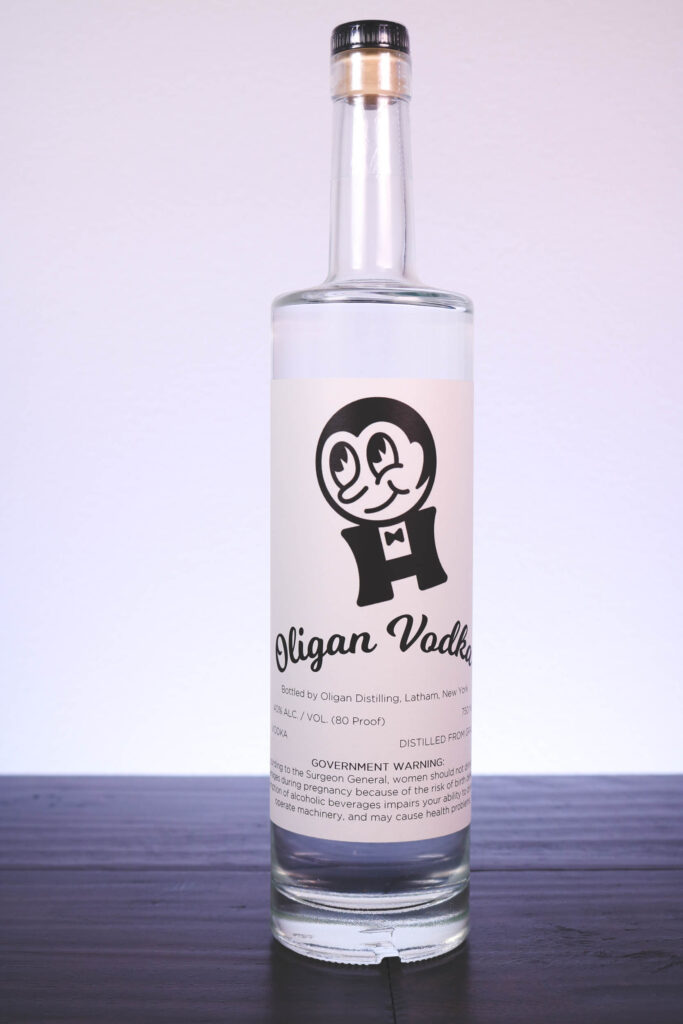
Oligan Vodka

Oligan Vodka

It seems like not all that long ago that I was learning to drive in Albany, NY.  I still remember not having a great grasp of where the right side of the car was.   Well – at 16 – I really didn’t understand where most of the car was.  Even so, I remember driving nervously up and down Albany-Shaker road regularly (living not far off it).  On Saturdays, we’d go to Wendy’s, turning on to British-American Boulevard.  Driving past the nondescript buildings that made up the business park was more entertaining than continuing down Albany-Shaker, evoking memories of when my mother once ran over a planter in a Cadillac teaching me to drive in the snow.   While it’s been years, it seems like Oligan Distillery (who makes Oligan Vodka), might be changing my mind about where the entertainment on Albany Shaker Rd lies.

Oligan Distilling is new – like just barely a year old new.  Despite this, it hasn’t stopped them from offering not only Oligan Vodka, but also a couple of different gins.   After trying a few samples I purchased, one of the co-owner was nice enough to show me around the distillery.  Even though Oligan is small, it’s one of the few distilleries to have semi-automated continuous feed.  That said, the still is operating at nowhere near capacity, and at the time I visited – it was suggested it was barely at 35% capacity.  Expansion is implied, if not planned.

Still, you have to start somewhere – and somewhere is with a corn based vodka.  The corn is local – grown in Schaghticoke – which should help to give a slightly sweeter flavor.   The owner suggested part of the plan was to get to 100% corn vodka, allowing Oligan to move toward gluten free – like another big vodka we’ve talked about.  Still, the bottle I received isn’t quite there – but is it good?

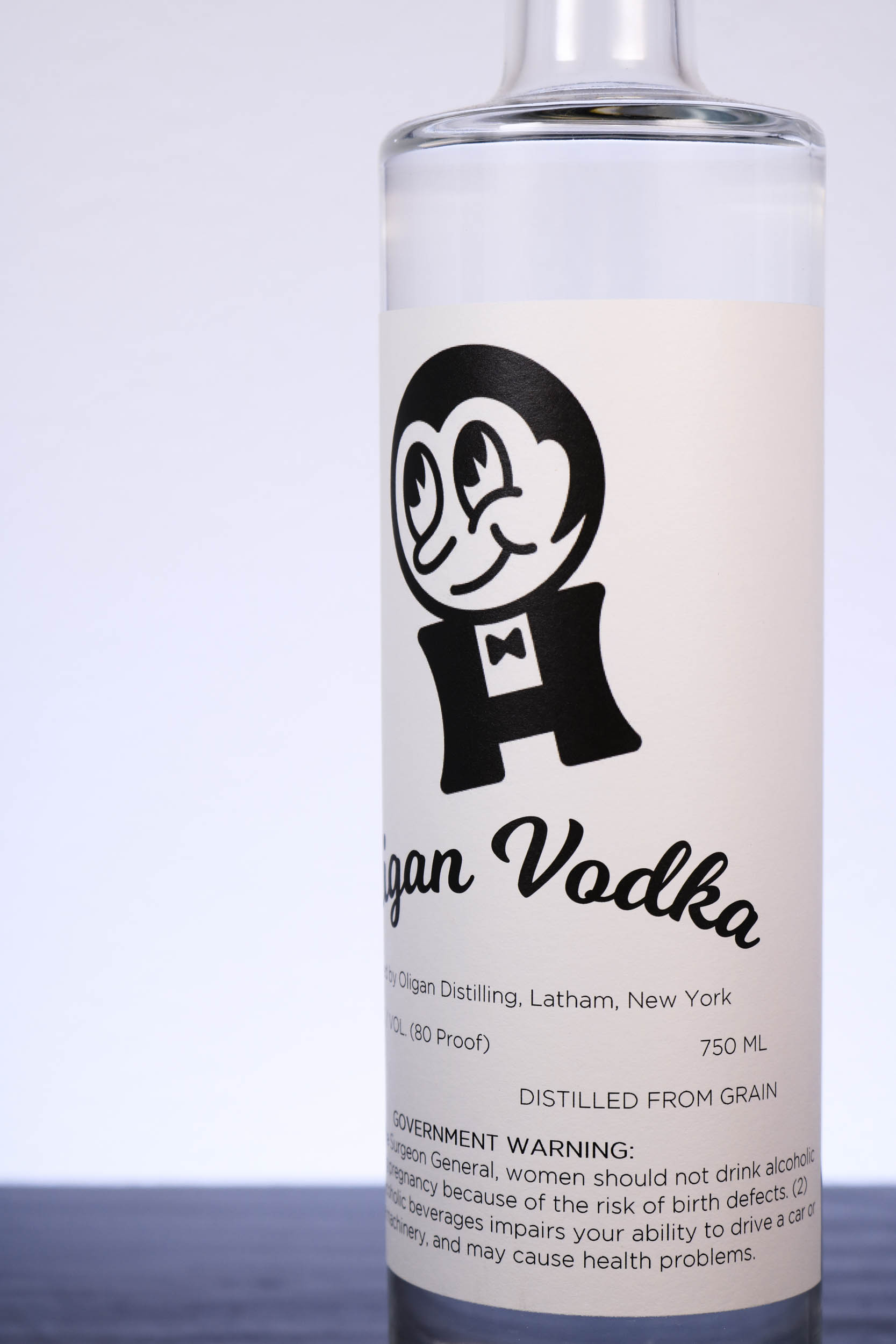
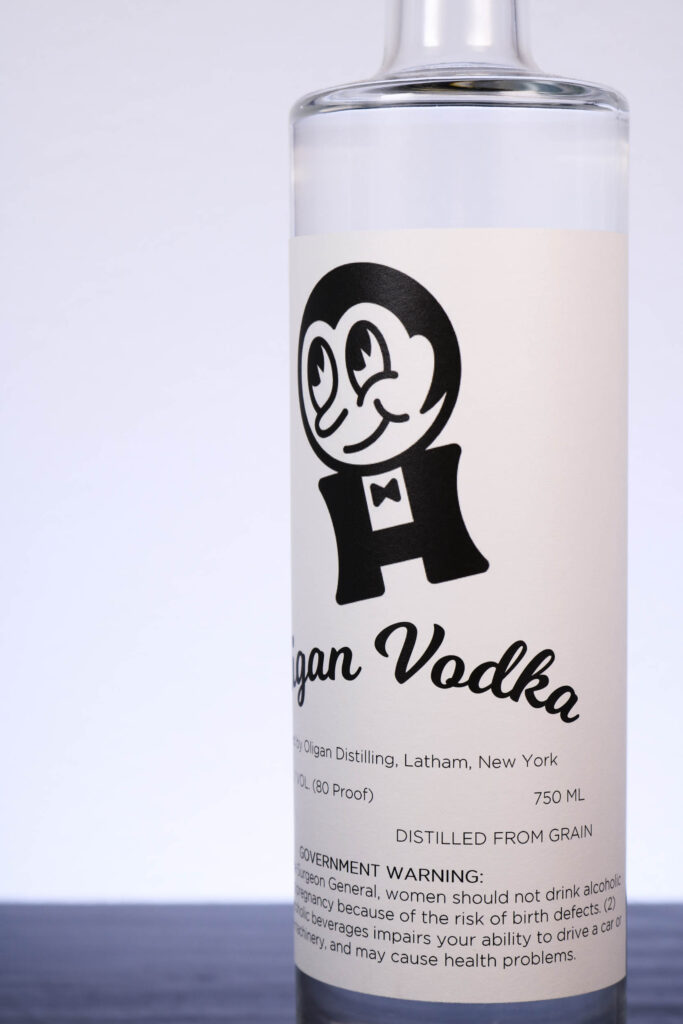
Oligan Vodka

Oligan Vodka Label

Sight:  Clear – with some really long legs.

Smell:  It’s clean with a slight vanilla odor, and a little bit of burn.  Later, a waft of spiciness comes through and wraps with a subtle fruitiness.  There’s a tiny kick of almost creaminess.

Sip:  The body is light, and dances easily across the palate.    It gets a little thin through the mid palate, but smooth.  There’s the subtle fruitiness again and it’s complimented with a spicy nature.

Savor:  The ending is palate coating, and somewhat spicy with a bit of minerality and grain.  A touch of bitterness rounds things out.

Oligan Vodka is a very pleasant addition to the vodka scene.  It has a very smooth and light body for what it is, but doesn’t compromise flavor.  Price wise, you will pay a little bit more here, as there’s some economics of scale in play.  That said though, if you’re looking for a new vodka to try in Albany, Oligan Vodka certainly fits that bill and has some surprises that make it worth the while.

In Cocktails

Oligan plays well with other ingredients – and that lightest little tingle of spice stands out.  It gives it an edge that helps play against the warmth of ginger in a mule or the bite of lime.  While it’s not the smoothest – it plays well, not overtly accentuating any bitter flavors.  In a martini, it bends towards the minerality side a little, but gives this subtle kind of almost of creamy weight.

Oligan Vodka Overall

You always root for the home team right?   You have to.  Even when you move away.  Oligan is putting out a nice product for a distillery starting out, and it’s got a nice streak of uniqueness thanks to the rye.  I think Oligan is off to a promising start, their vodka is certainly interesting, and I can’t wait to see what they do next.  Check them out if you’re in Latham, NY.

Other’s Share Their Thoughts on Oligan Vodka

  • Oligan’s Site
  • Check out 518 Bites & Sights visit to Oligan Distillery
Posted in VodkaTagged Latham, New York, OliganLeave a Comment on Oligan Vodka

Leblon Cachaça

Posted on May 18, 2020June 21, 2020 by Nick
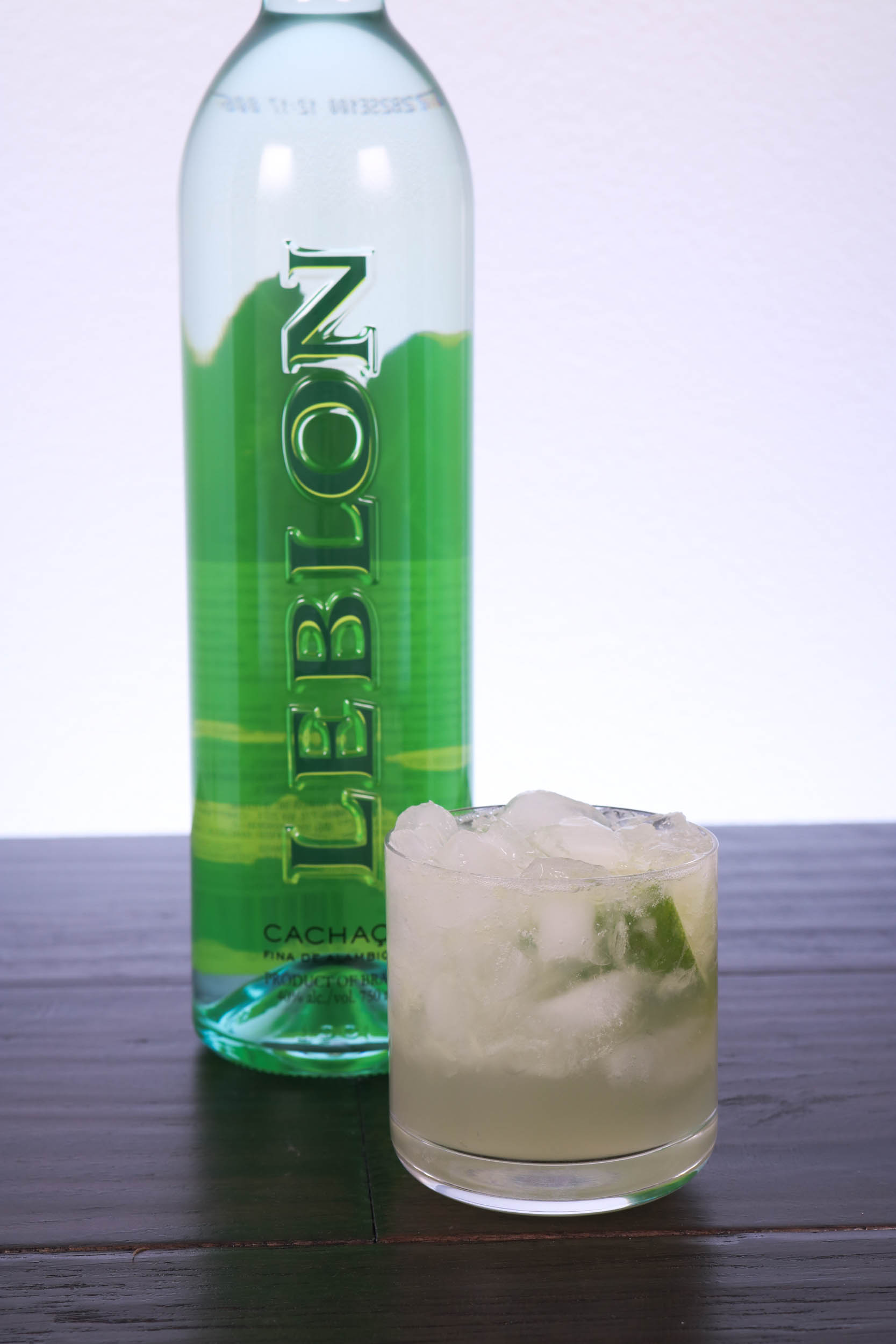
Leblon Cachaça

Leblon Cachaca

When you look at most menu’s, you’re libel to find the usual suspects as bases for drinks.  You’ll definitely see your gin, whiskey, tequila, rum, and vodka.  You might see wine or even an amaro based drink.  Yet, unless you’re in a Brazilian restaurant or in Brazil, you’re unlikely to see one of the most consumed spirits in the world.  Cachaça.

If you’re familiar with rum, and you open a bottle of silver Cachaça, you might feel like you’re drinking a rhum agricole.  This is no accident, as both rhum agricole and Cachaça utilize fermented sugar cane juice in their creation.  These of course aren’t the only regulations – as the TTB points out in their release, there’s a whole host of things that make Cachaça tick – including a regulation keep alcohol content between 38 and 48%.  By the same release – it’s worth noting that Cachaça is also technically a rum.

In this case, you can think of Cachaça as an elevated subcategory of rum – like Cognac is to brandy.

Speaking of Cognac, Leblon Cachaça takes a bit of a different path to your shelf than Novo Fogo.  Instead of being rested in stainless steel, Leblon ends up taking a trip to France via brandy cured casks that it’s aged in.  So does this give it an edge?

Leblon Cachaça

Sight:  Essentially colorless.

Smell:  Fresh grass, ripe bananas, lightly press herbs, and a touch of vanilla raft out.   There’s a slightly pithy citrus note present as well.

Sip:  The body is light to moderate, and the texture is slightly viscous.   There’s very little perceivable sweetness, but there are herbal and citrus notes that begin almost immediately, if faintly.  There’s a defined funkiness here that’s decidedly green and herbal – but it also tightly binds notes of vanilla and light wood into it.

Savor:  The finish is smooth, and prolonged.  If you’re not a fan of the grassy, herbal, raw cane flavor – then you’re going to find this finish unpleasant.  Notes of citrus and a touch of vanilla show up as it goes.

Let’s just be clear –  I’d be hard pressed to sit down and enjoy consuming Leblon Cachaça neat.  In fairness to Leblon Cachaça, that’s not really the point here.  Rather – the flavors extract themselves well in cocktails, but maintain enough character to have a presence.   This makes it a great choice when looking to try to craft new drinks or make classics like the Caipirinha.

For this reason, we keep Leblon as our go to crafting Cachaça.

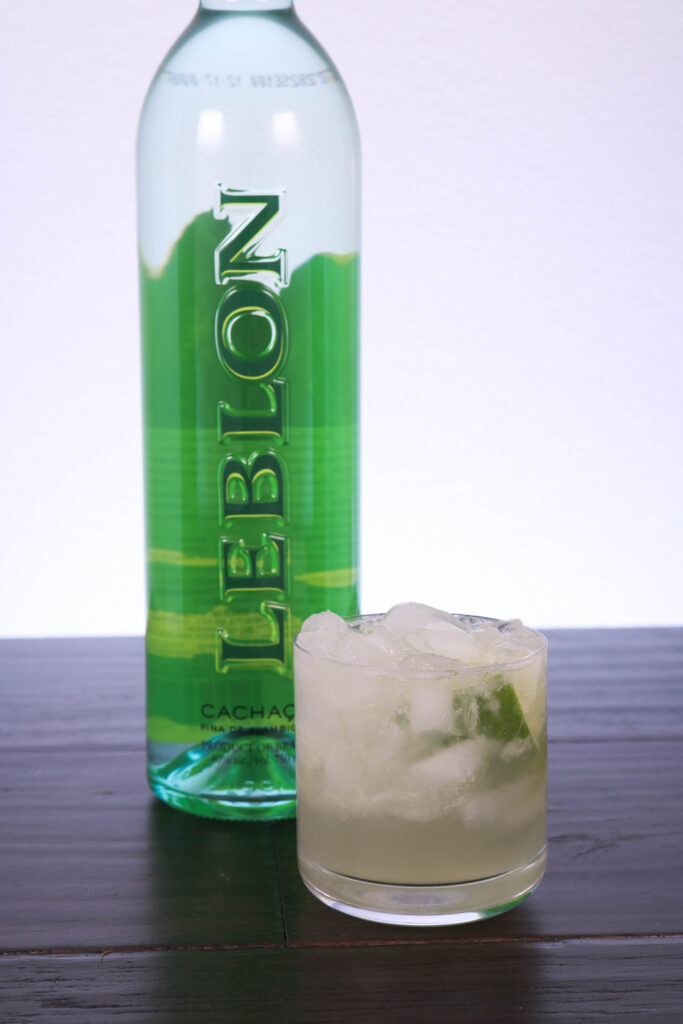
In Caipirinhas

Leblon is very much citrus and sweetness forward in a classic Caipirinha preparation.  Notes of vanilla and ripe banana come forward rounding out notes of lime sorbet and gently pressed herbs.  The finish is brief, but carries a sweetness and pleasantly lime and vanilla ending.

Our Final Thoughts – Lebelon Cachaça

There’s nothing wrong with Novo Fogo, in fact, depending on the day – I can probably suggest either.   That said, I’ve found that Leblon tends to have broader distribution, and more reliable to keep on hand, and comparable in quality.

Others Share Their Thoughts on Leblon Cachaça:

  • Leblon’s Website
  • Inuakena Ranks an enormous amount of Cachaça
Posted in Cachaça, Silver Cachaça, SpiritsTagged Brazil, Leblon, Oak AgedLeave a Comment on Leblon Cachaça

The Classics: The Martini

Posted on April 17, 2020October 3, 2021 by Nick
The Classics:  The Martini

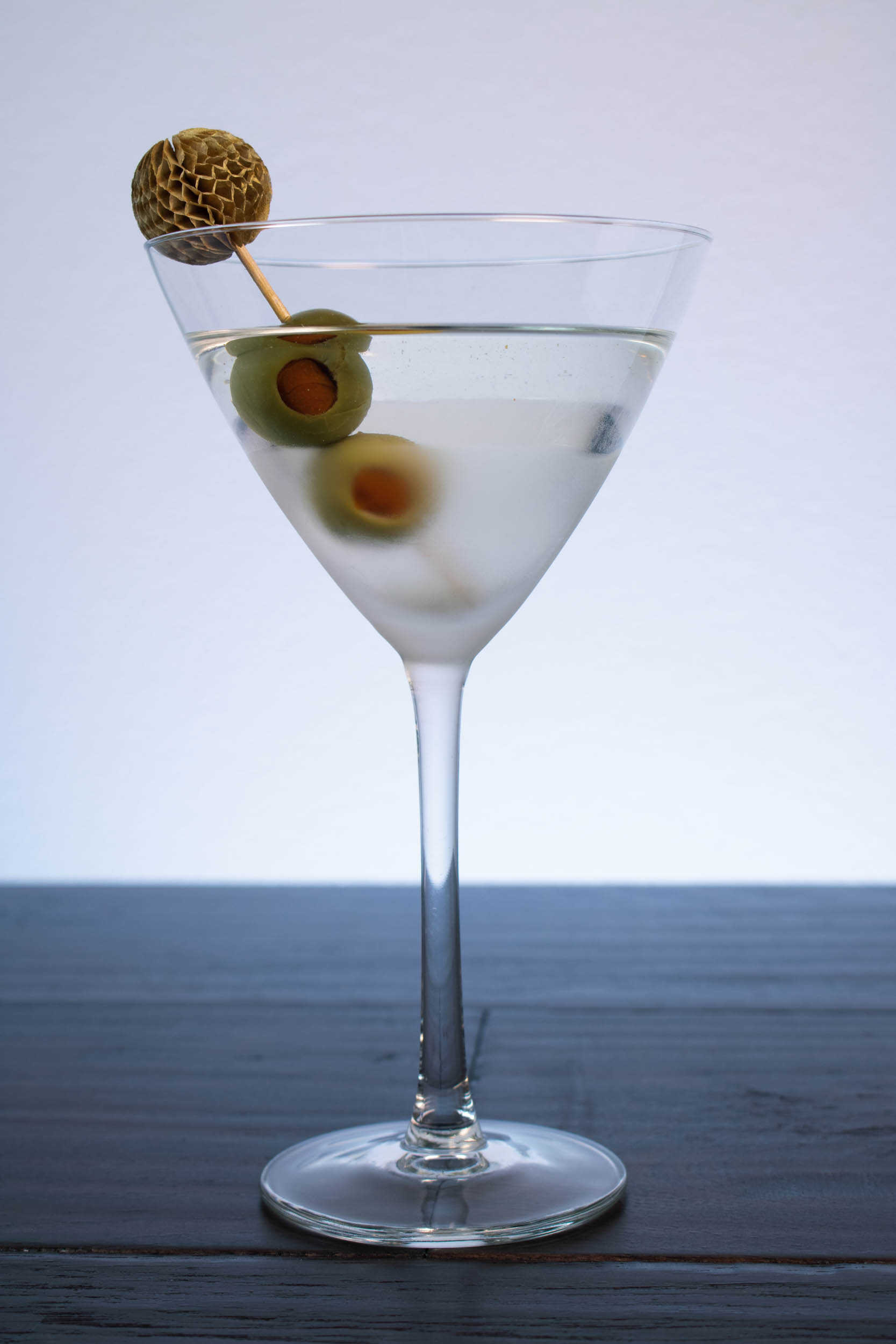
The Classic Martini

Perhaps there is nothing as classic as a Martini.  Much like all classics, the origin of the Martini is up for debate.  There are a few things, that in this authors opinion, are not:

  • A classic Martini is made with gin.
  • A classic Martini is stirred.
  • James Bond orders Martinis incorrectly, but he’s still damn cool.

So how do you make a Martini?  The basic foundation is always the same – gin, vodka, and garnish.  The execution of this ratio changes based on the individuals preference.  We tested ratios from 6 parts gin to 2 parts gin combined with 1 part dry vermouth.  What we found was that a wetter Martini (2 parts gin to 1 part vermouth), ended up being a much more robust and balanced cocktail.  That’s not to say you can’t make one with 100 parts gin to 1 part dry vermouth, but that it wouldn’t be our recommendation.

The Classic Martini


Martini
2 oz
London Dry Gin
1 oz
Dry Vermouth
1 Dash
Orange Bitters (Optional)
Garnish
Olive or Lemon Twist
Combine all ingredients in a mixing vessel. Add ice and stir. Double strain into a chilled coupe. Garnish with olive(s) or a lemon twist


The play of the aromatics of gin, mixed with the subtle acidity and flavor of wine and herbs gives the Martini it’s character.  The smoothness imparted by the ice and dilution creates a strong, clean flavor cocktail, with a crisp appearance.   The glass lends its classic elegance.

So what about Vodka Martinis?

Well – when it comes to Vodka, this is sometimes called a Kangaroo and has a different ratio.   If you shake it, it becomes a Bradford.  So what’s the big deal with shaking.  The simplest explanation is that shaking rearranges molecules in a much faster and abrasive manner.  This changes the amount of dilution and the texture.    In other words, you end up with a different final product.   If you want a fantastic and deep explanation, check out this post from Steve The Bartender.

  • Gin – We recommend a London Dry Gin for your Martini.  Our go to is Beefeater.
  • Dry Vermouth – Our recommendation is Dolin Dry, but feel free to use your preference.
  • Orange Bitters –  These are a personal preference, and may work better or worse depending on your choice of gin.  We recommend trying at least one Martini with orange bitters to determine if this is your jam.  We use Fee Brothers*, but Regan’s* is highly recommended as well.
  • Garnish –  There are a lot of choices for garnish, but olives and lemon twists are customary.  We recommend lemon twists to accentuate aromatics, and olives to add a salinity.

* – These are affiliate links that help us to offset the cost of running First Pour Cocktails.  We may receive some portion of the purchase price from items you buy through these links.

Posted in Classic Cocktails, Cocktails14 Comments on The Classics: The Martini

Pierre Ferrand 1840 Cognac

Posted on April 5, 2020June 21, 2020 by Nick
Pierre Ferrand 1840 Cognac


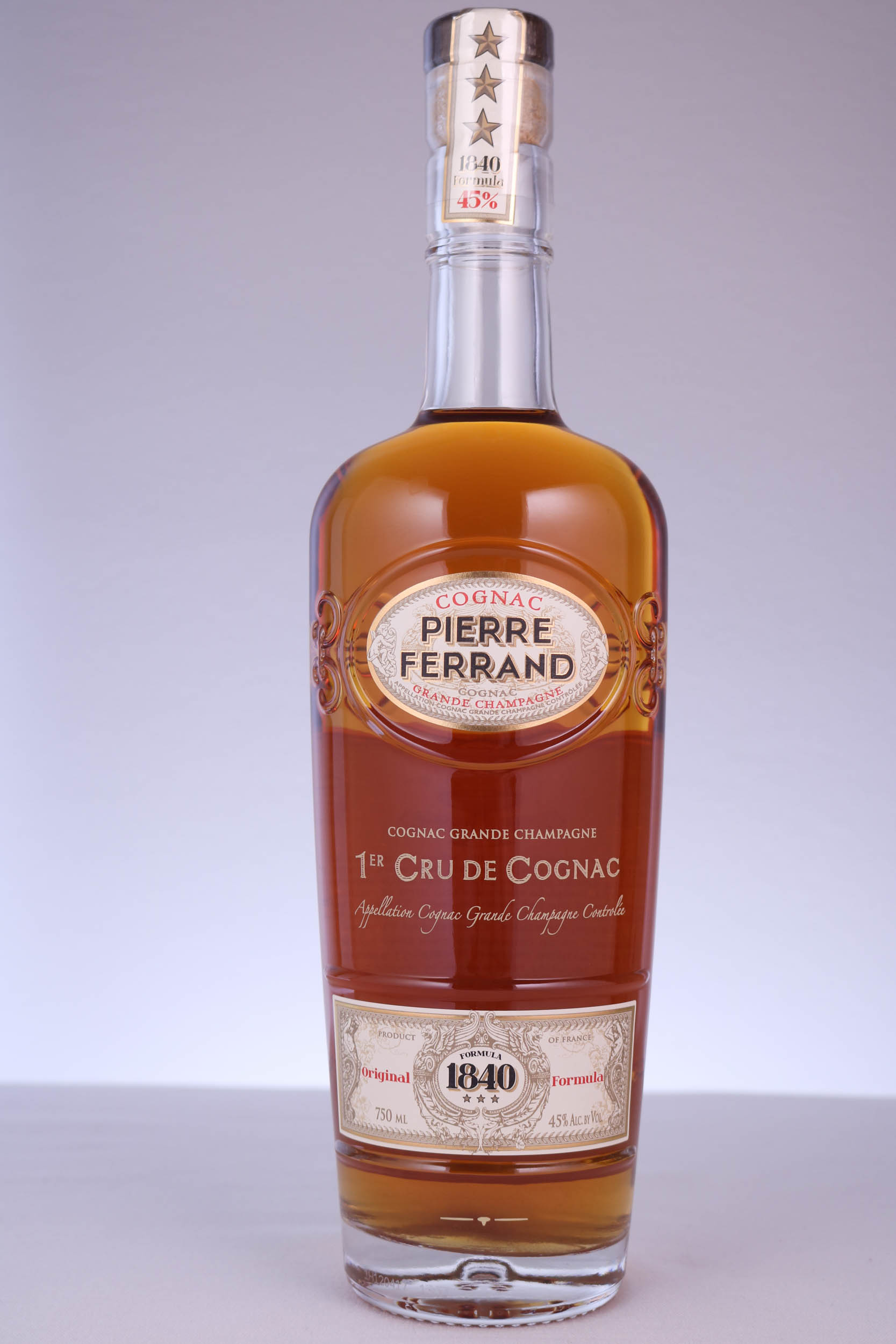
Pierre Ferrand 1840 Cognac

It would not be unexpected for visions of brown leather furniture and crystal decanters to go through ones head at the mention of Cognac.  Exuding an old world luxury, you might imagine a snifter cradling a pretty dark liquor held by men in their finest clothes puffing on cigars in a wood paneled room.  While this doubtlessly still happens, Cognac’s markets and demographics have changed, leading to products with different intentions, like Pierre Ferrand 1840 Cognac.

Wait – what is Cognac?

Before we get into Pierre Ferrand 1840 Cognac, let’s first talk a little about what Cognac is.  Cognac is specific form of Brandy from the Cognac region of France.  You can think of this as how bourbon is whiskey – except made to exacting specifications of the law.   Cognacs are distilled from wines made from Ugni Blanc (or occasionally two other varietals that make up 2% of Cognac production).  These wines are distilled twice under specific restricted processes that end up making eau de vie.  These eau de vie are then blended to make Cognac.

The process of blending the aged eau de vies is critical.  Wine is a natural product, and therefore changes from year to year.  The blending process of taking multiple eau de vies helps to ensure a consistency in the product.

Eau de vie are aged in barrels that can be reused as many times desired (as long as they never contain a non-wine product ie. Bourbon).  These ages of these blended eau de vie then help to designate the Cognac’s classificaton.  As Cognacs do not wear age statements, these are the classifications to help you understand the product:

  • V.S. (Very Special) – A minimum of 2 years in oak (sometimes known as three star)
  • V.S.O.P. (Very Superior Old Pale) – A minimum of 4 years in oak.
  • Napoleon – A minimum of 6 years in oak.
  • X.O. (Extra Old) –  A minimum of 10 years in oak.
  • Hors d’âge (Beyond Age) – Equal to X.O. by years – a marketing term to designate a higher quality.

These are really the basics of Cognac – but far from the full trip you could take down the rabbit hole.  For a great in-depth read – check out this guide from Eater.

Pierre Ferrand 1840 Cognac

Pierre Ferrand 1840 Cognac represents one of the new style of V.S. cognacs on the market.  Specifically designated for mixing, these Cognac’s seek to have a more robust profile to help shine in cocktails.  Pierre Ferrand 1840 is made in the Grande Champagne region of Cognac, and is distilled on the lees.  The eau de vie are then aged in multiple environments ranging from humid to dry across an unspecified variety of casks.  So does Pierre Ferrand 1840 have the right setup to work in cocktails?

Sight: A delightfully rich amber, boarding onto orange.

Smell:  Raisins, dried apricot, violets and other flowers wrap with hints of ester and poached pears.  Orange marmalade and notes of caramel join in, and hints of leather and tobacco peak around.

Sip:  The start is interestingly sweet, and beautifully viscous, almost lanolin like on the tongue.  The profile changes gradually, moving from sweet, caramel like and floral with hints of pear and fruit toward something more dense.  The transition moves toward oak with a spiced cigar box – and there’s a touch of tannin here from a strong woodsy finish.

Savor:  The ending maintains a burnt marshmallow, baked fruits, and strong finish of oak.  The ending lingers with abundant spice tannin.

Pierre Ferrand 1840 Cognac is designed for mixing, and has a suitably complex character to justify it’s reasonable price tag.    The character is quite good, and the texture is delightful. While one wouldn’t sit back and sip this on it’s own, it plays well in classics like the sidecar.  Overall, for the price Pierre Ferrand 1840 Cognac is well crafted and flavorful.

Pierre Ferrand 1840 Cognac is our go to bottle in our home bar, and our recommendation to you.  If you’re beginning a home bar, check out our Beginning Bottles for a Home Bar for more recommendations.

For more info – check our Pierre Ferrand’s Website.

Posted in Brandy, Cognac, SpiritsTagged France, Pierre Ferrard, V.S. (Cognac)2 Comments on Pierre Ferrand 1840 Cognac

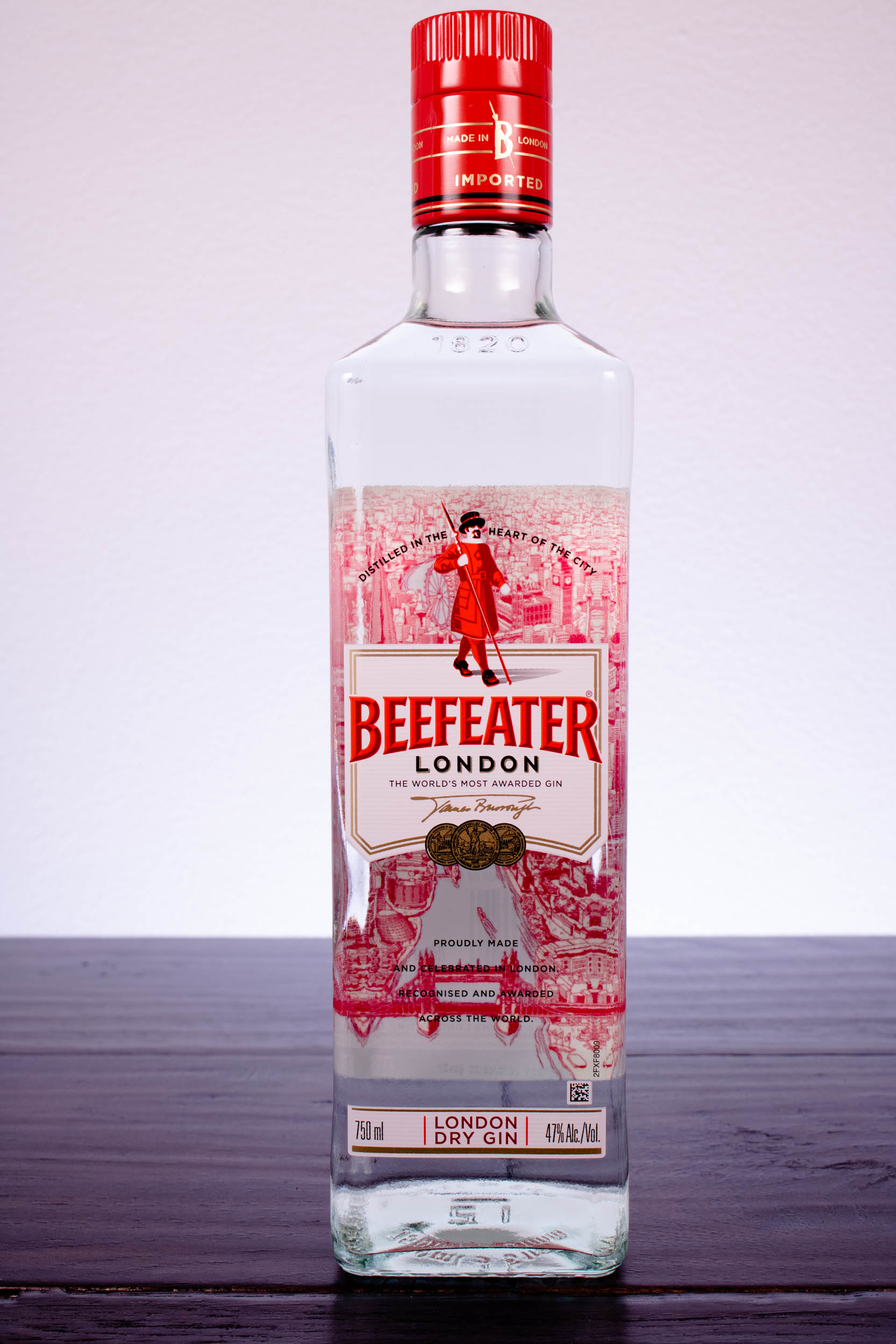
Beefeater London Dry Gin

Posted on March 25, 2020June 21, 2020 by Nick
Beefeater London Dry Gin

Beefeater London Dry Gin

Perhaps there is no Gin that’s bottle and brand so stands out to decidedly stands out to me as both British and cosmopolitan as Beefeater.  The Yeoman Warders (or Beefeaters) are of course the ceremonial guards of the Tower of London, and Beefeater Gin prominently features one on the label.  The brand has been around since 1876 – and not for nothing.  Beefeater London Dry Gin has won multiple awards from the San Francisco World Spirits Competition between 2006 and 2012, as well as high ratings from spirit reviewers.

So with all that said, does Beefeater deserve a place on your bar?

Beefeater London Dry Gin

Sight:  Clear.

Smell:  Juniper comes to a head from the start – it’s accented by notes of lemon peel, touches of spice, citrus, and angelica.

Sip:   The mouthfeel leads with citrus peel, but moves into juniper fairly freely.  There are notes of coriander and angelica root that pop out over time.    There’s a hint of sweetness as well, but the overall profile is clean and light with just a touch of heat.

Savor:  The ending emphasizes juniper, citrus pith, and spicing with a hint of bitterness.

Beefeater London Dry Gin is clean, simple, and straightforward.    The complexity is enough to lend itself well to cocktails, but strong enough to emphasize itself in cocktails.  It particularly goes well in a martini, where it shows off the ability to smooth, while bringing out the best in the vermouth.  For this same reason – we like crafting with Beefeater.  It plays well in both classics and tiki cocktails, without getting lost.  For this reason, we recommend Beefeater as your entry gin.

Looking for more?

  • The Gin Is In does more justice to a gin review than any mere moral can with Beefeater London Dry Gin.
  • Check out Beefeater’s website
Posted in Gin, London Dry, SpiritsTagged Beefeater, Pernod Ricard18 Comments on Beefeater London Dry Gin

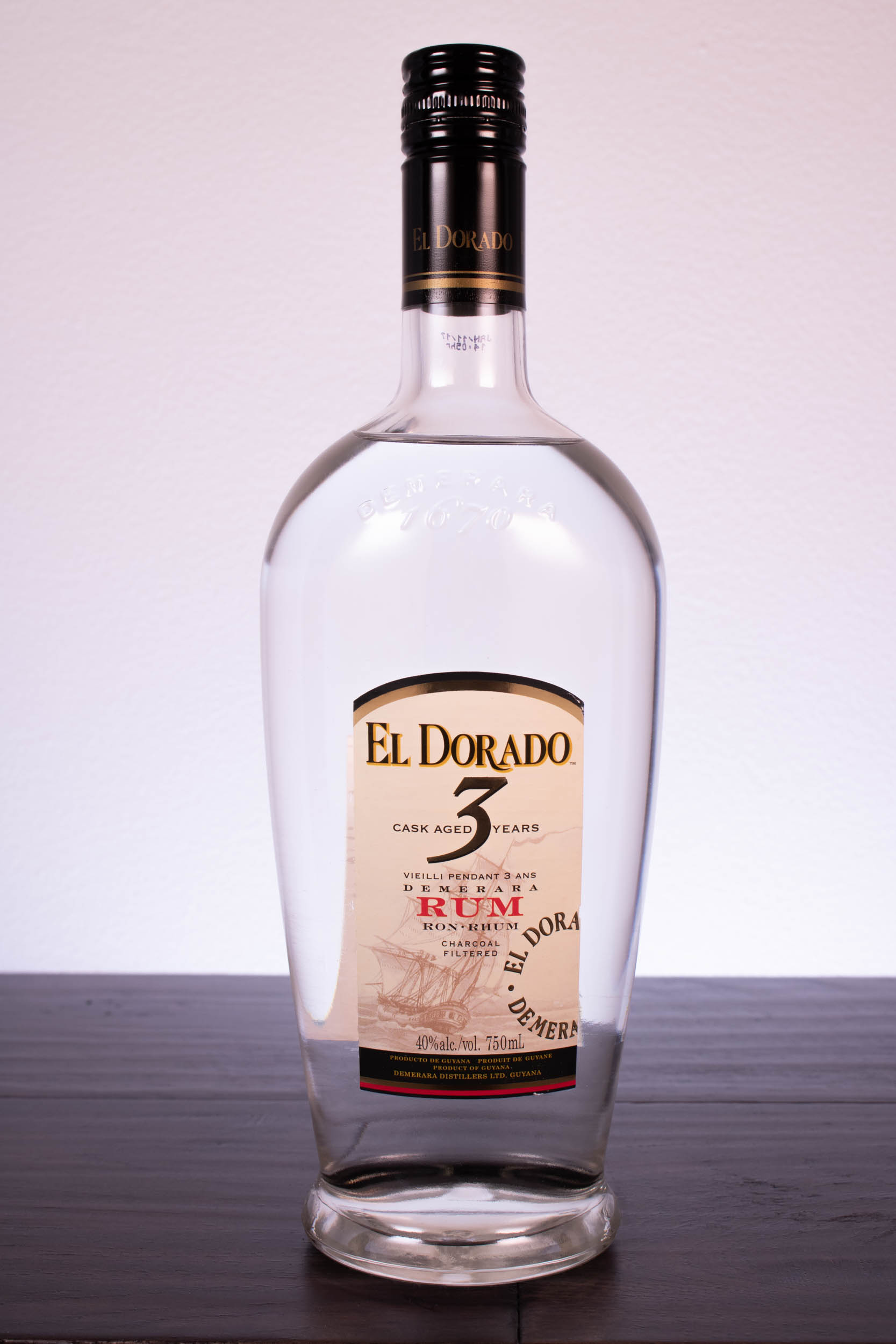
El Dorado 3

Posted on March 19, 2020 by Nick
El Dorado 3

El Dorado 3 Rum

A couple years ago, I bought Ann Marie a copy of Smuggler’s Cove Tiki* cocktail manual.  The result of this was two fold.  First, it energized Ann Marie to branch out into a whole new area,  and one that she arguably ended up being quite passionate about – Tiki drinks.  The second result was the exponential growth of our rum collection, swelling from 2 – 4 bottles to over 20.   Even with all those rums, we still find there to be something special about El Dorado 3.

El Dorado 3

We didn’t originally pick up a bottle of El Dorado 3 (we actually ended up with the 8), but we ended up being curious enough about their line up that we also ended up tasting not only the 8, but the 3, 5, and 12.  As previously mentioned in our review of El Dorado 12, Demerara Distilling Limited (DDL) is home to some of the oldest operating stills in the world.  While demerara and Guyana rums are known for the caramel (something that Matt Pietrek of Cocktail Wonk dug into with Sharon Sue-Hang of DDL), you won’t see any of that here thanks to the charcoal filtering process.  Techniques like charcoal filtering, and their use of wooden stills, demonstrate the experience that DDL has.  Experience that shows through in their rums, like their youngest, El Dorado 3.

Sight: Clear – thanks to charcoal filtering

Smell:  Vanilla and powdered sugar with hints of banana and cotton candy are layered over by an ethanol layer.  The nose is sugary, with hints of nougat and a little nuttiness.

Sip:  The mouthfeel is moderate and there’s a fun salted caramel like note that quickly vanishes into large quantities of raw sugar and nougat.  There’s a sweetness as well.  A touch of banana and macaroon hides there as well.

Savor:  The ending has a touch of rum funk and cotton candy with hints of nuts.   Finish has a moderate length.

El Dorado 3 is our go to lightly aged rum thanks to it’s very well balanced character and playful flavors.  The vanilla and caramel notes provide strong backbones for everything ranging from eloquent daiquiri’s to imaginative and elaborate Tiki drinks.    In fact, our biggest regret regarding El Dorado 3 is that it isn’t more readily available everywhere.

If you are going to stock a lightly aged rum in your bar, El Dorado 3 is our top recommendation.  For more recommendations, and to see other bottles for starting your home bar, check out our Beginner Home Bar Bottles list.

* – First Pour Cocktails may get a portion of a commision from purchases made through affiliate links.  These help build your home bar, and help us pay for this wonderful site!

Posted in Lightly Aged, Rum, SpiritsTagged Demerara Distillers Limited, El Dorado, Guyana5 Comments on El Dorado 3

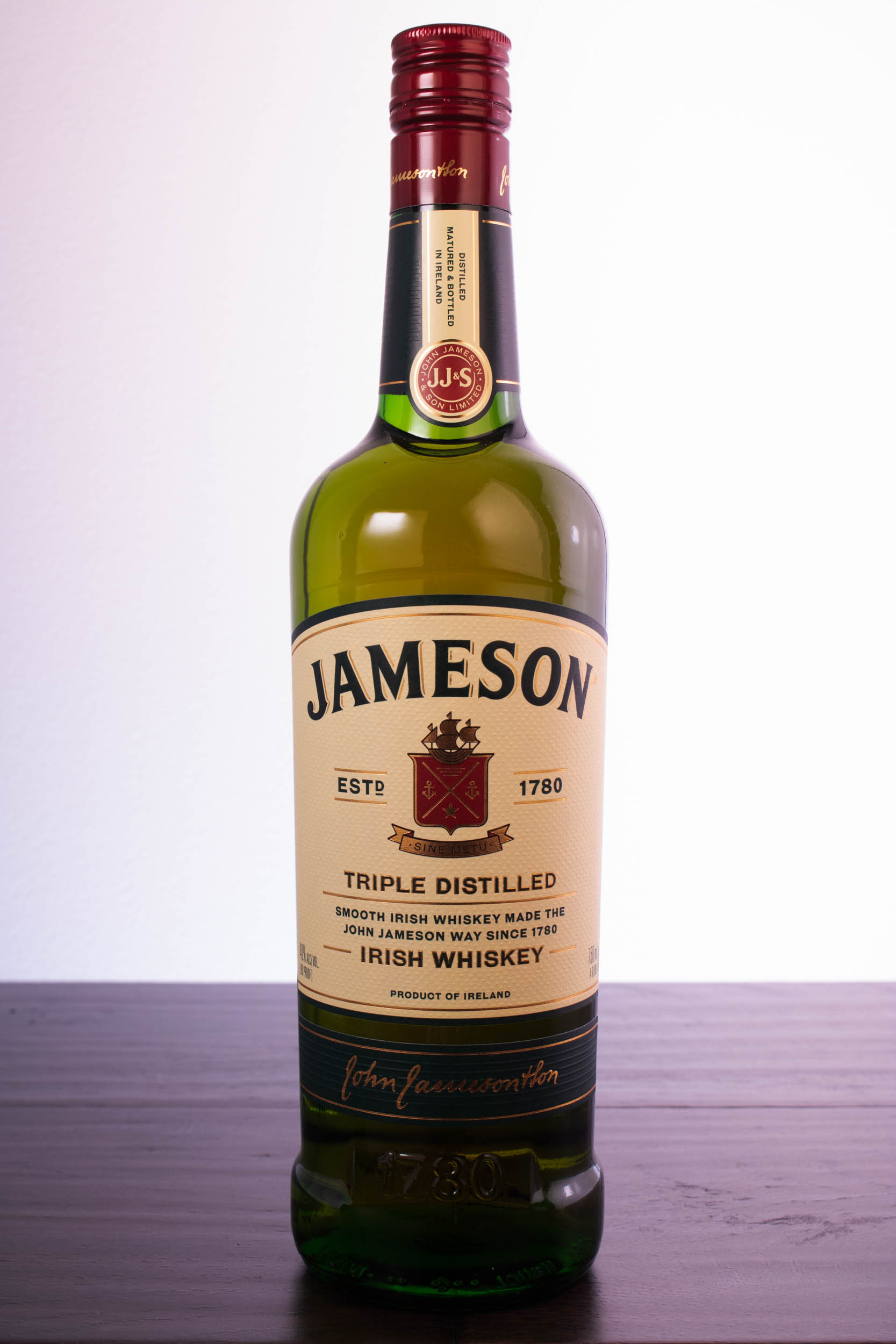
Jameson Irish Whiskey

Posted on March 16, 2020 by Nick
Jameson Irish Whiskey

Jameson Irish Whiskey

Back when I lived in Kentucky, I had fond memories of Jameson during Saint Patrick’s day celebrations.  It was smooth, caramel like, and viscous – almost oily.  Jameson played some interesting roles in my life at that point, being shots for both celebrating getting a date with a girl I fancied, and also as book ends when I relocated my shoulder myself.  So as we looked to stock our home bar, I couldn’t help wondering, is Jameson Irish Whiskey as good as I remember?

Jameson Irish Whiskey

Jameson Irish Whiskey is triple distilled of malt and grain using a pot still.  It’s then aged in oak for a minimum of 4 years.

Sight:   A moderate deep orange like gold.

Smell:  A hint of ethanol laces with a touch of salinity and lightly caramelized sugar.  Green apple skin and grain notes run through the background.

Sip:  The palate is light to medium, but gets somewhat oily.  There’s more burn that might be expected.   There are notes of wood and salted caramel, mixing with touches of baked apple, vanilla, and acetate.  There’s a touch of astringency to it.

Savor:  The ending maintains a bit of astringency and light salinity.  There are again bitter alcohol, caramelized sugar, and woodsy notes on the finish.

Jameson is merely acceptable, and I don’t think it’s worth going out of the way to look for.   Perhaps it’s the nostalgia of the flavor of victory, but time and an evolving palate have led me to question the endearing love of Jameson shared by so many.  Is it bad?  No, certainly not, the flavor is a touch unrefined, but thankfully cheap.

Next year, I’ll buy a different Irish whiskey.  Until then, please my Irish whiskey drinking friends, chime in with your favorite Irish whiskey.

For more ideas on Jameson:

  • Jameson’s website
  • In Search of Elegance share’s their thoughts.
Posted in Irish, Whiskey2 Comments on Jameson Irish Whiskey

Pierre Ferrand Dry Curaçao

Posted on March 3, 2020June 9, 2020 by Nick
Pierre Ferrand Dry Curaçao

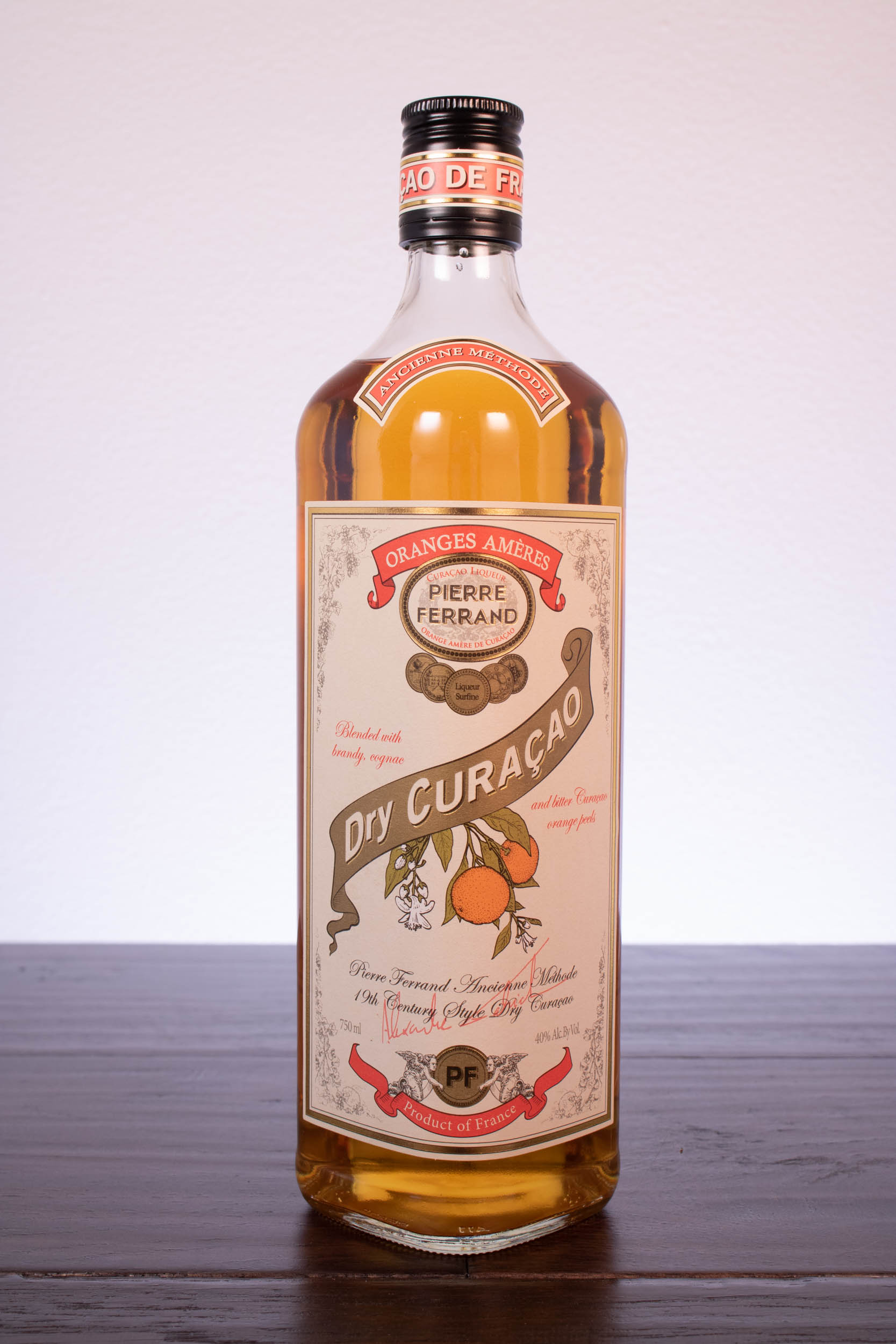
Pierre Ferrand Dry Curaçao

One of the most flummoxing things about starting to make certain cocktails was that ingredients have a way of sounding like one another.  After all, whiskey is also whisky, bourbon is whiskey, and scotch is whisky.  Much like Scotch isn’t Bourbon though, not all curaçao are equivalent – well not exactly anyway.  So when you think about orange liqueurs, where does Pierre Ferrand Dry Curaçao fit?

What is Curaçao?

To start – let’s just establish what curaçao is.  Historically speaking, curacao was a liqueur made from the Laraha orange’s extract.  This bitter orange wasn’t much for eating, but the peels were aromatic.  Figuring out this could be made into liqueur with neutral spirits or brandy, curaçao was born.   Supposedly seeking to help give some mystique, Bols is said to have added the blue coloring to the concoction.

In addition to Bols adding blue coloring, there’s some debate as to who exactly started the name Triple Sec (which in this case, you can use synonymously with curacao).   Some claim it came from Cointreau, who went through multiple iterations of branding – and ultimately removed it once a flood of cheap triple sec hit the market.  Others claim it was a label for the distillation process.  Regardless of where it started, Triple Sec supplanted Curaçao in some name conventions, and you can now swap the names interchangeably.

But what about the ingredients?  While you’ve probably experienced blue curacao at one point or another it would be a mistake to think that it was identical to other curaçaos – like Pierre Ferrand Dry Curaçao.  The magic in this starts with the base, and develops from there through the addition of spices and the orange used.  Some ingredients, like your Mr. Boston Triple Sec are low level, orange flavored neutral spirits gussied up with sugar.   Others, like Grand Marnier, are brandy based and intrinsically have underlying notes of oakiness and grape brandy.

Depending on the other flavors in your drink, sometimes you can get away with this. A bold or aged tequila might play well with brandy based curacao like Pierre Ferrand Dry Curaçao in a Margarita.  While something more subtle though, might require the use of a neutral spirit like Cointreau – which is our go to recommendation as it will work regardless.

As a note: While some will probably fight me on this, not all Blue Curaçao are bad, notably Giffard makes a lovely one.

On It’s Own: Pierre Ferrand Dry Curacao

Pierre Ferrand Dry Curacao is modeled after classic early 20th century French orange.  It features Laraha oranges infused in grape brandy, combined with a distillate of walnut skins and prunes aged in brandy and cognac, and toasted sugar aged in barrels.

Sight:  A beautiful golden color with hints of orange

Smell:  Macerated orange peels float out on the nose and mix with various orange notes.   Candied characteristics layer with touches of pith and notes of nuttiness and grapes build around the edges.

Sip:  The body starts out round and quickly shows it sweetness.  A good amount of brightness keeps things level.  The orange is front and center, bringing a mix of orange flavors out.  There’s a bit of the pith and a strong backbone of  woodsy, nutty, sweet caramelized sugar.

Savor:  The ending rounds out sweet – but slowly turns pithy.  The flavor of candied oranges and slightly nutty cognac lingers.

I’d be remiss to tell you that Pierre Ferrand Dry Curaçao was anything other than luscious and delectable.  The subtle complexity wafting up on the nose, and the well rounded palate make it a pleasure to sip.  Thanks to its sizable character, it also plays great in cocktails, and is an ingredient that shows up in the world of Tiki cocktails.  On of the most notable of which is the classic El Presidente highlighted in Smuggler’s Cove*, featuring a solid mix of grenadine, dry vermouth, Pierre Ferrand Dry Curaçao, and Lightly Aged Rum.

Final Thoughts:

Pierre Ferrand Dry Curaçao is a wonderful orange liqueur that’s well worth the price.  Check it out if you’re into Tiki or want a new orange liqueur experience with an extra French historical flare.

If Pierre Ferrand seems familiar, or you want to try something else by them, check out our past reviews of Plantation 20th Anniversary and O.F.T.D for some of their excellent rums.  For even more info, check out Pierre Ferrand’s Site.

* – Contains an affiliate link that may result in First Pour Cocktails receiving a portion of the sale.
Posted in Liqueur, Orange, SpiritsTagged Curaçao, Dry Curacao, Pierre Ferrard, Triple SecLeave a Comment on Pierre Ferrand Dry Curaçao

Stolichnaya “Stoli Vanil” Vanilla

Posted on February 24, 2020 by Nick
Stolichnaya “Stoli Vanil” Vanilla

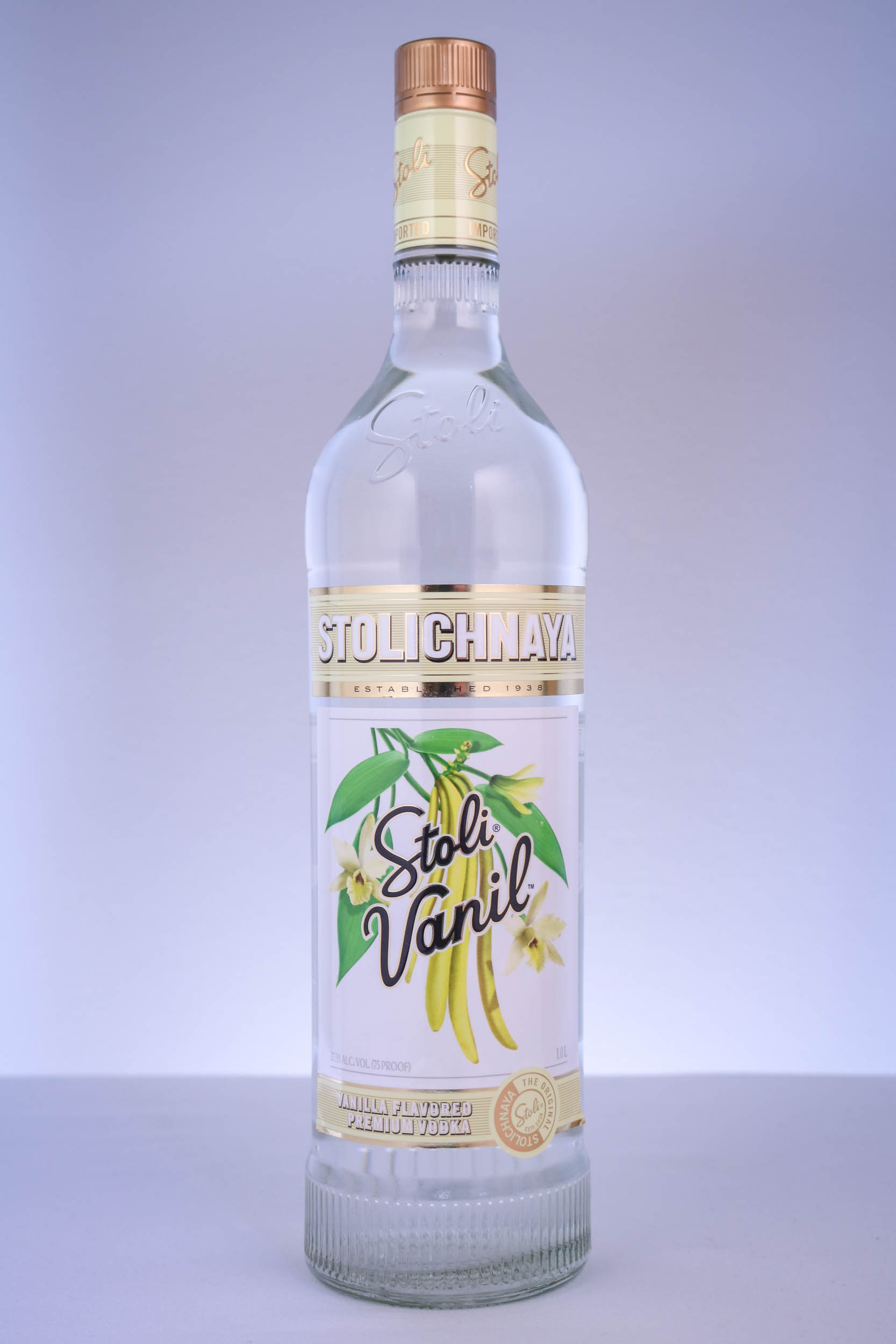
Stoli Vanil

As a general rule, flavored vodka’s (and other spirits) are an anomaly in our collection.  It’s not that people don’t enjoy the flavors that manufactures can infuse into their product, but rather that we prefer our ability to use natural ingredients or other modifiers to achieve similar results.  Even so, we keep a bottle of Stolichnaya “Stoli Vanil” Vanilla around – because my mother likes it for her chocolate martinis.

Stolichnaya “Stoli Vanil” Vanilla

Stoli Vanil is made from a mix of wheat and rye.  To make it vanilla they use a mix of natural vanilla flavors.

Sight:  Clear

Smell:  There’s a subtly ethanol note and plenty of cake like vanilla / frosting that pulls through.

Sip:  The body is syrupy yet thin, while pulling in plenty of vanilla and mild grain / grape ethanol notes.

Savor:  The ending lingers with a touch of creamy character and a more bitter ethanol component, while the vanilla hangs out – heading toward extract.

Stoli Vanil ends up being something of a simplistic vodka – heavy on the vanilla and cake like notes.  The slight ethanol characteristic isn’t the nicest counterpoint against the sweetness of the vodka.  It’s not really great for sipping on, but fortunately – that’s not the point.

Stoli Vanil In Cocktails

That said, for making certain dessert cocktails – it gives a nice little bump to other flavors like chocolate and nuts.  It really downplays the sharper notes in a chocolate martini, playing more background.  To see how it behaved in a more vodka forward application, I made a simple play on a creamsicle.    The combination of Stoli Vanil, orange bitters, simple syrup, and club ends up feeling like more than the sum of it’s parts.   A creamy body with subtle bubbliness plays off the vanilla notes and opens up lightly floral with a touch of orange.    The richness is palpable, but somehow also feels refreshing.

Final Thoughts

Stoli Vanil is a good vodka to craft cocktails with.  While you can create similar flavors with a vanilla syrup and vodka, Stoli Vanil provides a solid creaminess in it’s character that elevates it.  It’s certainly not a must have, but there’s no shame in keeping it in your bar.

For more information, head over to Stoli’s Website.

Posted in Flavored Vodka, VodkaTagged Latvia, Stoli, Stoli Group, StolichnayaLeave a Comment on Stolichnaya “Stoli Vanil” Vanilla

Posts navigation

Older posts
Newer posts
  • About
  • Cocktails
  • Contact
  • Privacy Policy
  • Sample Policy
© First Pour Cocktails 2019-2021 | Theme FPCtails by Nick Rinaldi
Manage Cookie Consent
To provide the best experiences, we use technologies like cookies to store and/or access device information. Consenting to these technologies will allow us to process data such as browsing behavior or unique IDs on this site. Not consenting or withdrawing consent, may adversely affect certain features and functions.
Functional Always active
The technical storage or access is strictly necessary for the legitimate purpose of enabling the use of a specific service explicitly requested by the subscriber or user, or for the sole purpose of carrying out the transmission of a communication over an electronic communications network.
Preferences
The technical storage or access is necessary for the legitimate purpose of storing preferences that are not requested by the subscriber or user.
Statistics
The technical storage or access that is used exclusively for statistical purposes. The technical storage or access that is used exclusively for anonymous statistical purposes. Without a subpoena, voluntary compliance on the part of your Internet Service Provider, or additional records from a third party, information stored or retrieved for this purpose alone cannot usually be used to identify you.
Marketing
The technical storage or access is required to create user profiles to send advertising, or to track the user on a website or across several websites for similar marketing purposes.
  • Manage options
  • Manage services
  • Manage {vendor_count} vendors
  • Read more about these purposes
View preferences
  • {title}
  • {title}
  • {title}