Skip to content
First Pour Cocktails First Pour Cocktails
  • About(current)
    About(current) Sample Policy(current) Privacy Policy(current)
  • Bar Setup(current)
    Recommended Bottles for Starting Your Home Bar(current) Recommended Equipment for Starting Your Home Bar(current) Blanco Tequila Rankings(current) Bourbon Rankings(current)
  • Cocktails(current)
    Cocktail List(current) Halloween Cocktails(current) Valentine's Day Cocktails(current)
  • Contact

Author: Nick

The Classics: Blood & Sand

Posted on February 21, 2022February 22, 2022 by Nick
The Classics: Blood & Sand

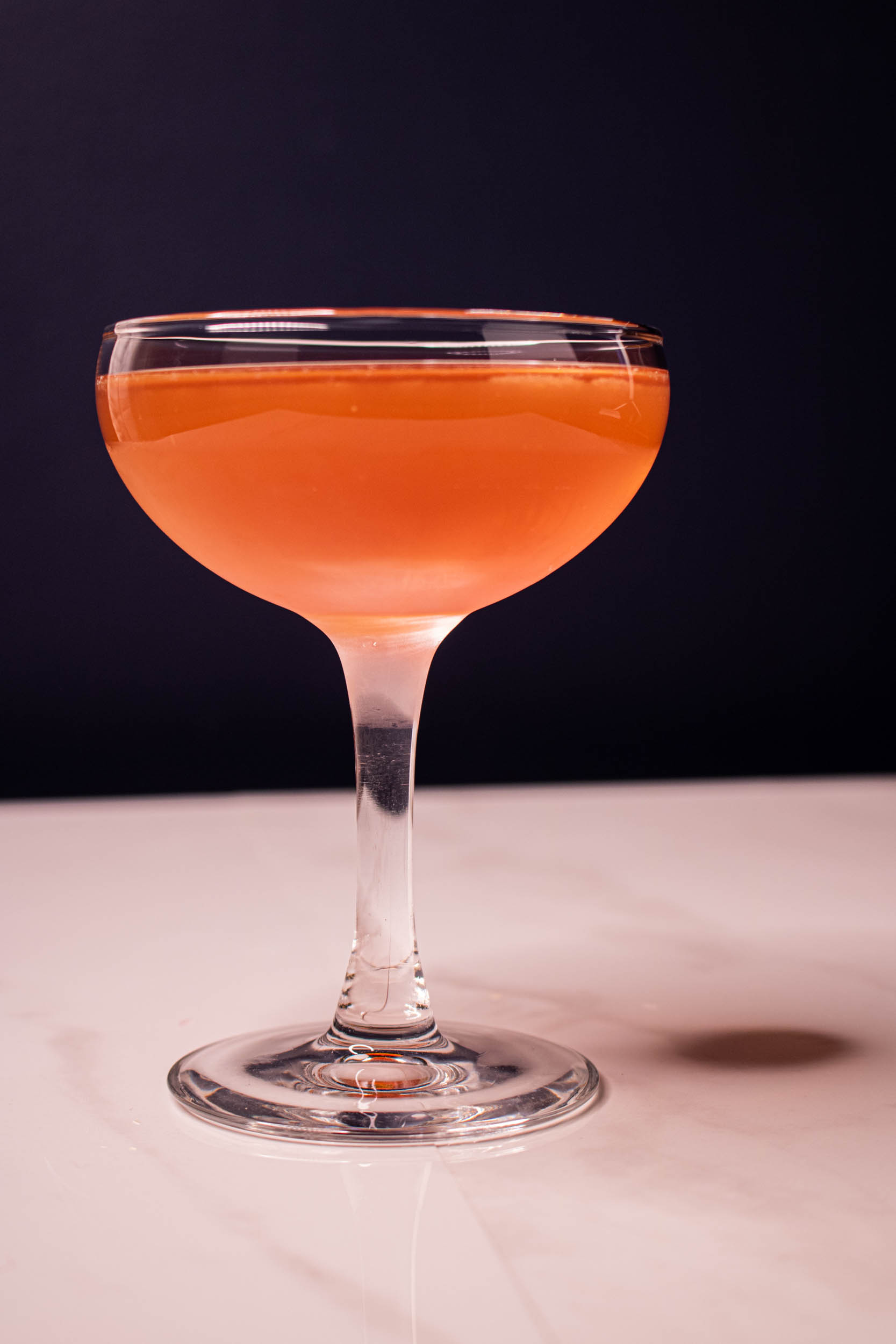
Blood & Sand Cocktail

The Blood & Sand is the sort of cocktail that you look at on paper and question why someone would put those particular ingredients together.  The start seems fine, scotch and sweet vermouth puts us well on the way to a Rob Roy.   A bit of cherry liqueur, a little unusual, but it seems reasonable.  But orange juice?!  Orange juice already make very few appearances in classic cocktails, and even less with scotch, so does it work?

Blood & Sand
Blood & Sand
¾ oz
Scotch
¾ oz
Sweet Vermouth
¾ oz
Cherry Heering
¾ oz
Orange Juice
Combine all ingredients in a shaker. Add ice and shake. Double strain into a chilled coupe. No garnish.

The Blood & Sand is a complicated drink.  It spans a spectrum of flavors ranging from spiced to smokey to fruity to sweet, and bouncing between them as it feels is appropriate.  The scotch here is going to be a key player adding notes ranging from grain to smoke depending on your selection. The complexity of the vermouth pinballs off the scotch and pulls in a variety of fruity notes from both the cherry liqueur and the orange.  The finish is drier than you might expect for a drink this sweet, but still quite interesting.

Drink Notes & Recommendations

The Blood & Sand is a member of the equal parts club in it’s original orientation.  This is probably the most debated structure for this classic, but where you should start from as a template.  The most common adjustments are to accentuate the scotch and give the orange juice more of a chance to show its merits.  In this case, we recommend adjusting both ingredients up by a 1/4 oz.

The level of smoke should also be an are you consider for adjustment.  Although it doesn’t necessarily call for smoke, the addition of peated whiskey (either by splitting up the base) or by switching completely to a peated scotch can really give a brilliant scotch forward kick to this classic.

  • Scotch – We recommend you start with some rich, round, and lower on the peat side of the spectrum.  Both Glenlivet 12 and Great King Street Artist’s Blend work well here.  A little bit of smoke from the addition of Ardbeg or Johnnie Walker Black can add another dimension.
  • Sweet Vermouth – Carpano Antica adds a lot of punch to this drink to help round things out.  More floral scotches could also work well with a lighter vermouth such as Dolin.
  • Cherry Heering – Heering is a branded liqueur, but the point is that it’s cherry based.  There are other cherry based liqueurs on the market (we used one from Luxardo’s Cherry Liqueur here), but you could also use cherry schnapps or maraschiano liqueur if you can’t access a cherry liqueur.  This will alter the flavor considerably.
  • Orange Juice – Use fresh squeezed to avoid tinny flavors and to best compliment the scotch and cherry flavors.
 

Posted in Classic Cocktails, CocktailsLeave a Comment on The Classics: Blood & Sand

Little Book Chapter 5: The Invitation

Posted on February 18, 2022February 15, 2022 by Nick
Little Book Chapter 5: The Invitation

Little Book Chapter 5: The Invitation

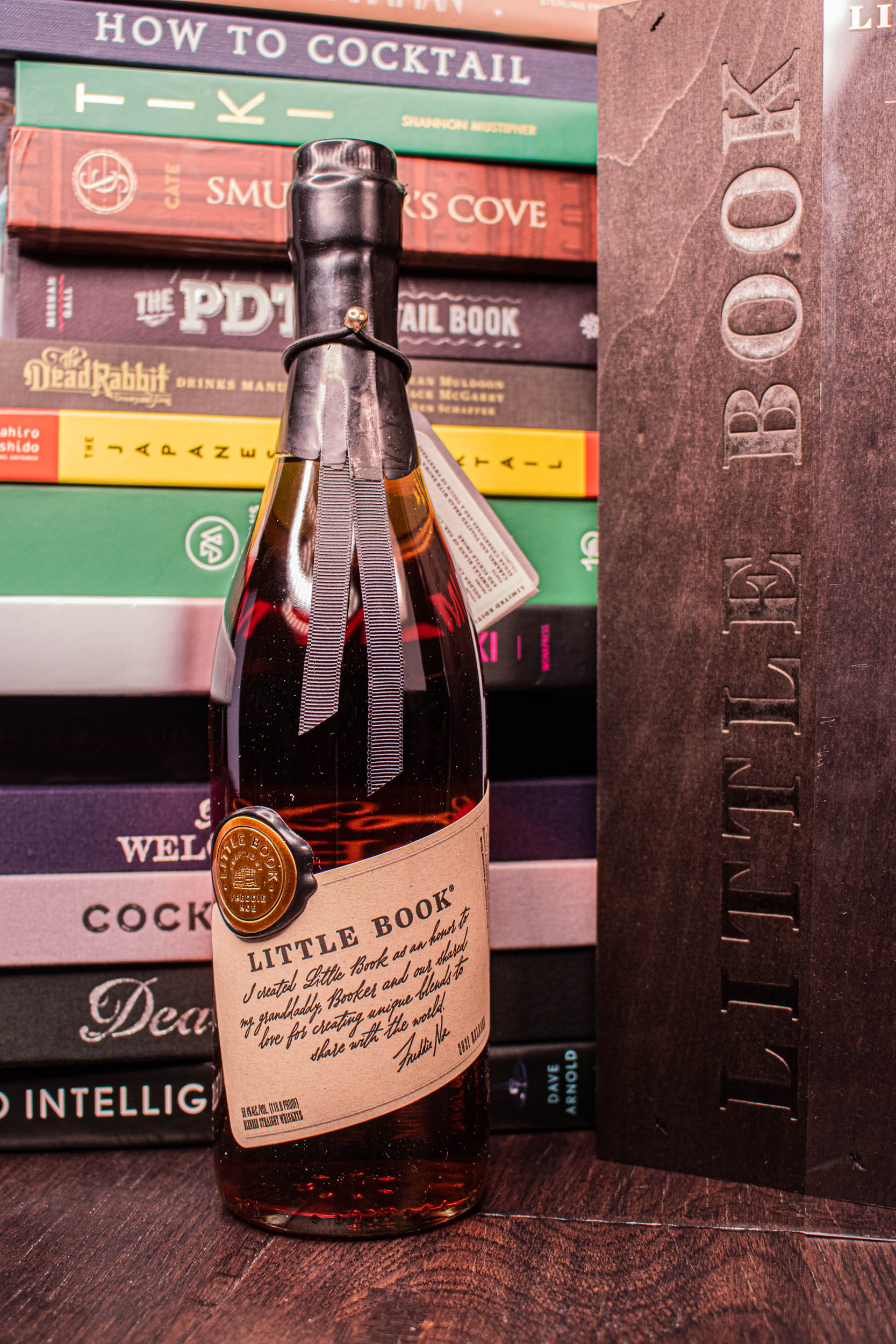
Little Book Chapter 5: The Invitation is the fifth release in Jim Beam’s curated collection from Eighth Generation Beam Master Distiller Freddie Noe.  “The Invitation” invites tasters to explore interesting blends, ages, and flavors in the evolving world of whiskey.  The blend is meant to highlight the diverse influences that have influenced Freddie Noe’s journey and and shaped his style as a distiller.  The results are nothing short of being fantastic, as the Little Book Chapter 5 has ranked number 3 on Fred Minnick’s Top 100 American Whiskeys of 2021.

Little Book Chapter 5: The Invitation

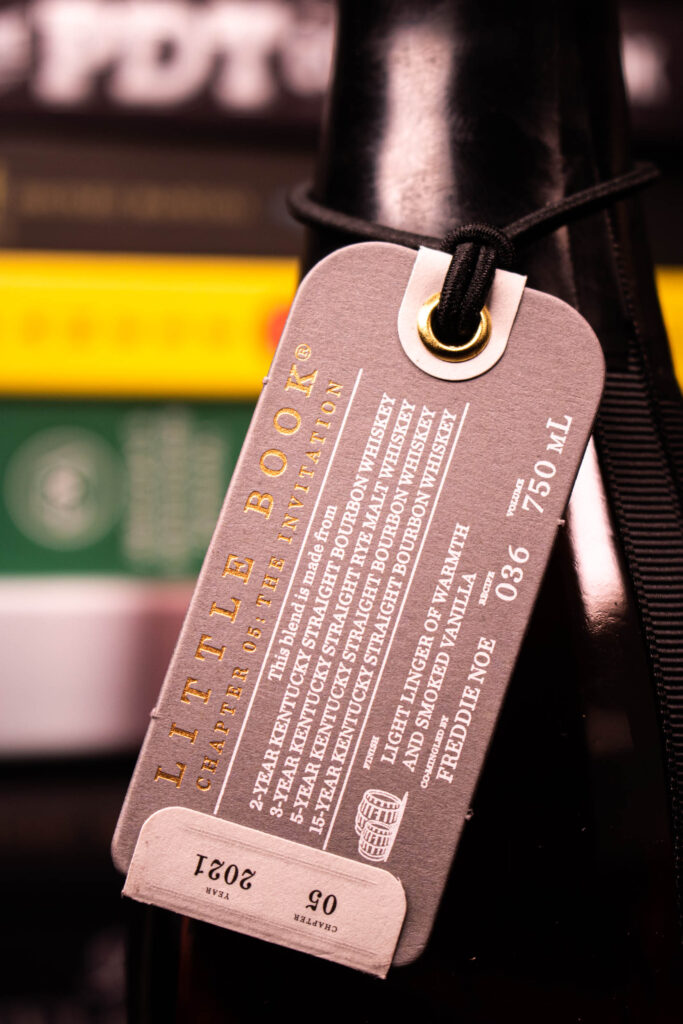
Little Book Chapter 5: The Invitation Neck Tag

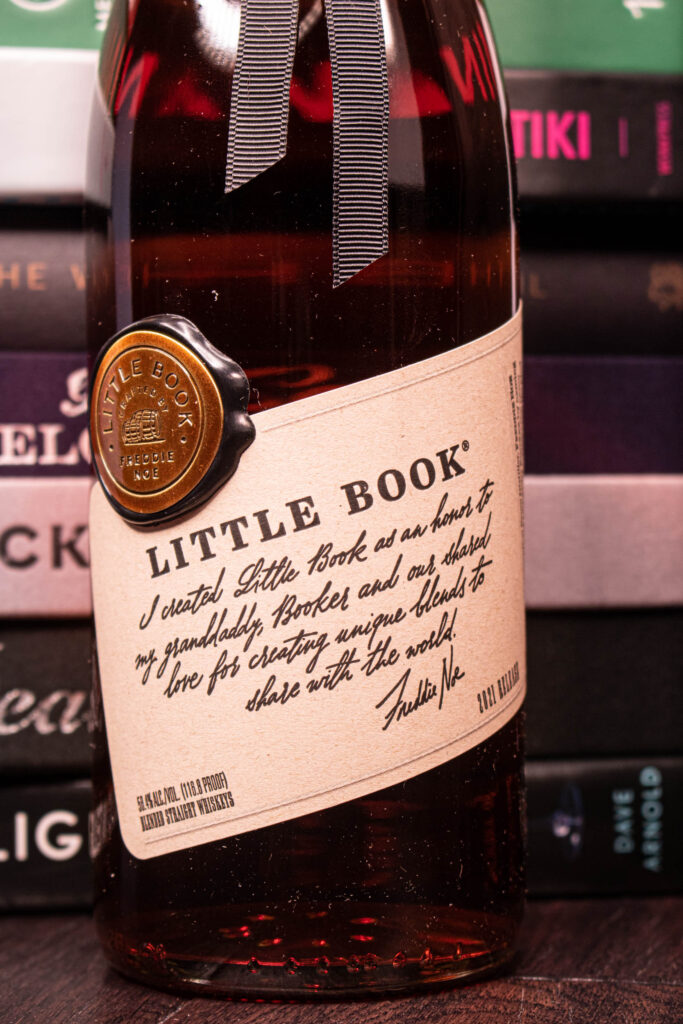
Little Book Chapter 5: The Invitation is a blend of 2 year-old Kentucky Straight Bourbon, 3 year-old Malted 100% Rye Whiskey, 5 year-old Kentucky Straight Bourbon, 15 year-old Kentucky Straight Bourbon.  The final result comes in at 116.8 proof.

Sight:  Chestnut – Oloroso Sherry

Smell:  The nose is an evolutionary experience with Little Book, changing gradually over the time you leave it in the glass.  On first pour, there was a heavy dose of peanut and charred oak.  After opening, the nose explodes with juicy caramel, brown sugar, rich toffee, peanut brittle, and a jammy cherry.  As the nose continues to open, there are elements of charred oak, cigar box, toasted spices, black tea, maple syrup, warm vanilla, and a touch of almonds.  Despite the proof, there’s not a lot of heat.

Sip:  The body opens smooth and then warms up slightly.  The flavors of preserved cherries and warm vanilla laced caramel come through.  Touches of brown sugar and molasses open the door to almond brittle and notes of grape.  The oak influence kicks in, adding elements of cigar spicing, roasted sugar, baking spice, and tobacco.  Elements of black tea and a slight fruit funk jump in and compliment the light spicy sweetness.

Savor:  The finish pulls through the creamy brown sugar and caramel elements with a healthy dose of spice.  Roasted oak and spice goes through with a hint of burnt marshmallows.  The finish lingers beautiful, layering in more wood and sweet sugar notes.

Little Book Chapter 5: The Invitation is simply incredible.  The flavors are layered, complex, and intricate.  The sweetness of the caramelized notes is pervasive, but evolves constantly at Little Book continues to open.  The fruit notes are present enough to give it variety, while the nuttiness and wood make up all the in between notes.  The result is an incredible whiskey to simply savor over hours.

In Cocktails

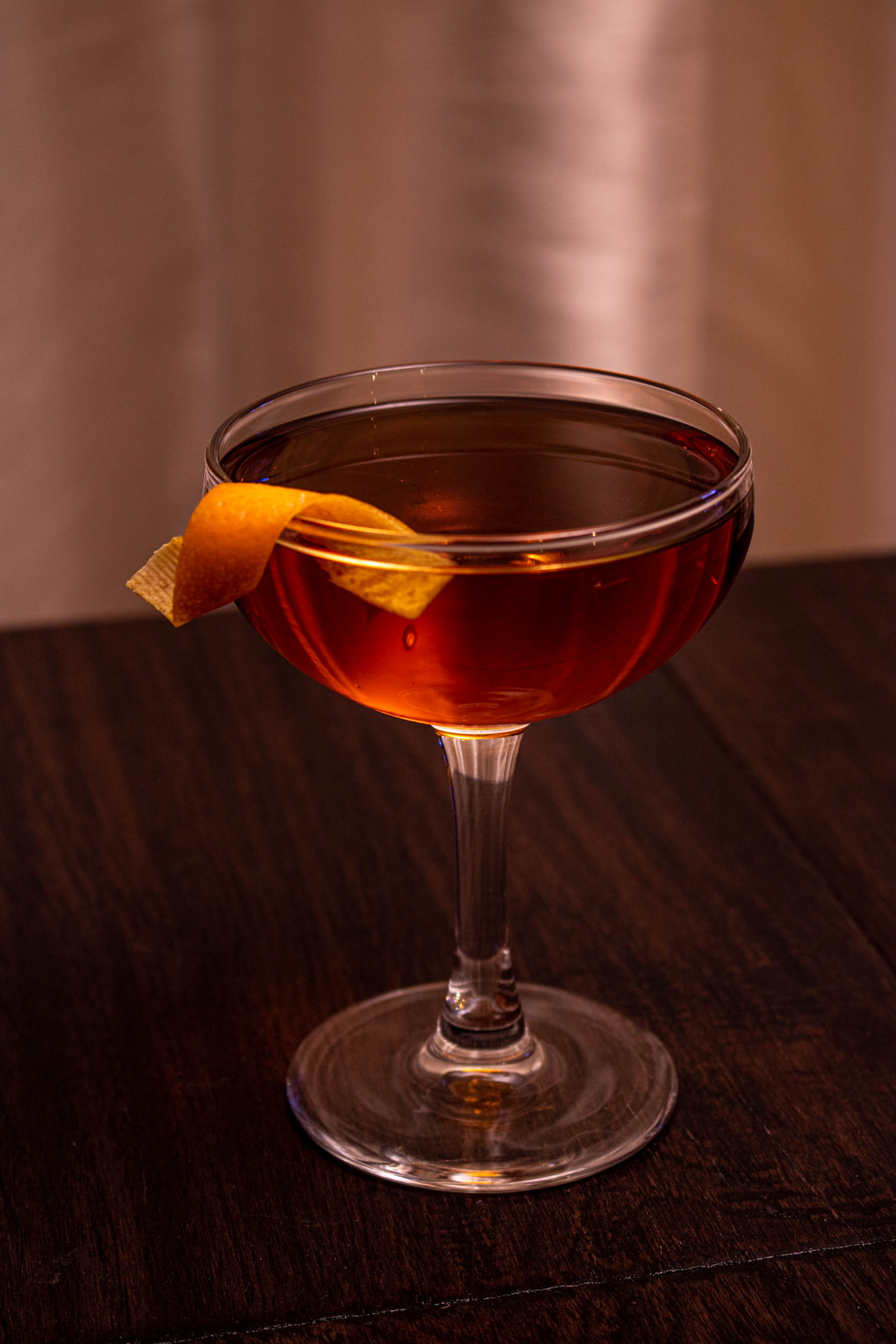
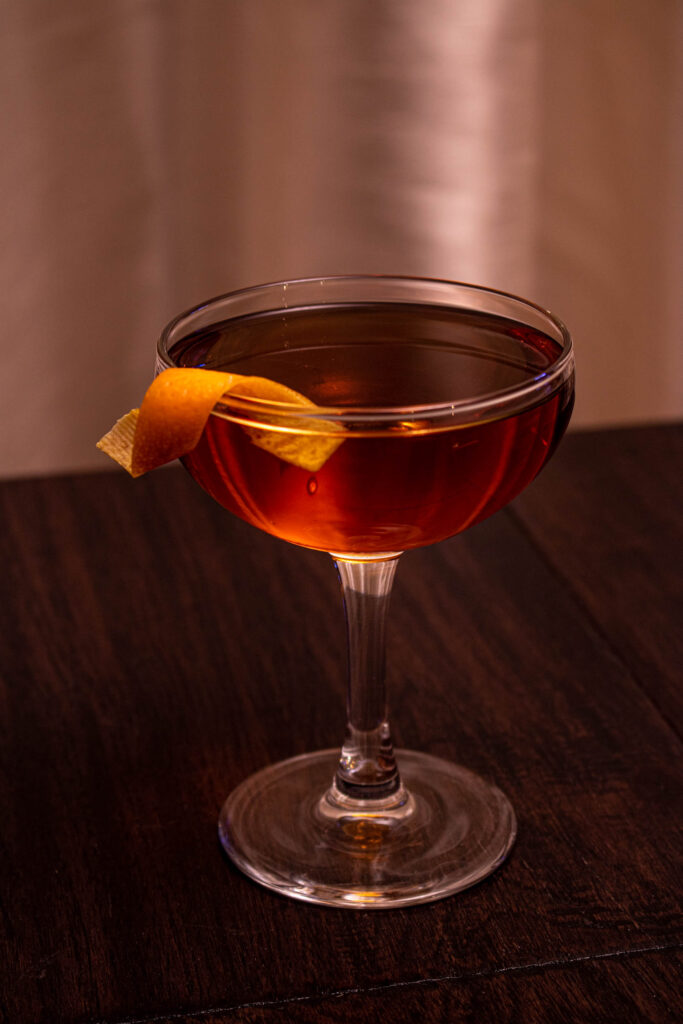
Let’s start with the obvious, you’re not buying this bottle make cocktails.  To a certain extent, there’s probably some group that would argue putting this in a Manhattan or Old Fashioned is sacrilege.  All that said, if you own one, it’s your bottle, and you should enjoy it as you see fit.  So here’s what I think of it in the one Manhattan I made.

Is it a good Manhattan?  Oh god yes.  Is it 3-4 times better than a $30 – $50 bottle of whiskey?   No, not even remotely.  You’d have to be out of mind to be making Manhattans or Old Fashioneds with it.  The flavor is explosive with juicy cherries, spiced oak, and caramel.  The notes of nuts and black tea are absolutely present, and it fights with some of the herbal character of the vermouth, explaining to pretty much every other element in the drink that is the superior element.  The spicing and brown sugar flavors are so intense that it actually manages to pull off the same length of finish it does in the Glen Cairns glass.

To date, this is the most expensive Manhattan I’ve ever made, and was delicious.   I do not however recommend you use Little Book for this purpose.

In Review – Little Book Chapter 5: The Invitation

Little Book Chapter 5: The Invitation Label

Little Book Chapter 5: The Invitation is one of the best whiskeys I’ve ever encountered.  This sort of bottle is obviously not a stock it and keep it around for making drinks sort of thing, but it is an incredible offering if you can manage to find it.  One of those, words-fail-you sort of offerings that you keep for special occasions.  Even at $125, there’s a lot of value here and you should try it if you get an opportunity.


Posted in Bourbon, Spirits, WhiskeyTagged Clermont, Jim Beam, Kentucky, Little Book1 Comment on Little Book Chapter 5: The Invitation

The Classics: Hanky Panky

Posted on February 14, 2022February 13, 2022 by Nick
The Classics: Hanky Panky

Hanky Panky

The Hanky Panky originated at the Savoy Hotel under the leadership of head bartender Ada Coleman between 1903 and 1926.  Reportedly, the drink was made for an actor, Charles Hawtrey, who exclaimed, “By Jove! This is a real hanky panky”.  The name stuck, and the drink ended up in the Savoy Cocktail Book.  While the original cocktail called for equal parts dry gin and sweet vermouth, most modern variations have upped the gin to move the end drink into something that more closely resembles a Negroni than a Manhattan.  With the flavors in question though, either camp should consider giving this one a try.

Hanky Panky

Hanky Panky
2 oz
London Dry Gin
1 ½ oz
Sweet Vermouth
¼ oz
Fernet Branca
1
Orange Twist
Combine all ingredients in a mixing vessel. Add ice and stir. Double strain into a chilled coupe. Garnish with an orange twist.

The herbal notes of the gin compliment nicely with the fruitiness and nutty character of the vermouth.  The stronger, alpine bitter herbs and the touches of mintiness bring a unique complexity to the mix.  The result is something that isn’t completely off base for lovers of Negronis or Manhattans, but cranks the complexity up to 11.

Drink Notes & Recommendations:

The balance in the Hanky Panky is tricky due to the dependency of the amount of Fernet Branca with the sweetness of the vermouth.  That said, if you are between an eighth and a quarter of an ounce, you should be quite happy with the results.  To a certain degree this depends on your vermouth, with something complex like Carpano Antica being able to stand up to more Fernet.  A lot of this will be personal preference, and your mileage may vary.

  • Gin – A firm London Dry is going to work best here, standing up to the Fernet and working with sweet vermouth nicely.  We used Beefeater, but would also recommend trying this with Tanqueray or Bombay Sapphire.
  • Sweet Vermouth – A complex vermouth like Carpano Antica plays well here, but you could also lighten things up something more easy going.  The key will be to adjust the balance by bringing the amount of Fernet up or down based on preference.
  • Fernet Branca – This Italian digestif is not everyone’s favorite flavor.  It’s bitter, it’s herbal, it’s kind of minty, and very polarizing.  If you’re not sure if you enjoy it, we recommend you make your first past at this cocktail at 1/8 of an ounce (.125 oz) to determine your enjoyment level.  You can also use other Fernets if you happen to find this drink to your liking.
  • Glassware –   It is appropriate to serve this drink in either a coupe or Nick & Nora.
Posted in Classic Cocktails, CocktailsLeave a Comment on The Classics: Hanky Panky

Great King Street Artist’s Blend

Posted on February 11, 2022July 25, 2022 by Nick
Great King Street Artist’s Blend

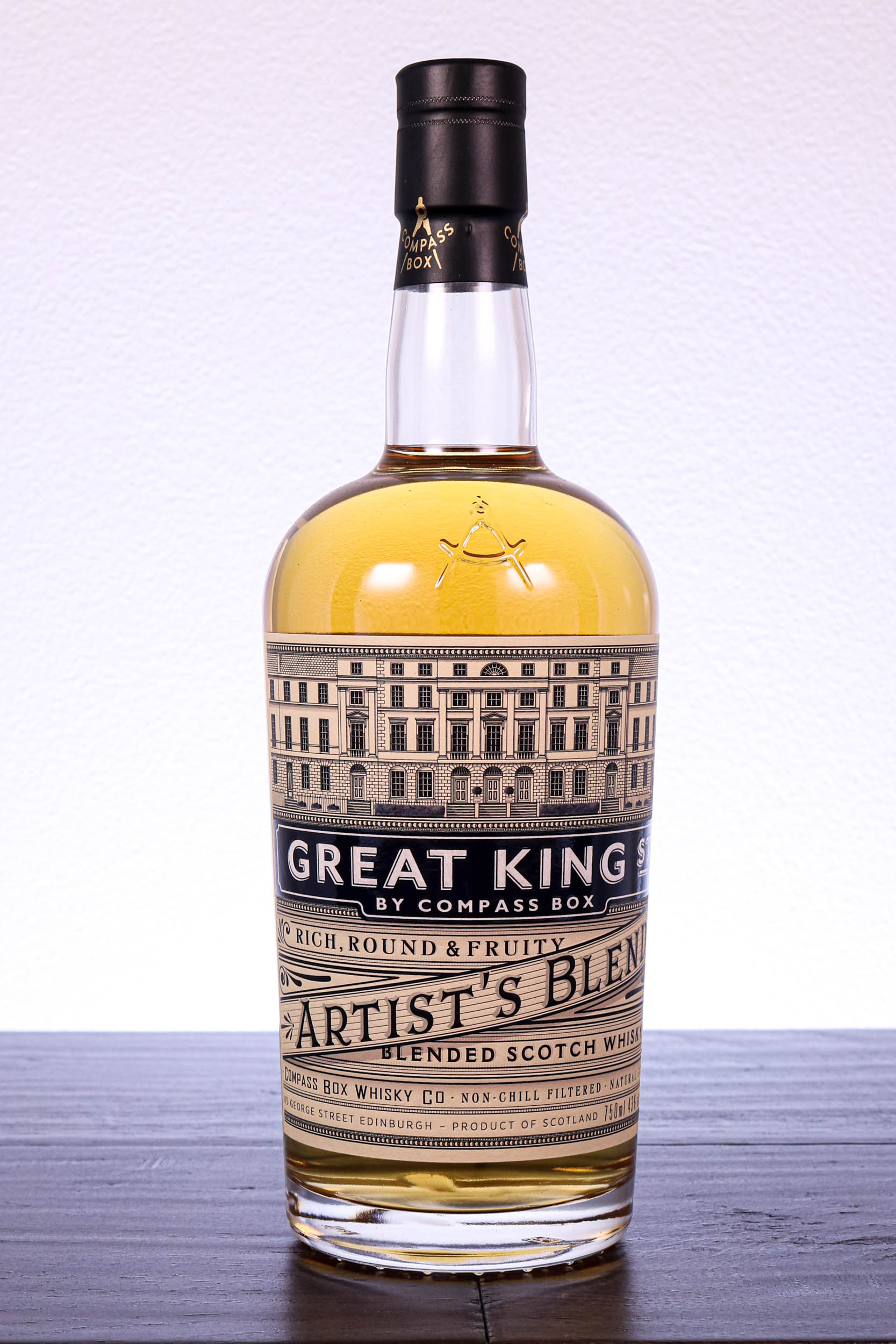
Great King Street Artist's Blend Bottle

Compass Box is well known for some of the more interesting blends in the past couple decades, including their Peat Monster and Hedonism.  What some individuals don’t know is that Compass Box also offers a truly affordable daily drinking / cocktail scotch in their Great King Street Artist’s Blend.

Great King Street Artist’s Blend

Great King Street Artist’s Blend is a high malt (55%) blend that comes from a one-hundred year old recipe.  It is non-chill filtered and has no added coloring.  Like many scotches, over 70% of the blend is first fill bourbon barrels, but it also has influence from French oak and sherry barrels.  A high amount of the blend is also single malts at 40% of the blend.  All of this adds up to theoretical quality, but how does it taste?

Sight:  A pale gold fringing into summer corn color.

Smell:  The nose starts off with barrels of green apples and pears.  Notes of caramel and sugar come through, giving a delightful candied note to the apples.  There’s a bit of pie like cooked notes that come through, and are leaning into hints of baked oat crumble.

Sip:  The start is smooth and rich as things start out.  Warm notes of caramelized apples and baking spices come out off the bat.  There’s a gradual lean into cereal notes and more green pears / apples.    There’s a bit of nutty vinous note that comes in toward the start of the finish.

Savor:  The finish is nutty and laden with apples and cereal grains.  The finish coats the palate and continues on, giving a little spice as it goes.

Great King Street Artist’s Blend is a beautiful, yet simple scotch.  The flavors of fresh apples and spice compliment richly against the cereal grain elements.   Combined with the balanced and lingering finish, it ends up being easy to drink but in no way boring. The final result is inviting and smooth enough to drink on its own, but also stands up to water, ice, or other flavors.

In Cocktails

In a Highball the apples and cereal notes wake up and bring out slight touches of orange.  The carbonation and minerals bring forward some of the earthier notes in blend – possibly emphasizing some of the oak influence with a touch of vanilla and spice.  The result is super drinkable, and easy going.  In a Rusty Nail it keeps the apple and pear flavors at the forefront, while the touches of spice balance well against the herbs and sweetness of the Drambuie.  Overall, it works fantastically in both applications, standing up to the strong flavors of the Drambuie while also showing it’s ability to be subtle in the highball.

In Review – Great King Street Artist’s Blend

Great King Street Artist Blend is one our favorite choices for a home cocktail bar due to its ability to work both in cocktails and on its own.  The flavors are quintessential scotch, but also refined and elegant.  At a price point between $30 and $40, it’s absolutely worth keeping on your shelf.  If you haven’t tried Artist’s Blend yet, you’re missing out on a great scotch that’s also a great value.

Posted in Blended, Scotch, SpiritsTagged Compass Box, Scotland2 Comments on Great King Street Artist’s Blend

Valentine’s Day 2022: Flowers Are Expensive

Posted on February 7, 2022February 10, 2022 by Nick
Valentine’s Day 2022: Flowers Are Expensive

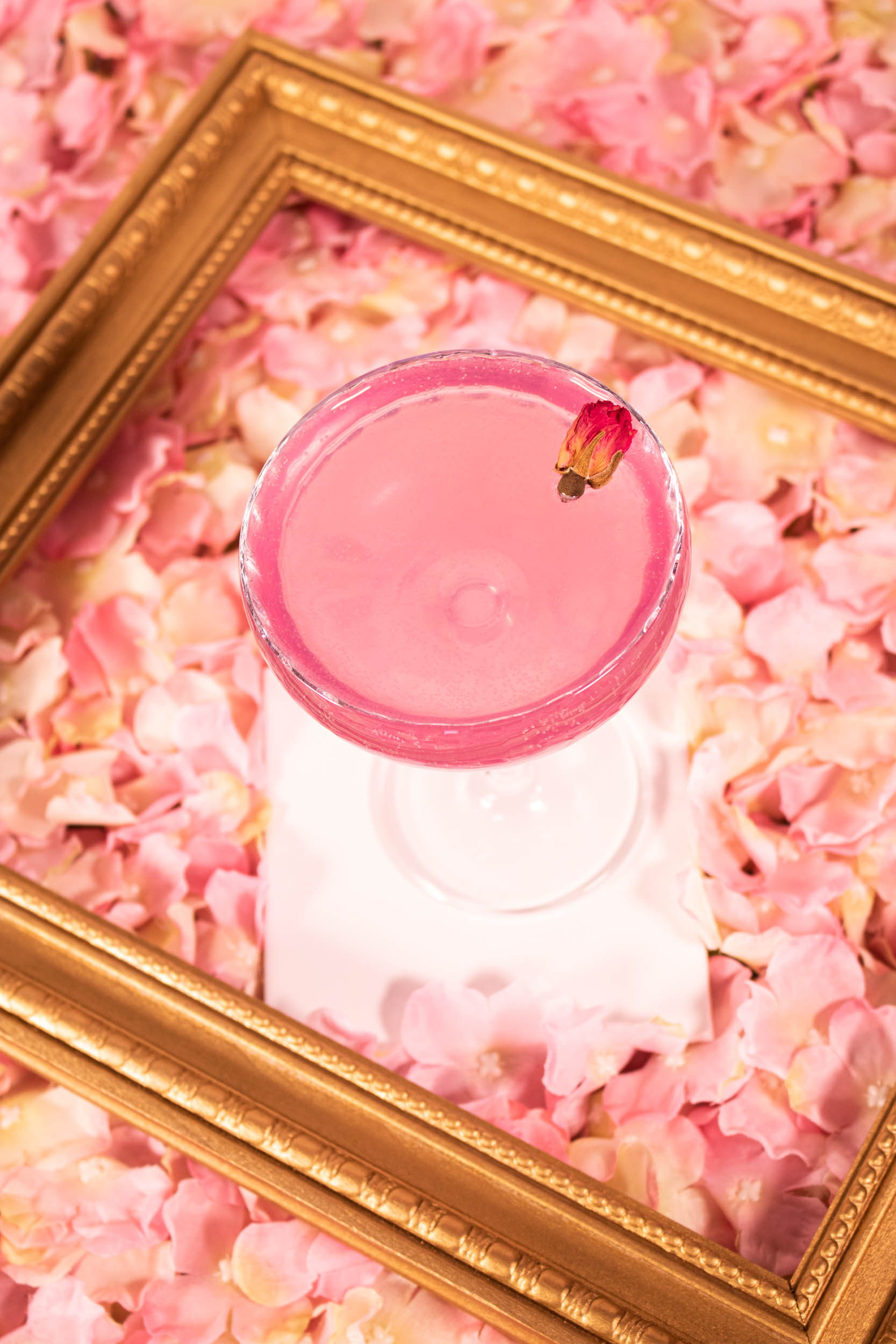
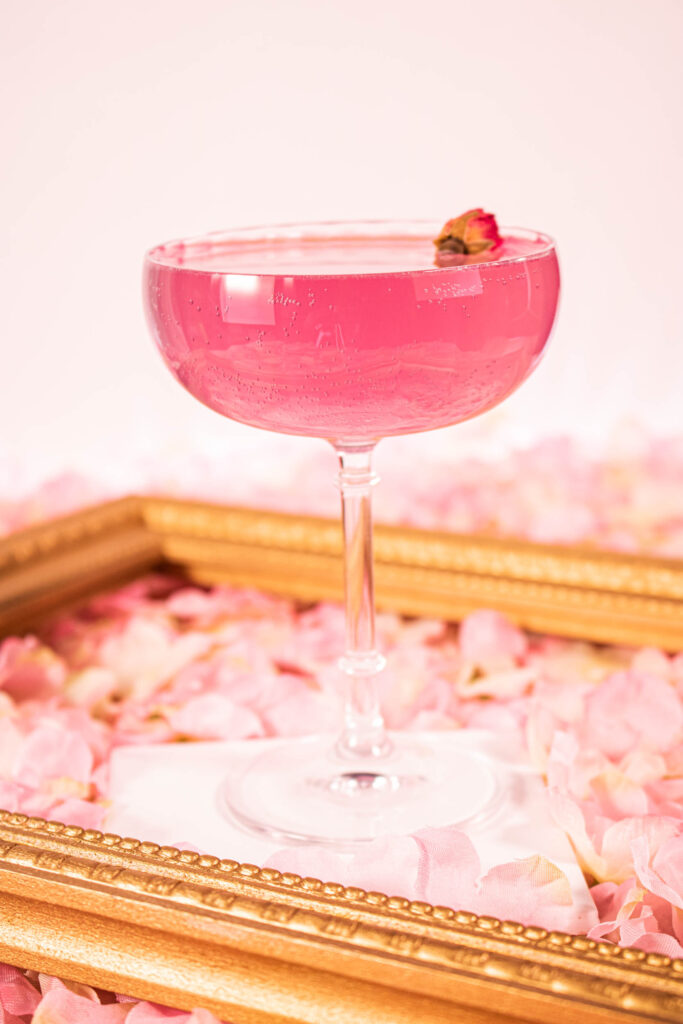
Flowers Are Expensive Cocktail

Valentine’s Day is all about celebrating love, and one of the most well recognized symbols of love is the rose.  As precedes their association with love, roses are sold by the dozens for those seeking to curry their lovers favor.  This of course means a huge demand for roses – in February,  a month where growing seasons are short.  This means that there’s a limited number of local roses that are produced, so some flowers are imported (and as living things, require air freight).  The added demand means that there are more florists who need to be hired and paid.  After all is said and done the price goes way up, and the flowers are expensive.

Flowers Are Expensive

Flowers Are Expensive
1 ½ oz
Empress Gin
½ oz
St. Germain Elderflower Liqueur
½ oz
Lemon Juice
5 oz
Asti Spumante
Combine all ingredients except the Asti into a shaker and add ice. Shake and double strain into a large coupe. Top with Asti Spumante. Garnish with a rose bud or petal.

Flowers Are Expensive is a delicate and dainty drink that’s both refreshing and lively.  The rose notes of the Empress Gin come out in an elegant flow to meet the round and friendly pops of elderflower from the St. Germain.  The lemon pops the brightness of both, and the Asti provides a bouquet of peach and spring flower blossom notes.   The end is a sweet and sparkling drink that’s simple but layered in it’s character, and is great for entertaining or simply sitting on your deck and chilling.

Drink Notes & Recommendations

Flowers Are Expensive Cocktail

Like all our drinks, we do significant testing to make sure that the cocktail works out well.  For Flowers Are Expensive we actually started with hibiscus syrup and after multiple iterations ended up at St. Germain.  That said, if you’re willing to take the time and energy, we still fully recommend trying it with a half / half split, which will post the recipe for below.

  • Empress Gin – We chose Empress Gin for more than just it’s color.  The floral forward notes make it a wonderful compliment for both St. Germain and the Asti.  While you can use other gins, you’ll want to look for something more floral or contemporary like Aviation (or the now defunct Flower City).
  • St Germain Elderflower Liqueur – This is THE bottle when it comes to elderflower liqueurs.  It basically took over menus a decade ago, and it’s still got a place in most restaurants and bars.  We recommend going with St. Germain as we’ve found it to be consistent, but feel free to use another Elderflower liqueur if you can’t find it or already have a different elderflower liqueur in your home bar.
  • Lemon Juice – Use fresh squeezed for best results.  Check out our equipment for starting a home bar to find a recommended hand squeezer if you want to add one to your bar.
  • Asti Spumante – Don’t mistake Moscato d’Asti for Asti Spumante.  Moscato d’Asti can have light carbonation and is also delicious, but what you want is Asti Spumante, which is sparkling wine (think like Cava or Champagne) and has the cage on the neck to match.  We recommend Cinzano’s Asti Spumante here or Martini & Rossi Asti Spumante.  Both will add delightful floral notes, stone fruit flavors, and a subtle sweetness.
  • Dried Rose Bud – We’ve found our most reasonably priced source for these little rose buds is the local Asian market, but you can also buy them from Amazon*.

Variations:

To add another layer of complexity and increase the floral nature of the drink, reduce the St. Germain to ¼ and add a ¼ oz of Hibiscus Syrup.

Hibiscus Syrup

  • 300 g Water
  • 300 g Granulated Sugar
  • 12 g Dried Hibiscus Flowers

Place the dried hibiscus flowers in a tea sachet and close.  In a sauce pot, bring water and sugar to a simmer over medium-high heat.  Add the sachet containing the dried hibiscus flowers and boil for 5 minutes.   Remove from heat and remove the sachet.  Allow to cool before bottling.  Add an optional 30g of neutral grain spirit for preservative purposes if desired.  Refrigerate.  Dispose of if any mold or clouding develops.

* – This link is an Amazon affiliate link that may result in First Pour Cocktails receiving a portion of the sale of the item.  These sales help us keep the website running and bringing you new original cocktails.  As of this posting, we lose money every year, so please consider using our links when purchasing items related to our cocktails and reviews!  Thanks!


Looking for something more bourbon forward?  Why not try a Who Saz Men Can’t Be Romantic?

Who Saz Men Can't Be Romantic

Posted in Cocktails, Original Cocktails1 Comment on Valentine’s Day 2022: Flowers Are Expensive

Smith & Cross Traditional Jamaica Rum

Posted on February 4, 2022February 3, 2022 by Nick
Smith & Cross Traditional Jamaica Rum

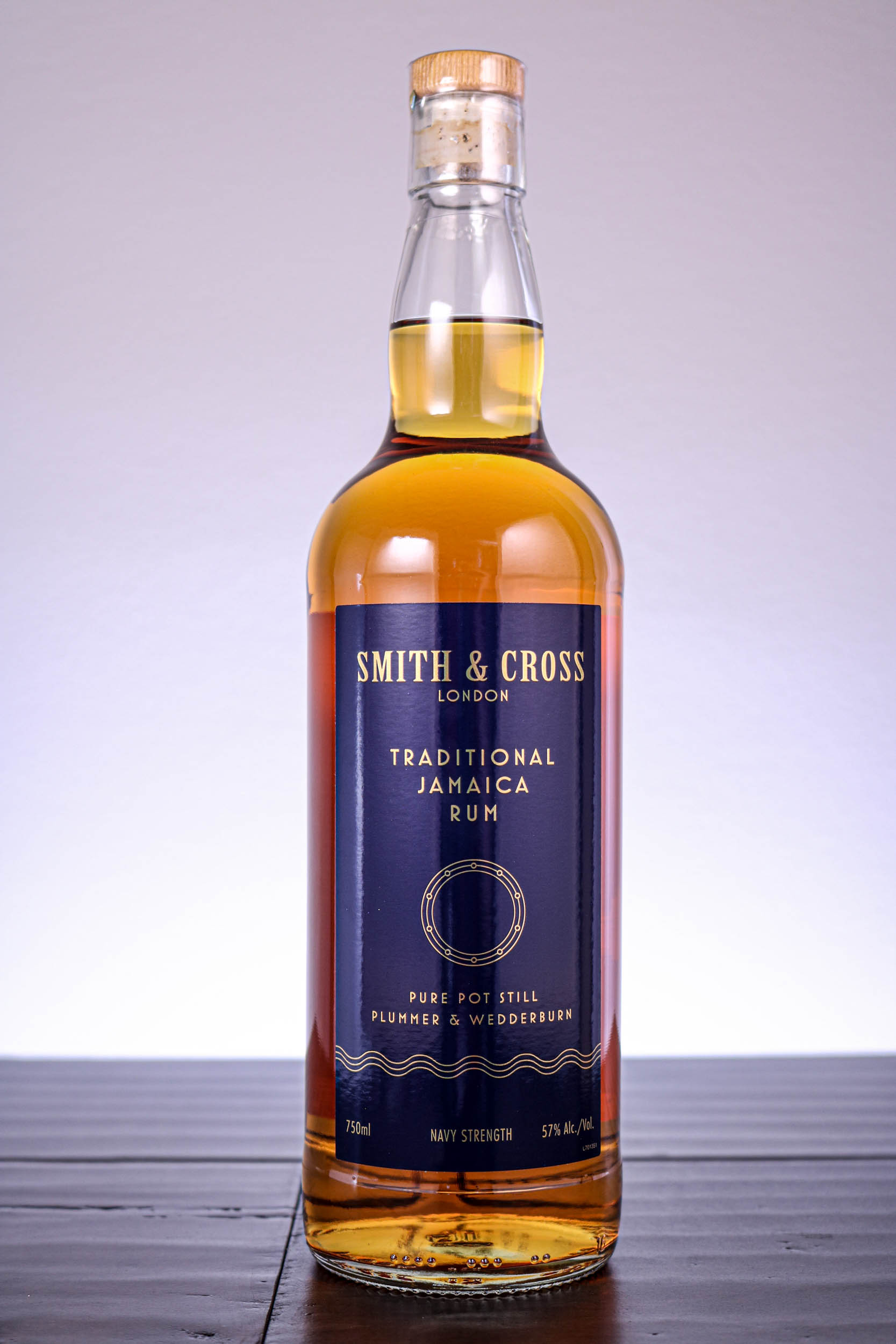
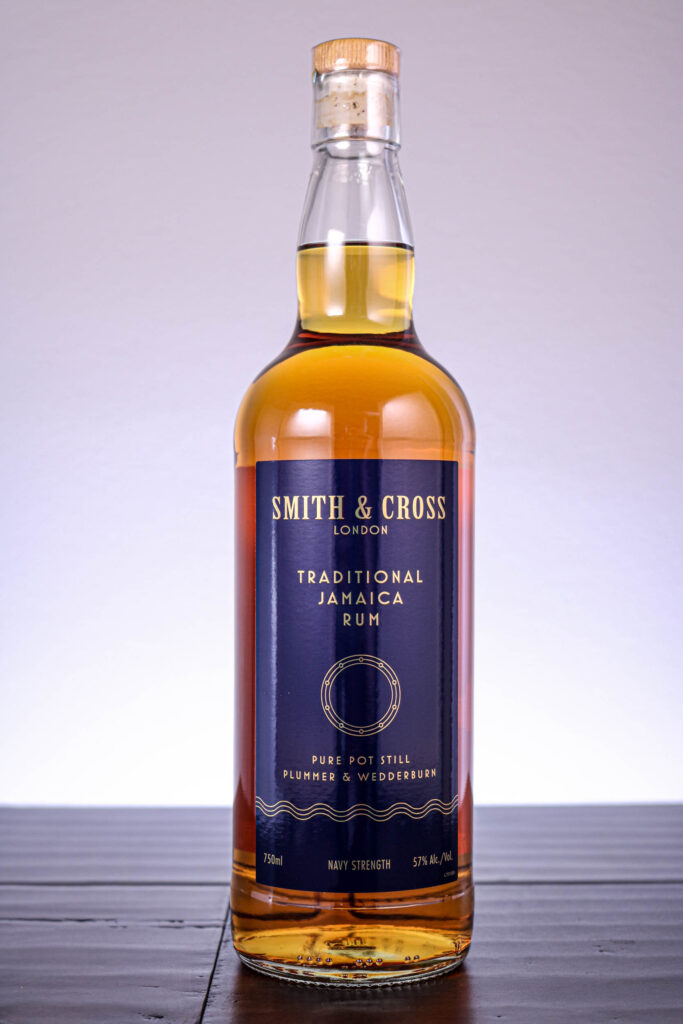
Smith & Cross Traditional Jamaica Rum Bottle

Smith & Cross Traditional Jamaica Rum has London on the label, but is actually produced by Hampden Estate in Jamaica.  The rum is produced from two separate pot stills, Wedderburn and Plummer.  One is purportedly barely aged, while the other purportedly spends 3 years in ex-bourbon barrels.  The result is a “Navy Strength” rum bottled at true proof (114 proof or 57% A.B.V.) that comes in at about $30.  While the proof lets you know your gun powder will still go off, is it worth loading your bar with this bottle?

Smith & Cross Traditional Jamaica Rum

Sight:  A beautiful bright gold with a tinge of orange throughout.

Smell: The proof is expressed from the nose in a way that informs you quite deliberately that you shouldn’t just shove your nose directly in.  Heat aside, heavily caramelized bananas, brown sugar, treacle, and various tropical fruits explode out of the nose.  The nose is deeply complex for the price, and conveys the esters that one associates with Jamaican rum.  Additional fruits begin to emerge, including apples, oranges, pineapples, guava, and fermented banana.

Sip:  The body is on the thin side, and is undeniably rather hot.  As the rum opens, there’s a song amount of spice that begins to expand including allspice, cinnamon, and cloves with a hint of powdered pepper.  Banana and grilled pineapple begin to emerge, and a load of caramel comes through.  Touches of molasses and brown sugar come forward as well.  Touches of oak are pervasive throughout.

Savor:  The ending is warm and spicy.  The fruitier notes get tangled in oak, and ultimately the full cadre of esters come out to hang around on a rather long finish.

Smith & Cross Traditional Jamaica Rum has an amazing nose and delivers quite a bit of flavor for the price.   While it would be rough to sip for an extended duration, it displays a ton of flavor.  The caramelized notes run throughout, and the fruitiness is inviting.   These flavors provide a good base to consider Smith & Cross for cocktails.

In Cocktails

In a daiquiri Smith & Cross Traditional Jamaica Rum simply sings.  The flavors of banana and grilled pineapple explode outward thanks to the brightness of the lime.  The spices kick things into overdrive, adding clove and allspice notes while a subtle caramelized sweetness hangs out in the background.    The oak is there, but the finish keeps things balanced as tropical fruit and esters hold their own.  As it warms, it even gets a sweet up tick at the end.  The result is a complex and layered daiquiri that’s simple to make.

In Review: Smith & Cross Traditional Jamaica Rum

Smith & Cross Traditional Jamaica Rum is one of our favorites.   Not only does it deliver flavor in droves, it also won’t break the bank.  Those beginning their rum journey might find this one a little hard to take (thanks to the incredible mix of flavors and high proof), but we encourage you to try it anyways.  It can show you the next step in your rum journey without costing you an arm and a leg.  In addition, it makes a killer rum for tikis, especially if you want to use it as one of multiple rums in a cocktail.  Smith & Cross is worth your time, and you should consider it for one of your next rums.

Posted in Jamaican - Lightly Aged, RumTagged Haus Alpenz, Jamaica, London, Pot Still, Smith & CrossLeave a Comment on Smith & Cross Traditional Jamaica Rum

Valentine’s Day 2022: Who Saz Men Can’t Be Romantic?

Posted on January 31, 2022February 10, 2022 by Nick
Valentine’s Day 2022:  Who Saz Men Can’t Be Romantic?

Who Saz Men Can't Be Romantic

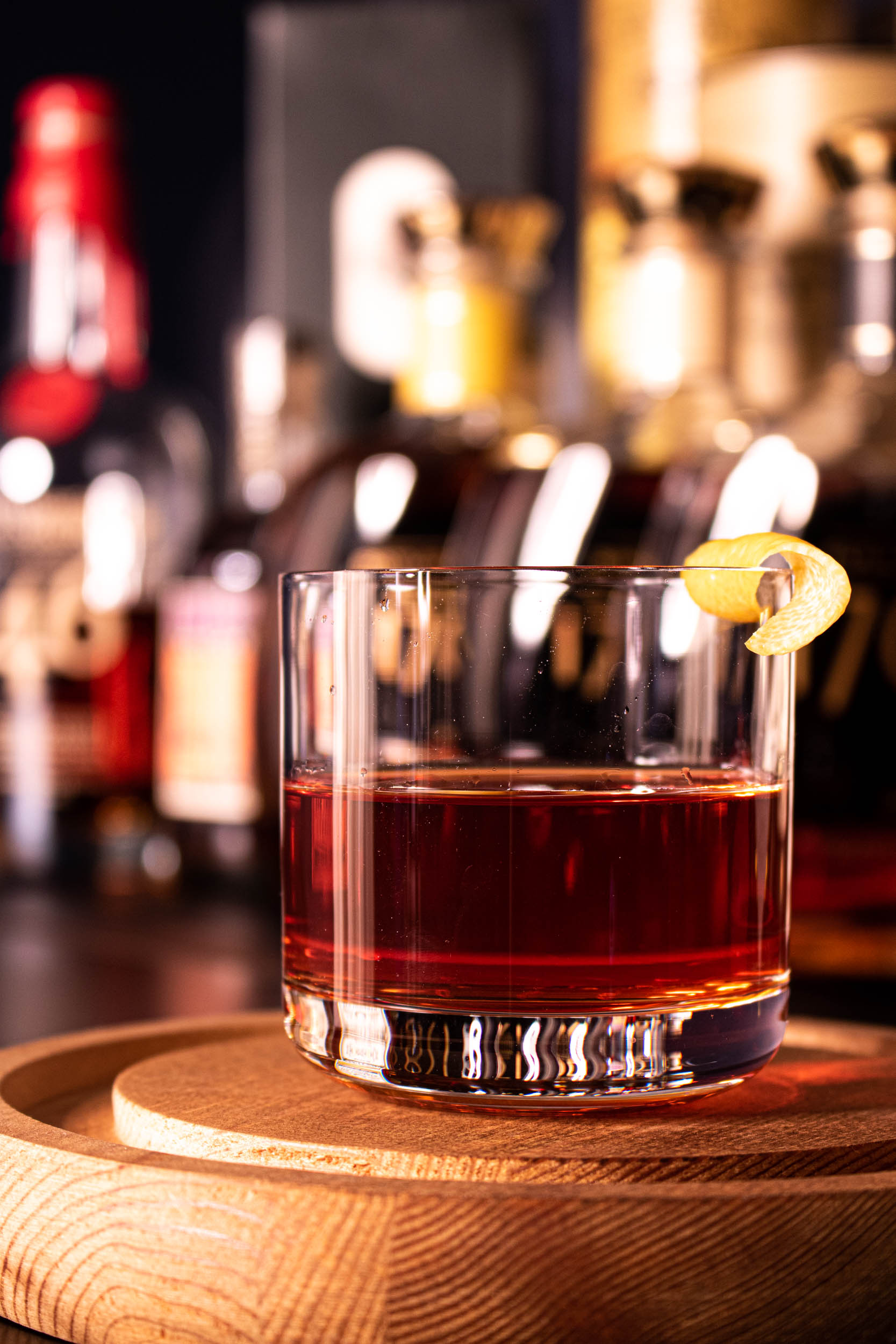
Welcome to our annual return to Valentine’s Day cocktails!  Over the past two years, we’ve created a handful of drinks to help enhance your romantic celebration.  We started with some riffs on a Love Potion using rum, before turning our attention to chocolate vodka with lots of strawberries in our Chocolate Covered Strawberry.  The syrup even doubled for mocktail purposes in our Chocolate Covered Strawberry Hot Chocolate.  We wanted to expand the line up, and to lead things off this year, we wanted something boozy that could stand up to the frigid temps with a little bit of sweetness. A real whiskey forward manly drink.  After all, Who Saz Men Can’t Be Romantic?

Who Saz Men Can’t Be Romantic?

Who Saz Men Can’t Be Romantic
2 oz
Maker’s Mark 46
¼ oz
Brown Sugar Syrup
2 Dashes
Peychaud’s Bitters
1 Dash
Angostura Bitters
Rinse
St. George Absinthe Verte
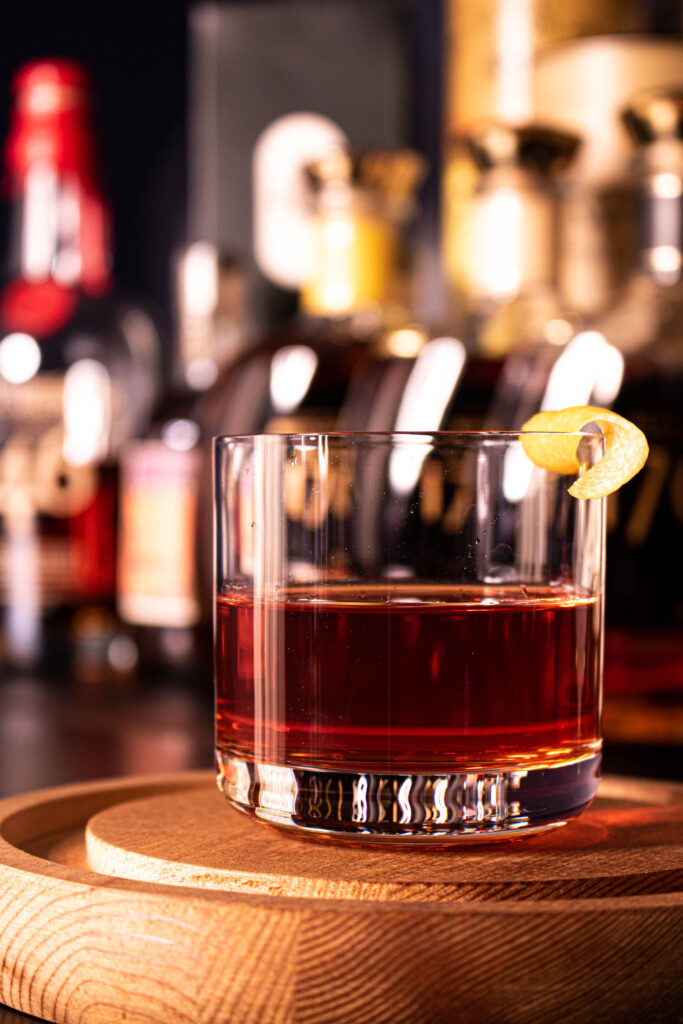
Rinse a chilled rocks glass with St. George Absinthe Verte. Dispose of the excess or set aside in a glass for later use. Combine all remaining ingredients in a mixing vessel. Add ice and stir. Double strain into the absinthe rinsed rocks glass. Garnish with a lemon twist.

Who Saz Men Can’t Be Romantic is a layered experience that leads with a brown sugar and french vanilla sweetness.  It parts into a lanolin texture with notes of spicy oak and caramel with hints of candied cherries.  The ending brings on a balanced touch of bitterness, rounding things out with a pop of clove, herbs, hints of anise, and a bit of sweetened caramelized oak.   The overall experience is sweet, herbal, balanced, and complex in all the right ways.

Drink Notes & Recommendations

The original inspiration for this cocktail turned out to be anything but romantic (Rolling Stone’s Brown Sugar – which has since been retired and is not particularly appropriate once you read the lyrics).   That aside, there’s a certain charming character to the city of New Orleans which is named in the first couple of lines.  One of the quintessential drinks that hails from The Big Easy is the Sazerac, which is an amazing classic that we’ve tweaked slightly for this recipe.  One thing to note is that ingredient choices are very critical to the outcome of the finished cocktail.

  • Maker’s Mark 46 – The vanilla and caramel notes are positively critical to the outcome of this cocktail.  While you should be able to find it, you could try to replace it another French oak finished bourbon.
  • St. George Absinthe Verte – We like St. George for it’s quality and heady herbaceous hit.  You don’t need to St. George, but we recommend using an actual absinthe over a pastis like Pernod.
  • Peychaud’s Bitters – These are the standard for any Sazerac.  You can purchase them at most well appointed liquor stores or through Amazon*.
  • Angostura Bitters – These are the gold standard of bitters.  You should have a bottle in your bar, and you can purchase them most grocery stores or Amazon*.
  • Brown Sugar Syrup – The brown sugar syrup is a rich syrup, and we’ve detailed our recipe as shown below.

Brown Sugar Syrup

  • 200 g Brown Sugar
  • 100 g Water

Instructions:

  • Sous Vide: In a small mason jar, combine brown sugar and water.  Put the lid on and shake to combine. Place in a sous vide at 145 degrees for 2 hours.  Remove from the water and allow to cool for an hour.  Bottle and refrigerate.   Dispose of if mold or haze develops.
  • Sauce Pot: Combine Brown Sugar and Water in a sauce pot over medium – low heat. Slowly heat until sugar completely dissolves. Remove from heat, and allow to cool. Bottle and refrigerate. Dispose of if mold or haze develops.

* – Amazon links contain affiliate links that may result in First Pour Cocktails receiving a portion of the sale.  These commissions help us keep researching new drinks and pay for the webhosting!


Looking for something more sweet and floral?  Why not try a Flowers Are Expensive:

Flowers Are Expensive Cocktail

Posted in Cocktails, Original Cocktails1 Comment on Valentine’s Day 2022: Who Saz Men Can’t Be Romantic?

Maker’s Mark 46

Posted on January 28, 2022February 7, 2022 by Nick
Maker’s Mark 46

Maker's Mark 46 Bottle

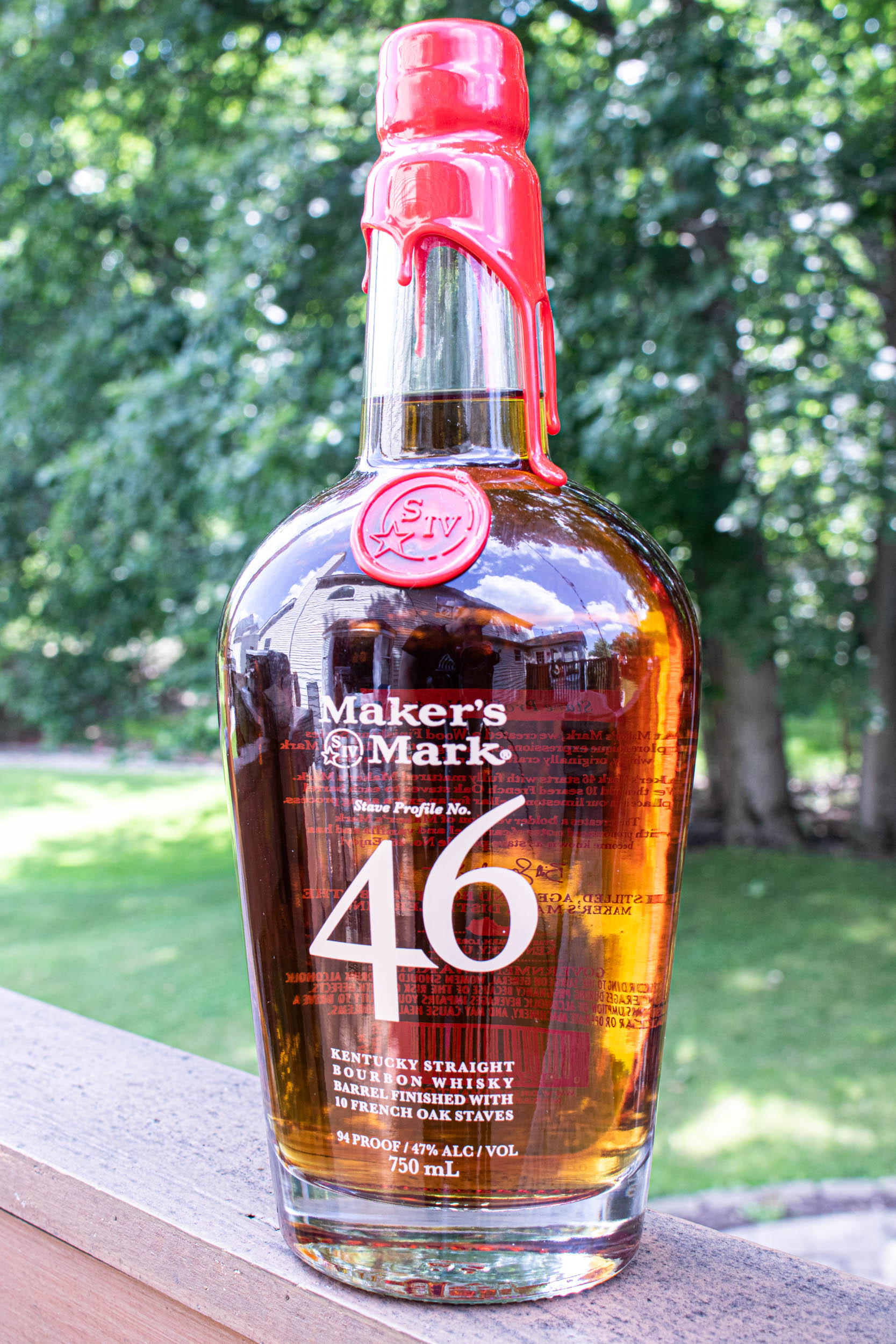
To the unfamiliar observer Maker’s Mark 46 appears to just be the next step up the line in Maker’s line up of bourbons.  While it does represent an increased cost to purchase, Maker’s 46 should be considered an extension of the standard Maker’s Mark line up, and their entry point into their wood finishing series.  Instead of changing their base recipe, 46 takes fully matured Maker’s Mark and then continues to age it with 10 virgin French Oak staves added to the barrel.  The result is Maker’s Mark, but with a French oak twist.  So is it worth the extra price?

Maker’s Mark 46

Sight:  A burnished chestnut color.

Smell:  French vanilla coffee and fresh baked pastry leads off, followed by jammy cherries.  There’s a certain amount of creaminess here that gets paired with caramelized brown sugar and notes of crème brulee. Hints of banana, leather, cigar box, and spicy oak play background.

Sip:  The sip leads of smooth and silk, but quickly becomes firm and slightly warm.  There’s a pop of smoked vanilla and latte that explodes out.  The French vanilla combines with oak and baking spice.  A lazy caramel drizzles its way through, lavishly coating things, while a slightly smoky preserved cherry hides in the background.

Savor:  The ending preserves that smoked vanilla cherry note, while adding in some toasted oak and caramelized sugar (with just a hint of charred marshmallow)

Maker’s Mark 46 is beautifully French oak polished Maker’s Mark.  There’s a lot going on here beyond the normal cherry, tobacco, and oak of ordinary Maker’s.  Specifically, it pops with French vanilla, coffee notes, and other toasted wood elements.  The addition of caramelized sugar notes bring a subtle sweetness.  Maker’s 46 is lovely on it’s own, and reasonably priced for the additional complexity.

In Cocktails

In a Manhattan Maker’s Mark 46 adds a variety of vanilla and caramel notes immediately out of the gate.  The vanilla almost becomes floral, like a vanilla bean.  It then balances back out, allowing touches of cherries and baking spice to join in.  Brown sugar and almond notes accentuate and have a hint of bitterness.   Texturally it’s still rich, but more balanced throughout and the ending avoids being tannic.

In Review – Maker’s Mark 46

Maker’s Mark 46 is a clearly step up and departure from its sibling.   While it does deliver additional flavor, the flavor is much more focused on the traditional vanilla notes associated with French oak influence than creating deeper version of the original Maker’s Mark.  In doing so, they’ve created a separate but related product that maintains its quality and is both a very good bourbon and great finished bourbon.  Its amazing flavor also plays well in classic cocktails and adds another dimension for crafting new items.  While it isn’t a must have for a bar, it is a must try for any fan of French oak aged wines, vanilla fans, or Maker’s Mark fans.  For only $8-10 more, it’s certainly worth a try.

Posted in Bourbon, Finished Bourbon, Spirits, WhiskeyTagged Kentucky, Loretto, Maker's Mark, Maker's Mark 461 Comment on Maker’s Mark 46

The Classics: Rusty Nail

Posted on January 24, 2022January 27, 2022 by Nick
The Classics: Rusty Nail

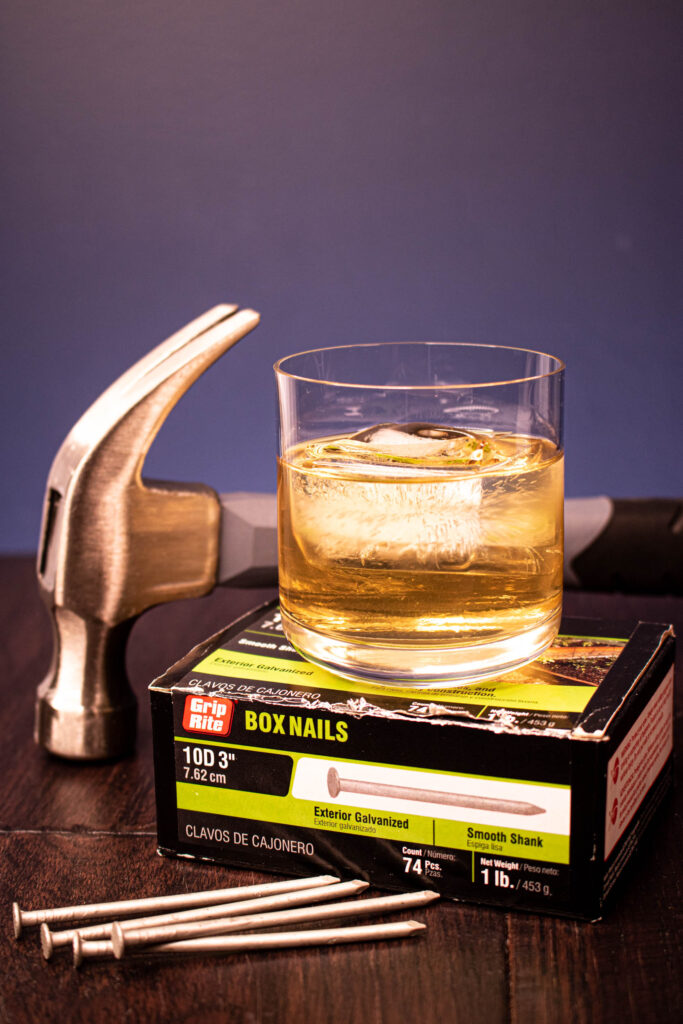
Rusty Nail Cocktail

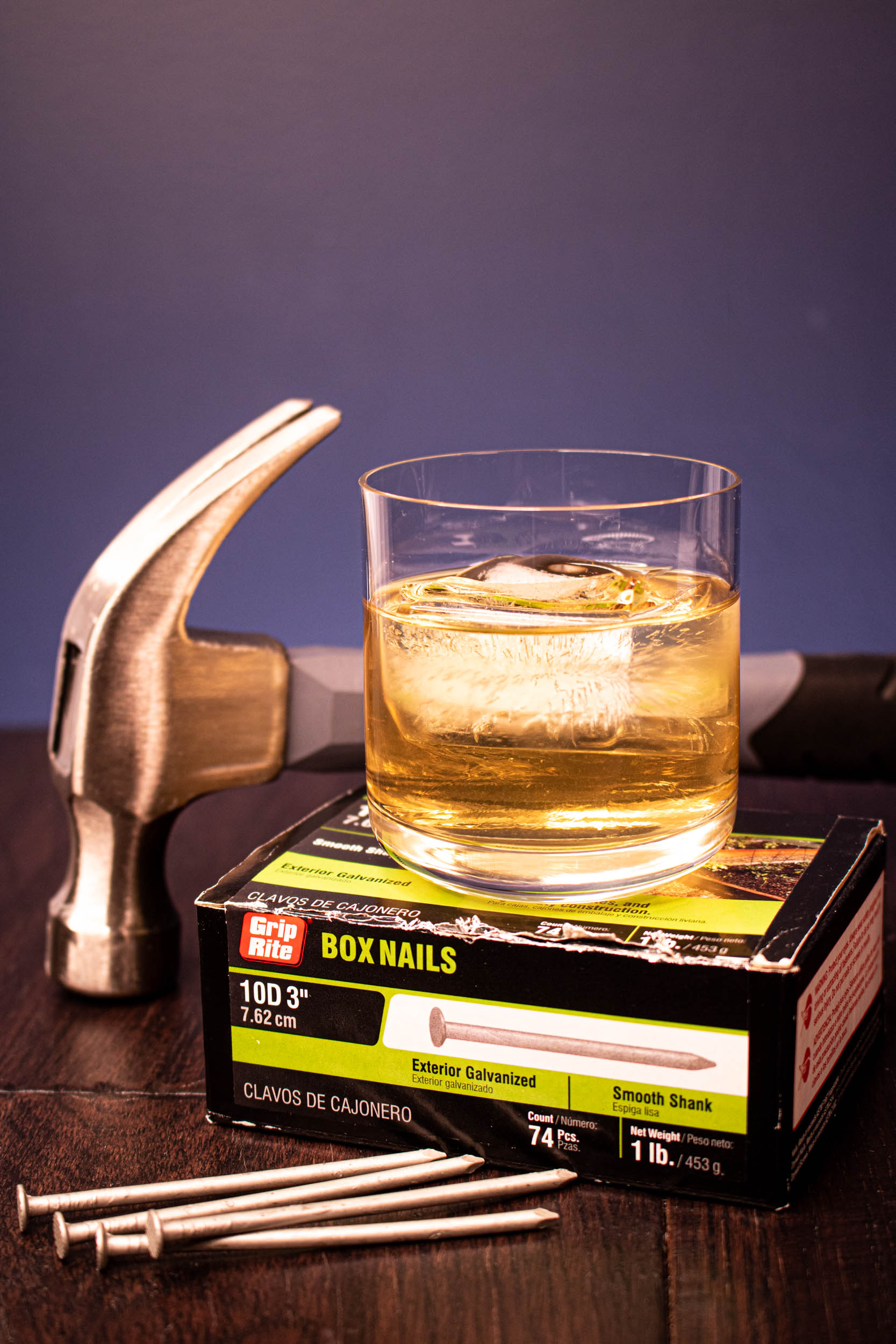
The Rusty Nail is yet another cocktail that seemingly explodes out of nowhere and enjoys a (in cocktail terms) long run of popularity.  It shows up somewhere between 1940 and 1950, before being introduced to the Rat Pack.  The result was people across the country enjoying Rusty Nails, before suddenly, they disappear from restaurant menus and cocktail drinker’s minds.  Which is a shame, because as classics go, this simple two part recipe of scotch and scotch based liqueur has a lot going for it to keep you coming back.

Rusty Nail

Rusty Nail
1 ½ oz
Scotch
¾ oz
Drambuie
Combine all ingredients in a mixing vessel. Add ice and stir. Strain into a rocks glass over a large fresh ice cube. No garnish.

The Rusty Nail is a classic cocktail that balances rich and sweet beautifully. The scotch provides cereal notes, earthy touches, hints of smoke, and notes of pome fruit. The Drambuie kicks it into high gear with more floral notes from the heather, baking spices, orange peel, and marmalade. The result is complex and warm cocktail, with a strong backbone and smooth, rich, mouth feel.

Drink Notes & Recommendations

I have an old love of this drink from my days late in college.  It has a complexity that varies with the scotch applied, but yet conveys a certain sophistication without being overwhelmingly boozy and aggressive.  Perhaps the only debate with the Rusty Nail is ratio. While the original spec is 2:1, 1:1 ratios aren’t uncommon (although they are quite sweet). Some modern interpretations go the other way, recommending a drier, more scotch forward 4:1 ratio. Our recommendation is that you start with the original recipe listed here, before adjusting to taste.

The simplicity of this drink also makes it a good drink for those experimenting with scotch or cocktails. If a bar has Drambuie, they can make this drink.  At only two ingredients it’s also a great beginner cocktail that demonstrates how a drink can be more than the sum of it’s parts.

  • Scotch – Scotch makes up over 60% of this drink, so the choice of scotch matters.  In general, Drambuie works better with lighter, less peat heavy scotches.   These scotches allow the floral notes to shine, while also giving room for the spice and orange to tease more out of the scotch.  We would recommend Glenlivet 12, Great King Street Artist’s Blend (which we used for this Rusty Nail), or Dewar’s White Label.
  • Drambuie – Drambuie is a scotch based liqueur that gives off floral, honey, spice, and orange notes.  There aren’t a lot of scotch based liqueurs that are widely available, so Drambuie is probably your best bet.  The flavor profile might be closest to Benedictine, but it won’t be nearly as good as Drambuie in this drink.  Use the original spec whenever possible for best results.
Posted in Classic Cocktails, Cocktails1 Comment on The Classics: Rusty Nail

Grey Goose Vodka

Posted on January 21, 2022January 2, 2022 by Nick
Grey Goose Vodka

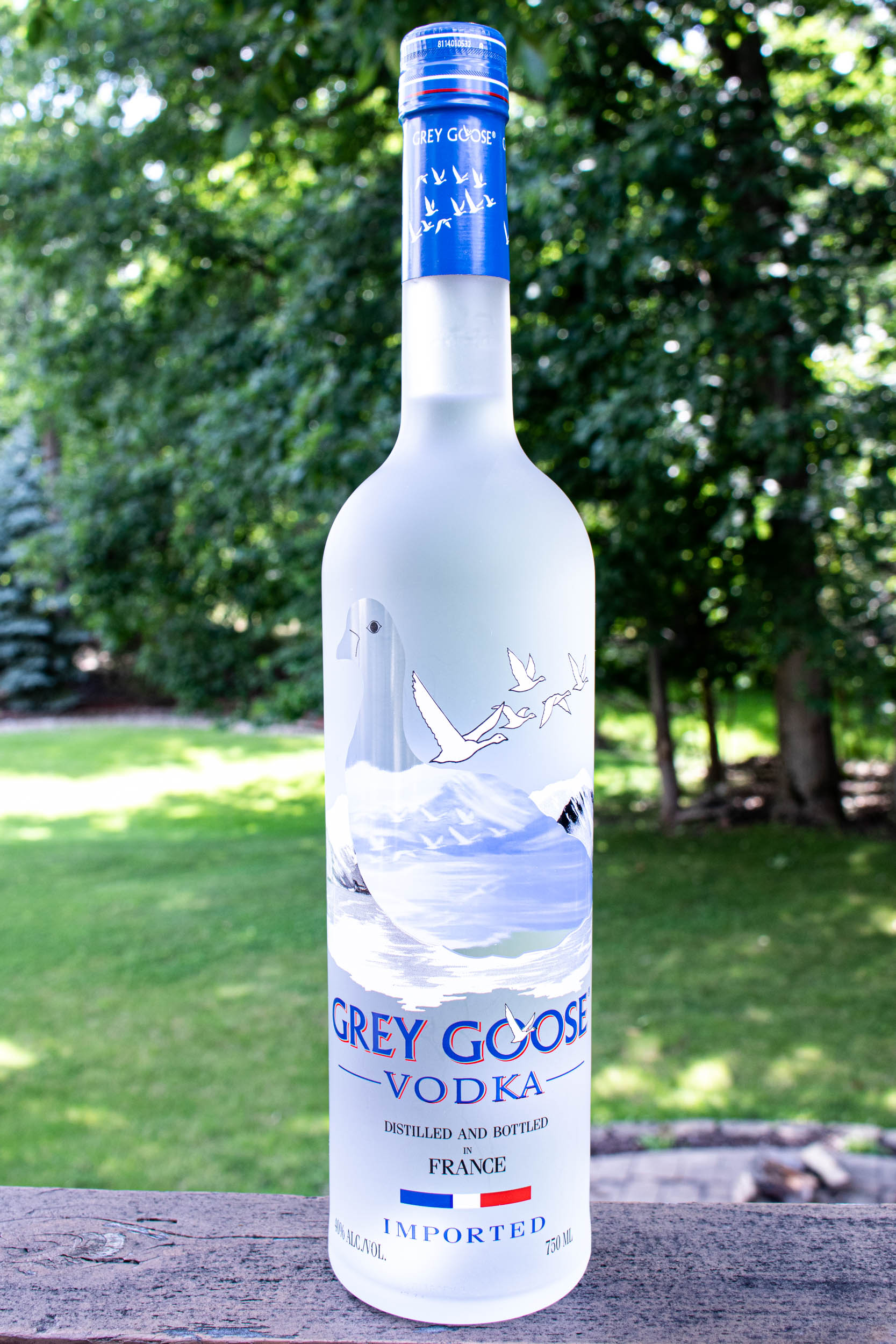
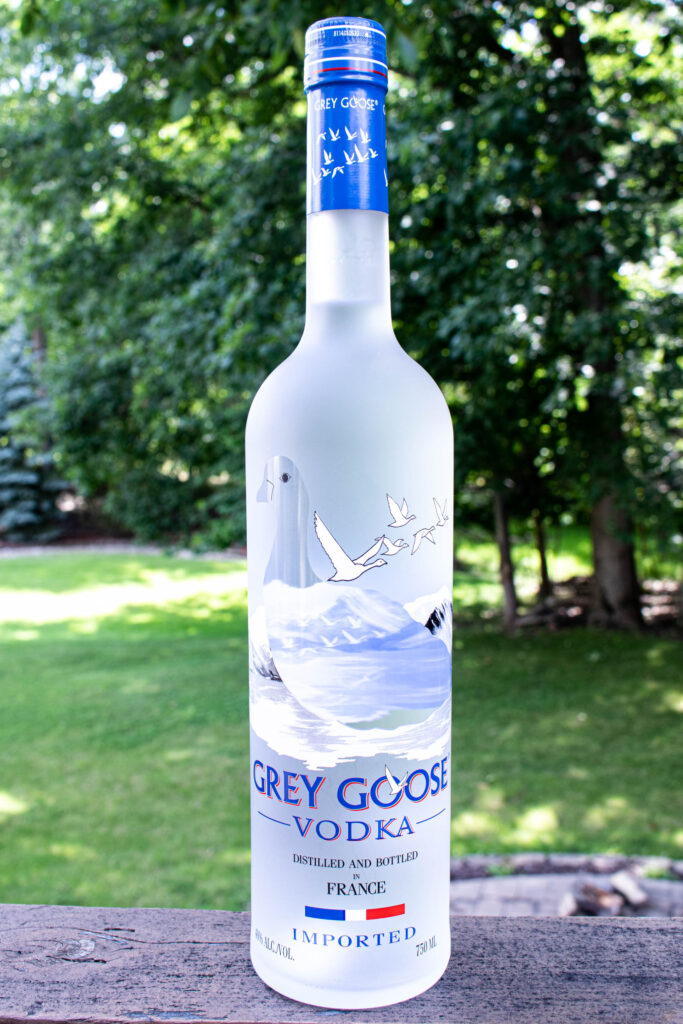
Grey Goose Vodka Bottle

Grey Goose Vodka is a status symbol.  Walk into any bar, and you’re likely to find it on the top shelf.  The marketing obviously work, as folks that you used to grab Svedka or Stoli suddenly reached upward to a trend avian based vodka.  It didn’t just grab vodka fans either.  Beer drinkers like my father gradually moved toward martinis from what was mostly beer.  As much fun as it is to discuss the malaise of chilled glasses of Grey Goose (keep that vermouth away from my [vodka] martini!), Appletinis, and Cosmopolitans – these were critical steps to revitalizing cocktails.  So was Grey Goose worth the expense?

Grey Goose Vodka

Grey Goose’s origin story is that it’s an effort to make a French vodka unlike any other.  They accomplish this by using winter wheat from France and water from their spring in the Cognac region of France.  So does it make it better?

Sight:  Clear

Smell:   The nose is clean, presenting ethanol and a light about amount of vanillin and a light amount of cereal grain.

Sip:  The body is rich, lanolin, and has just a slight amount of sweetness.  The cereal and vanillin notes comes through once more with a hint of the wheat from the distillate.

Savor:  The ending has an ethanol note that lays heavily over the top of the vanillin and wheat notes before fading.

Grey Goose Vodka is clean, with few distracting flavors.   The lack of real burn or complex flavors is clearly the draw here.  It’s important to note that the texture is also quite nice.   There are clearly reasons to like Grey Goose if your desire is an unobtrusive vodka.

In Cocktails

In a Kangaroo the Grey Goose does what it does best, provide support.   The weight of the vodka goes well with the bright character of the dry vermouth.  The subtle sweetness ties it together, and that vanillin note makes it feel composed.  Overall, it behaves cohesively without being obtrusive.

In Review – Grey Goose Vodka

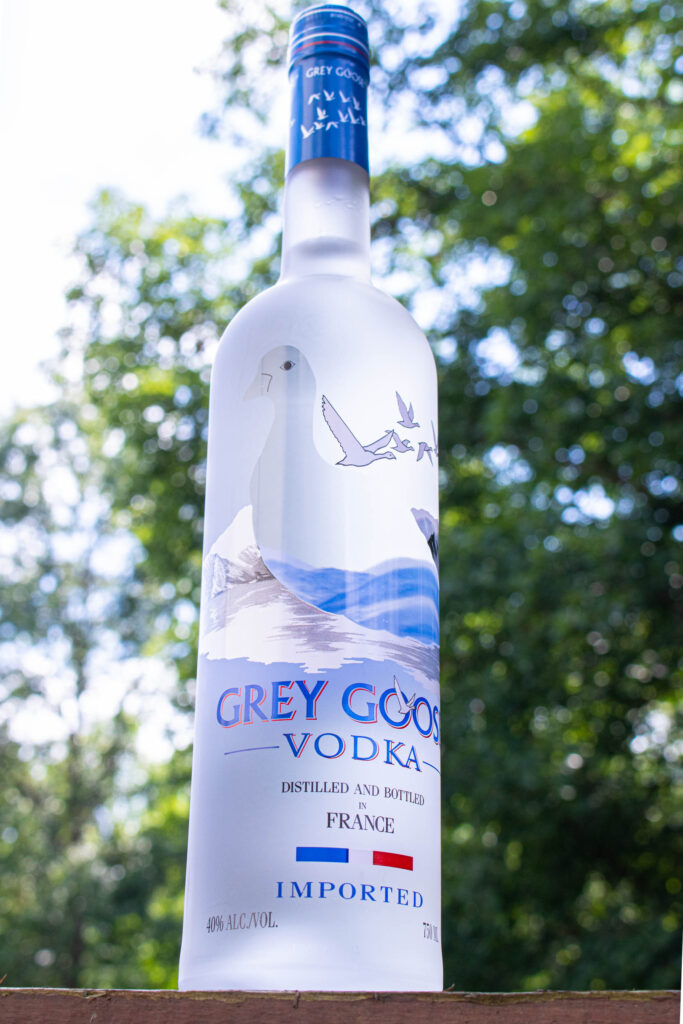
Grey Goose Vodka Bottle Sky

Grey Goose Vodka is really a master class in how to create a luxury brand.  As vodka goes, the smoothness of texture puts it right in line with other luxury focused brands like Absolut Elyx and Chopin.  While it gets an edge over the Tito’s and Absolut of world, there is an almost 50% price increase.  We have in the past said that we think the splurge is worth it to buy the slightly more expensive Absolut Elyx, and by that standard Grey Goose deserves consideration.  If you really don’t want to taste the vodka, Grey Goose is something that could fit the need and your bar.

Posted in Spirits, VodkaTagged Bacardi, France, Grey GooseLeave a Comment on Grey Goose Vodka

The Classics: Brown Derby

Posted on January 17, 2022January 17, 2022 by Nick
The Classics: Brown Derby

Brown Derby Cocktail

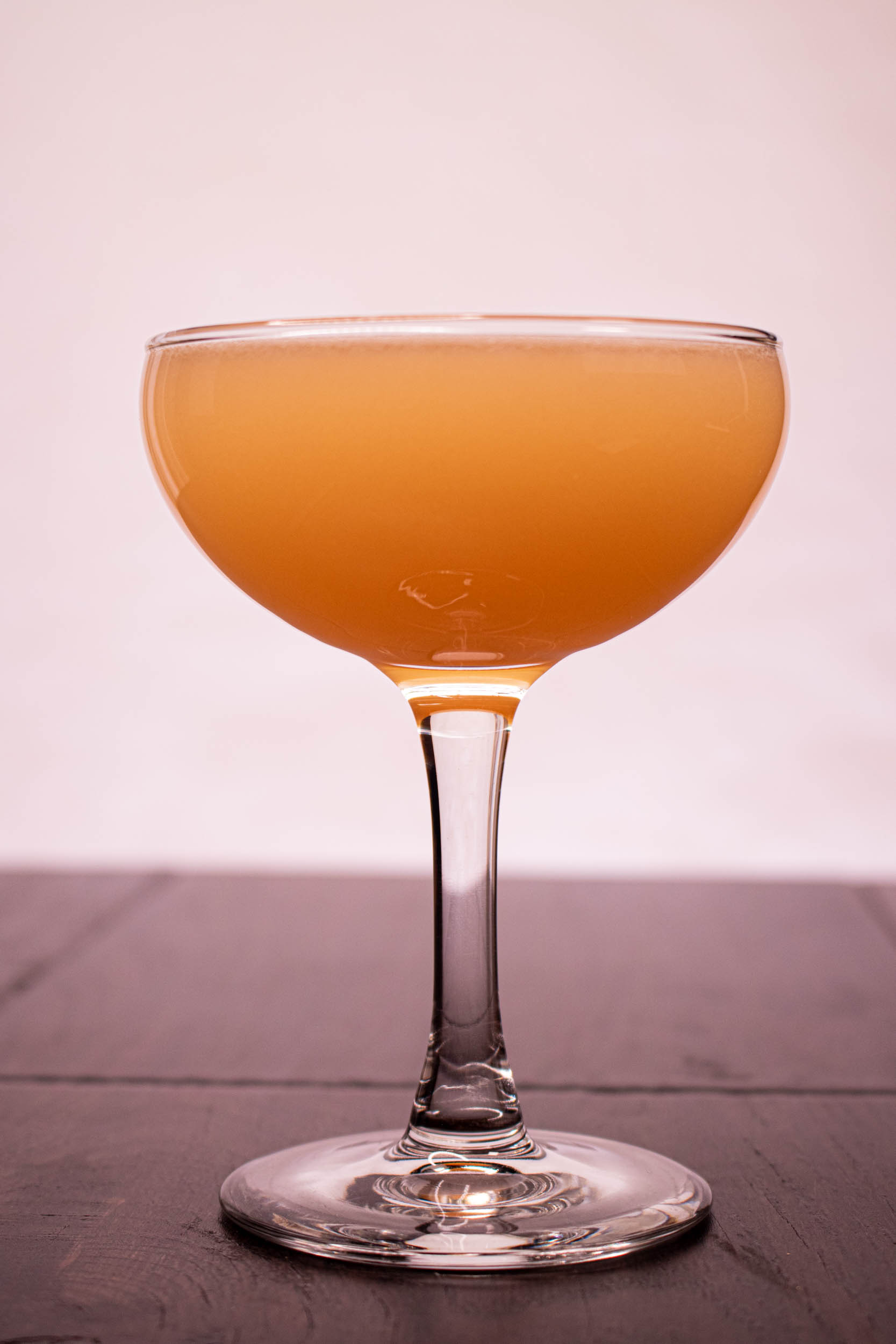
Named after an iconic LA Restaurant, the Brown Derby is a classic that can highlight the impact of grapefruit juice with aged spirits.  While grapefruit juice normally serves as a refreshing note with unaged liquors like rum and gin, with spirits like whiskey it can add weight and complexity to a drink.  When working with grapefruit juice, there are two things to be aware of.

  1. Grapefruit juice is notorious for interacting with certain medications – so be sure to ask guests prior to serving them a drink containing grapefruit juice.
  2. Grapefruit juice is subject to swings in sweetness and acidity.  Try your grapefruit juice before you use it to determine if you’ll need additional acidity (lemon or lime) or sweetness (simple syrup or base sweetener for the cocktail you’re creating).

Brown Derby

Brown Derby
2 oz
Bourbon
1 oz
Grapefruit Juice
½ oz
Rich Honey Syrup
Combine all ingredients in a shaker. Add ice and shake. Double strain into a chilled coupe. No garnish.

The Brown Derby is a rich, balanced drink that delivers subtle complexity and well layered flavors.  The sweetness gives a round start, while the grapefruit quickly adds levity.  The bourbon covers the mid-palate, adding spice and oak notes that beautifully compliment the honey that runs throughout.  The overall drink is simple but invites you to enjoy it’s complexity.

Drink Notes & Recommendations

The Brown Derby is an easy drink to forget about, but not one you should sleep on.  It’s delicious, and easy to make.

  • Bourbon – The richness of the honey and slight bitterness and tang of the grapefruit give you a lot of leeway on this cocktail.  The bourbons that will work best add complexity, so consider those that additional spicing or fruity flavors.  We used Elijah Craig Small Batch in our test, but would also recommend Wild Turkey 101 or 1792 Small Batch.
  • Grapefruit – There’s a strange flavor when it comes to store bought packaged grapefruit juice.  It’s not quite metallic, but it definitely isn’t right compared to fresh squeezed.   Avoid the packaged juice for this recipe, and go fresh squeezed.
  • Rich Honey Simple Syrup – See the recipe listed below:

Rich Honey Syrup

  • 200 g Honey
  • 85 g Water
  • 15 g 150+ Proof Neutral Grain Spirit or Vodka (Optional)

Combine water and honey in an 8 oz mason jar and seal. Sous vide at 145 degrees for 2 hr. Remove from the water bath and allow to cool. Once cool, bottle.  If desired, add 15 g of 150+ Proof Neutral Grain Spirit or vodka if desired. Shake gently to combine.  Refrigerate.

Posted in Classic Cocktails, CocktailsLeave a Comment on The Classics: Brown Derby

Mellow Corn

Posted on January 14, 2022January 2, 2022 by Nick
Mellow Corn

Mellow Corn Bottled In Bond Bottle

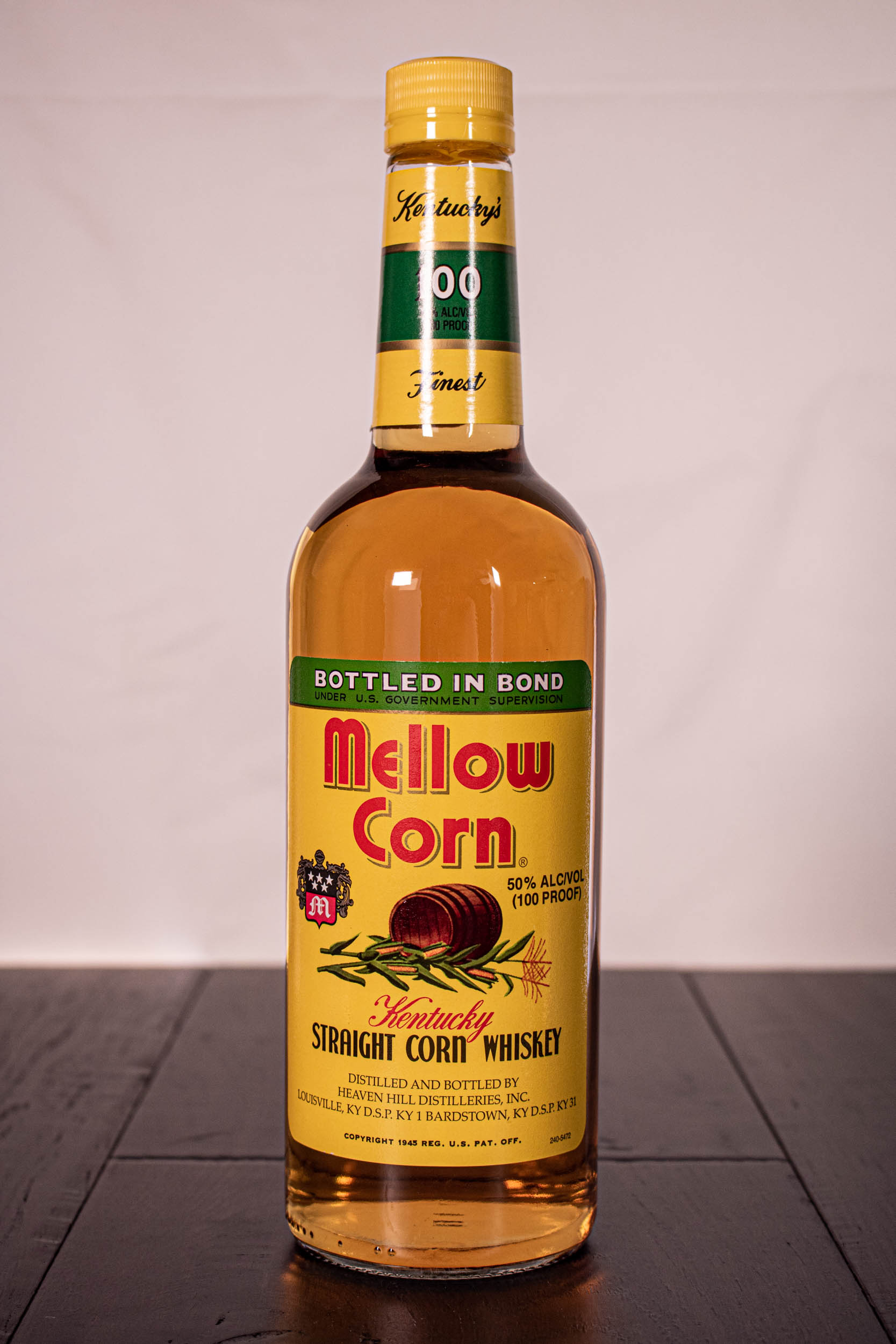
Perhaps the first thing to note about Mellow Corn is that it is not labeled as bourbon.  The reason is that Mellow Corn is actually produced to the specifications required for a lesser known spirit classification, Straight Corn Whiskey.  These whiskeys require that at least 80% of the mashbill be made of corn and can not exceed 160 proof at distillation.  Straight corn whiskey is not required to be aged.  For aged straight corn whiskey the barrels must be uncharred or previously used.  A bottle may be labeled as Bottled In Bond if aged a minimum of 4 years, and meeting the other requirements as set forth by the U.S. Bottled In Bond act.

Mellow Corn

Mellow Corn is one of those quirky sorts of bottles that has an unshakable following.  Supporters will extol the virtues of Heaven Hill’s bottom shelf dweller in poetic terms, before gushing about the price.  At under $20 and a fairly decent level of availability, it’s not surprising that folks would look to find value in a steadily increasing world of bourbons priced in the $50 – $80 range.

  • Mash Bill:
    • 80% Corn
    • 8% Rye
    • 12% Barley
  • Age: 4 Years+
  • Aging Vessel: Used Bourbon Barrels
  • A.B.V.:  50% (100 Proof)

Sight:  Yellow Gold

Smell:  Roasted popcorn and a hint of nuts leads things off with a bit of an ethanol hit.  Warm, toasted caramel joins in with a healthy dose of spice, and there’s just a hint of fruitiness.  There’s also a subtle corn hint.  The heat is pretty prevalent throughout.

Sip:  The body is light, and that unmistakable flavor of roasted corn and popcorn is prevalent throughout.    Touches of spice flirt with the flavor and a hint of sweetness joins in.  The heat is notable, if not oppressive.

Savor:  The ending carries forward a good mix of oak spice and notes of a variety of corn (roasted, fresh, popcorn) with in a twinge of heat.

Mellow Corn is an enjoyable experience that keeps things straightforward and flavorful.  If you didn’t realize this was a different product, you might even be inclined to mistake it for a bourbon.  What it lacks in complexity, it makes up in straightforward whiskey flavors you’d expect.  As a straight sipping whiskey, it’s interesting, but not something that would keep you investigating it over and over.

In Cocktails

In a Manhattan the corn just vanishes.   Thanks to the lighter flavor profile of the whiskey, the vermouth gets a free pass letting notes of fruity elements and spice fly freely.  As the drink warms up, it begins to develop some notes of corn. On the finish a light caramel notes comes out.

In Review – Mellow Corn

Mellow Corn is an interesting and unique offering in Heaven Hill’s line up.  It never quite crosses into amazing, but it definitely reaches interesting when on its own.  As a sipper, this a fine way to not break the bank and trying something new / pass it around.   As a cocktail whiskey – it poses something of a challenge.  It clearly can’t hold it’s own against dominate flavors, but simultaneously brings in body.  For these reasons, and the unusual classification, we recommend this bottle as a potential straight sipper, but not a bottle to stock in your bar.

Posted in Corn, Spirits, WhiskeyTagged Bardstown, Heaven Hill Distilleries, Kentucky, Louisville, Mellow CornLeave a Comment on Mellow Corn

Posts navigation

Older posts
Newer posts
  • About
  • Cocktails
  • Contact
  • Privacy Policy
  • Sample Policy
© First Pour Cocktails 2019-2021 | Theme FPCtails by Nick Rinaldi
Manage Cookie Consent
To provide the best experiences, we use technologies like cookies to store and/or access device information. Consenting to these technologies will allow us to process data such as browsing behavior or unique IDs on this site. Not consenting or withdrawing consent, may adversely affect certain features and functions.
Functional Always active
The technical storage or access is strictly necessary for the legitimate purpose of enabling the use of a specific service explicitly requested by the subscriber or user, or for the sole purpose of carrying out the transmission of a communication over an electronic communications network.
Preferences
The technical storage or access is necessary for the legitimate purpose of storing preferences that are not requested by the subscriber or user.
Statistics
The technical storage or access that is used exclusively for statistical purposes. The technical storage or access that is used exclusively for anonymous statistical purposes. Without a subpoena, voluntary compliance on the part of your Internet Service Provider, or additional records from a third party, information stored or retrieved for this purpose alone cannot usually be used to identify you.
Marketing
The technical storage or access is required to create user profiles to send advertising, or to track the user on a website or across several websites for similar marketing purposes.
  • Manage options
  • Manage services
  • Manage {vendor_count} vendors
  • Read more about these purposes
View preferences
  • {title}
  • {title}
  • {title}