Skip to content
First Pour Cocktails First Pour Cocktails
  • About(current)
    About(current) Sample Policy(current) Privacy Policy(current)
  • Bar Setup(current)
    Recommended Bottles for Starting Your Home Bar(current) Recommended Equipment for Starting Your Home Bar(current) Blanco Tequila Rankings(current) Bourbon Rankings(current)
  • Cocktails(current)
    Cocktail List(current) Halloween Cocktails(current) Valentine's Day Cocktails(current)
  • Contact

Author: Nick

The Classics: Last Word

Posted on April 4, 2022April 4, 2022 by Nick
The Classics: Last Word

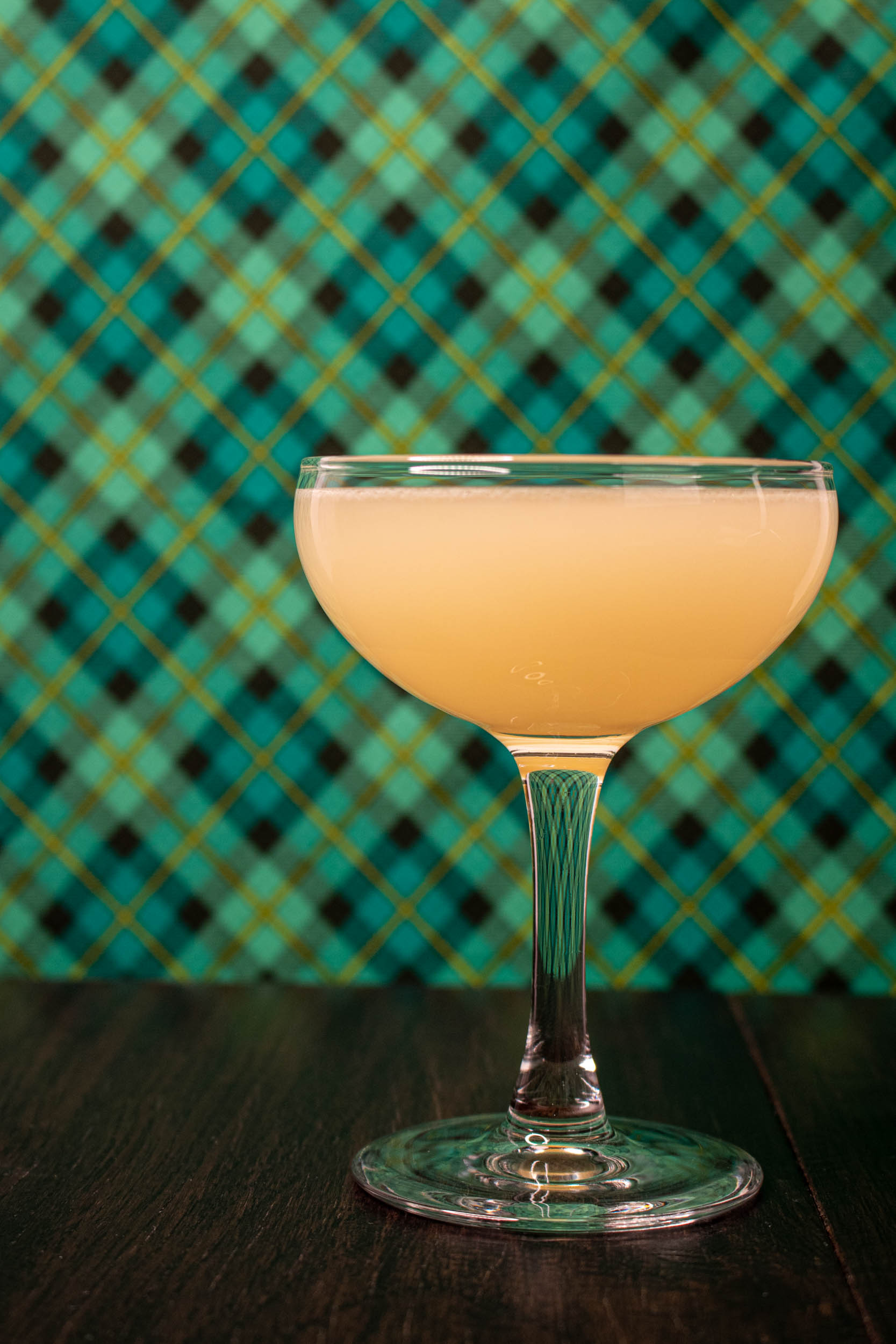
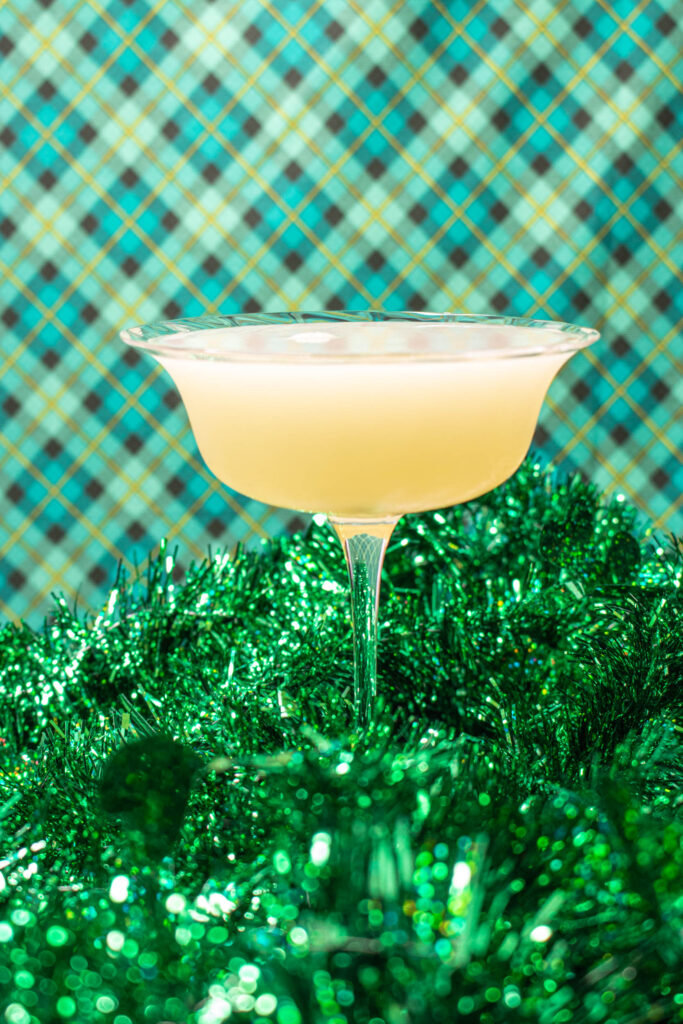
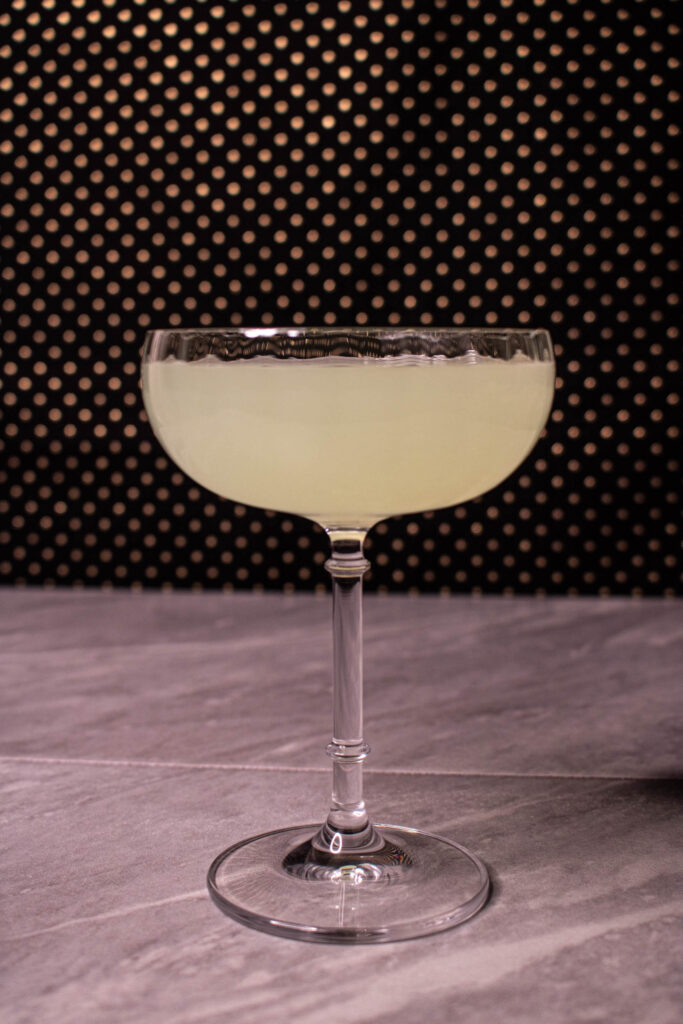
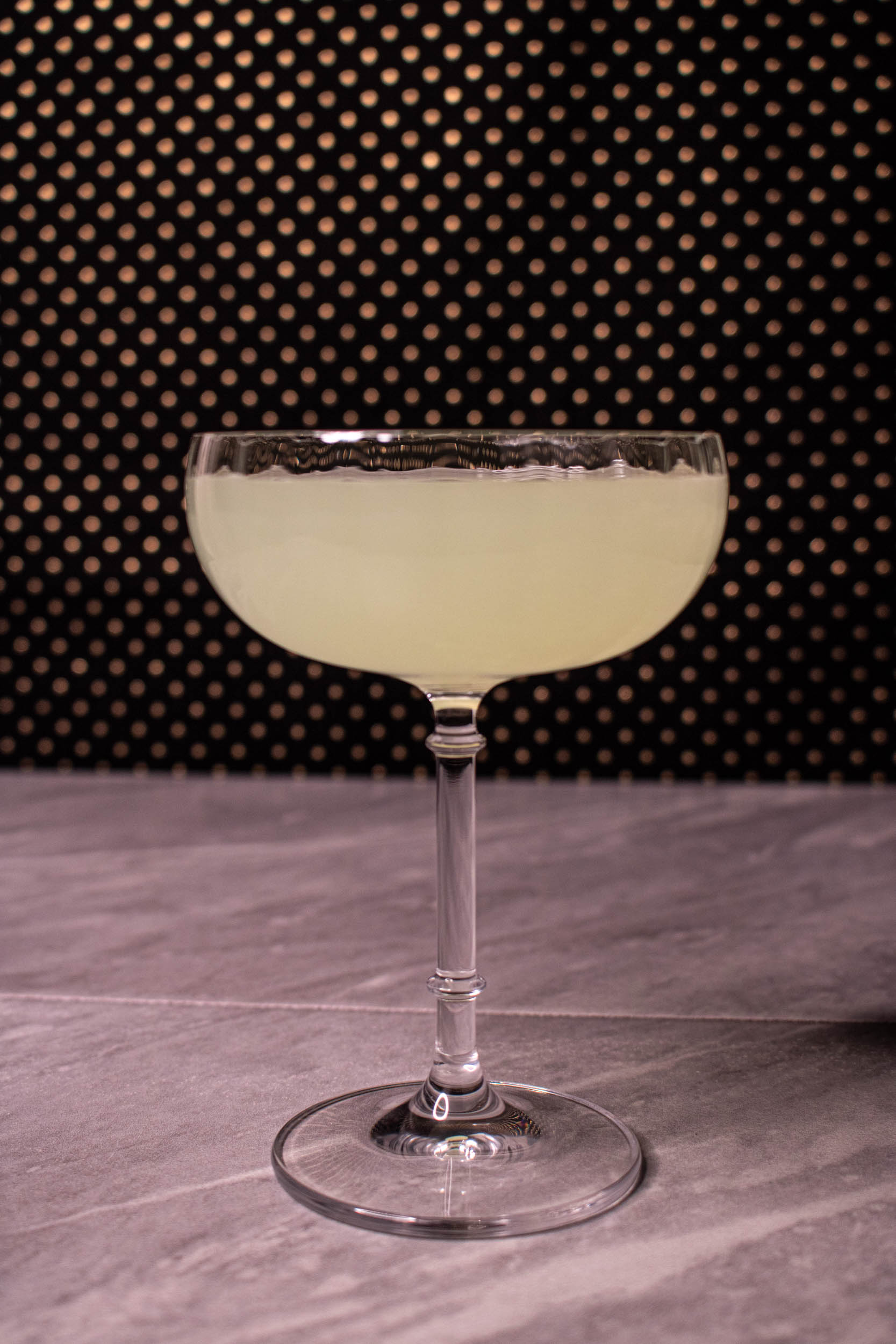
Last Word Cocktail

The Last Word is one of the quintessential equal parts cocktails and a study in balance.  Likely created pre-prohibition, the Last Word received a resurgence in the early 2000s when Seattle’s Zig Zag Cafe added to the menu.   Many members of the pre-prohibition cocktail movement took note, and the cocktail first spread across Seattle, and then ultimately the collective drinking world.  While at the time ingredients like Green Chartreuse could be hard to find, they’ve since become plentiful, so finding the ingredients to make the drink shouldn’t be an issue.

Last Word
Last Word
¾ oz
Gin
¾ oz
Maraschino Liqueur
¾ oz
Green Chartreuse
¾ oz
Lime Juice
Combine all ingredients in a mixing vessel. Add ice and stir. Double strain into a chilled coupe. No garnish.

The Last Word is a brilliant study in balance.  Sweet is in taught balance with sour, spice and herb are in perfect harmony.  The light cherry and almond like notes resonate beautifully with the fresh lime and run perfectly with the chartreuse’s and gin’s complex herbaceous notes.  Overall, every sip is electric, and wonderfully grounded in showing off every facet of it’s components.

Drink Notes & Recommendations

The Last Word is a riffable template, with drinks like Naked & Famous being generated from it.  Start with the original and see it in action before playing with the template, it will help you understand how it works and why it works (especially as you encounter failures).

  • Gin –  London Dry is the go to for an original, but you could easily substitute for contemporary styles.  We made ours with Beefeater, but could also it being delicious with Aviation.  For a bolder gin riff, consider using a Navy Strength gin.
  • Maraschino Liqueur –  We used Luxardo, which is one of the most common maraschino liqueurs you can find.  It’s distinctive for it’s straw like exterior.
  • Green Chartreuse –  Sadly there’s no real substitute for this herbal liqueur, so you’ll need to procure a bottle.  Be prepared to pay upwards of $50 a bottle for a 750.
  • Lime – Use fresh squeezed as always for best results.
Posted in Classic Cocktails, Cocktails1 Comment on The Classics: Last Word

Original Krupnik Honey Liqueur

Posted on April 1, 2022March 29, 2022 by Nick
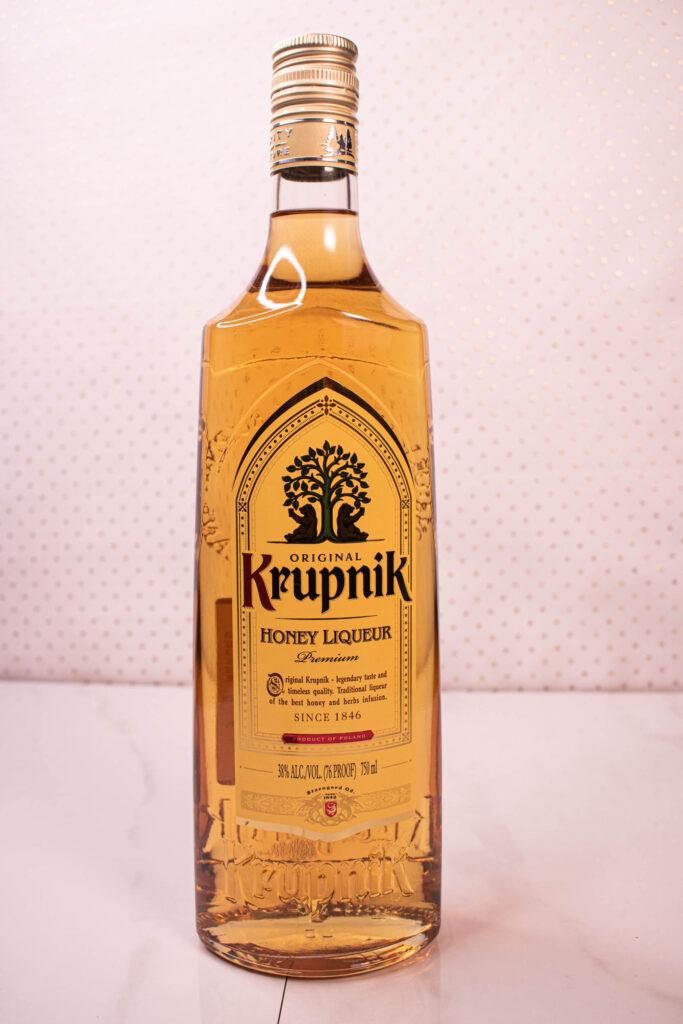
Original Krupnik Honey Liqueur

Original Krupnik Honey Liqueur

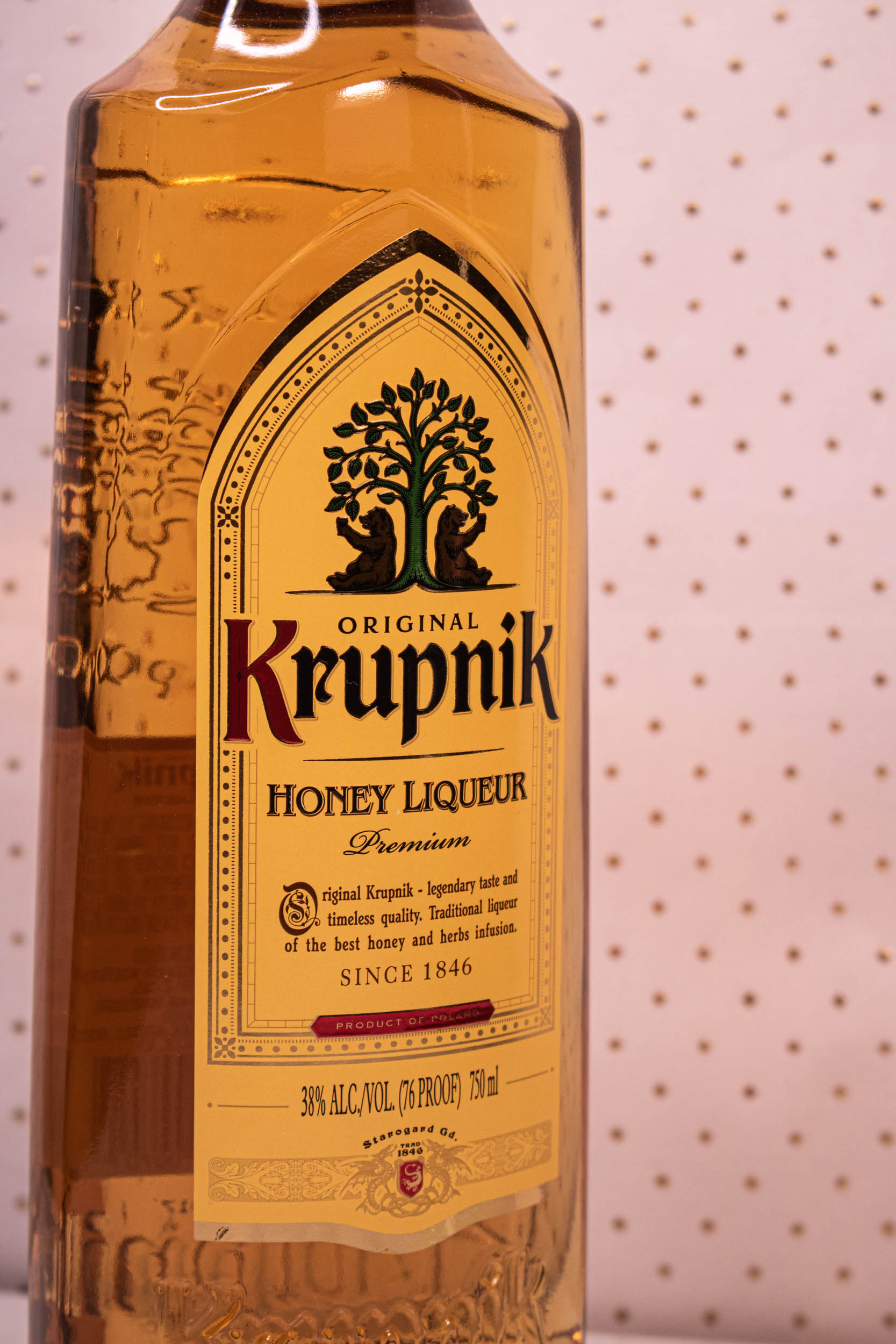
It’s almost Dyngus Day again, and rather than make our own Krupnik again, we opted to try Original Krupnik Honey Liqueur.  Produced by Marie Brizard in Poland, there’s reason to suspect that this should be good quality liqueur for a reasonable price.  A honey and herb liqueur infusion, this polish liqueur will give you one more option to celebrate the day.  You can also use it in our original Krupnik Fizz and The Pussy Willow.

Original Krupnik Honey Liqueur

Sight:  Caramel / Straw.  Caramel coloring is added for consistency.

Smell:  The smell of honey is dominant and there are touches of herbs and a little baking spice.  There’s a touch of fermented honey funk to it.

Sip:  The start is sweet, and immediately veers into mead and honey notes.  A hint of herbal and spice notes come out as well.    There is a bit of raw alcohol flavor as well – although the exact grain is hard to pinpoint (possibly rye?)

Savor:   The ending is more honey with a little spice.

Original Krupnik Honey Liqueur is sweet and predominately honey flavored.  There’s a balance of sweetness here so it’s not quite cloying, but it is very sweet.  As a sipper, it’s easy going if simple.  There’s not a lot to dislike, unless you’re not a fan of honey.

In Cocktails

In a Krupnik Fizz, the sweetness tones down dramatically, and the wine notes are given reign.  The herbal notes and spices slide into the background, and are touch to pick out.  While it works well as a sweetener, it provides mostly a honeyed note.  The net results is a nice drink, but we recommend making your own Krupnik if you want something spectacular.

In Review – Original Krupnik Honey Liqueur

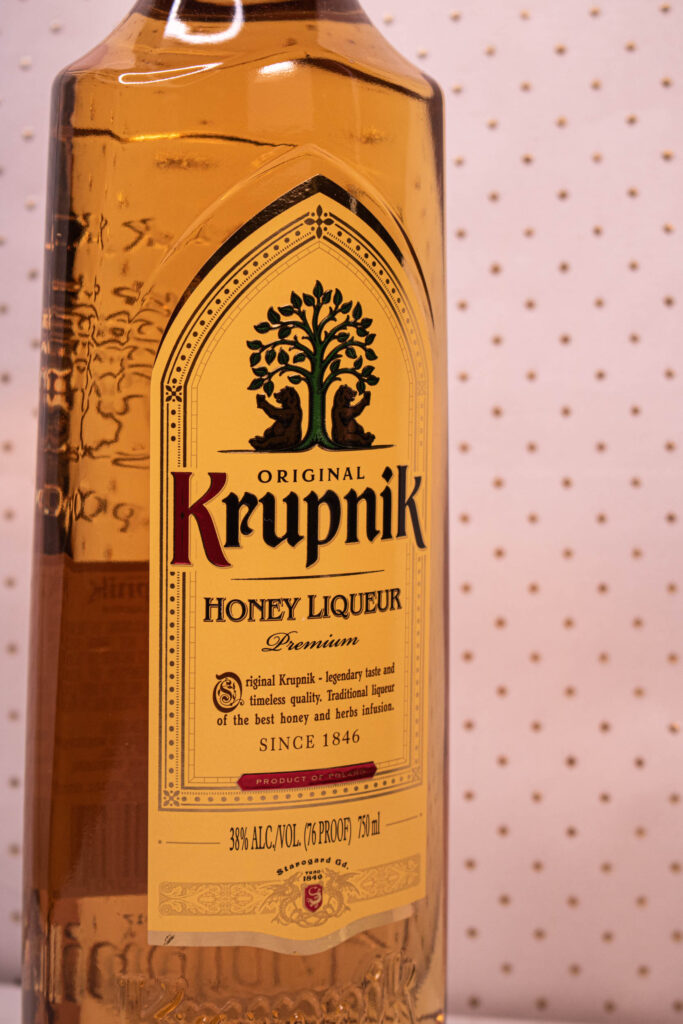
Original Krupnik Honey Liqueuer Label

At only $14, Original Krupnik Honey Liqueuer is an affordable shortcut to making your own.  While it isn’t the most amazing liqueur in the world, it’s well made and affordable.  Availability can be hit and miss, and it isn’t particularly called for in most cocktails.   That said, if you want to add one more Polish item to your Dyngus Day, then grab a bottle of Original Krupnik Honey Liqueur for the novelty of it.


Posted in Honey, Liqueur, SpiritsTagged Krupnik, Marie Brizard, PolandLeave a Comment on Original Krupnik Honey Liqueur

The Classics: Highball

Posted on March 28, 2022March 23, 2022 by Nick
The Classics: Highball

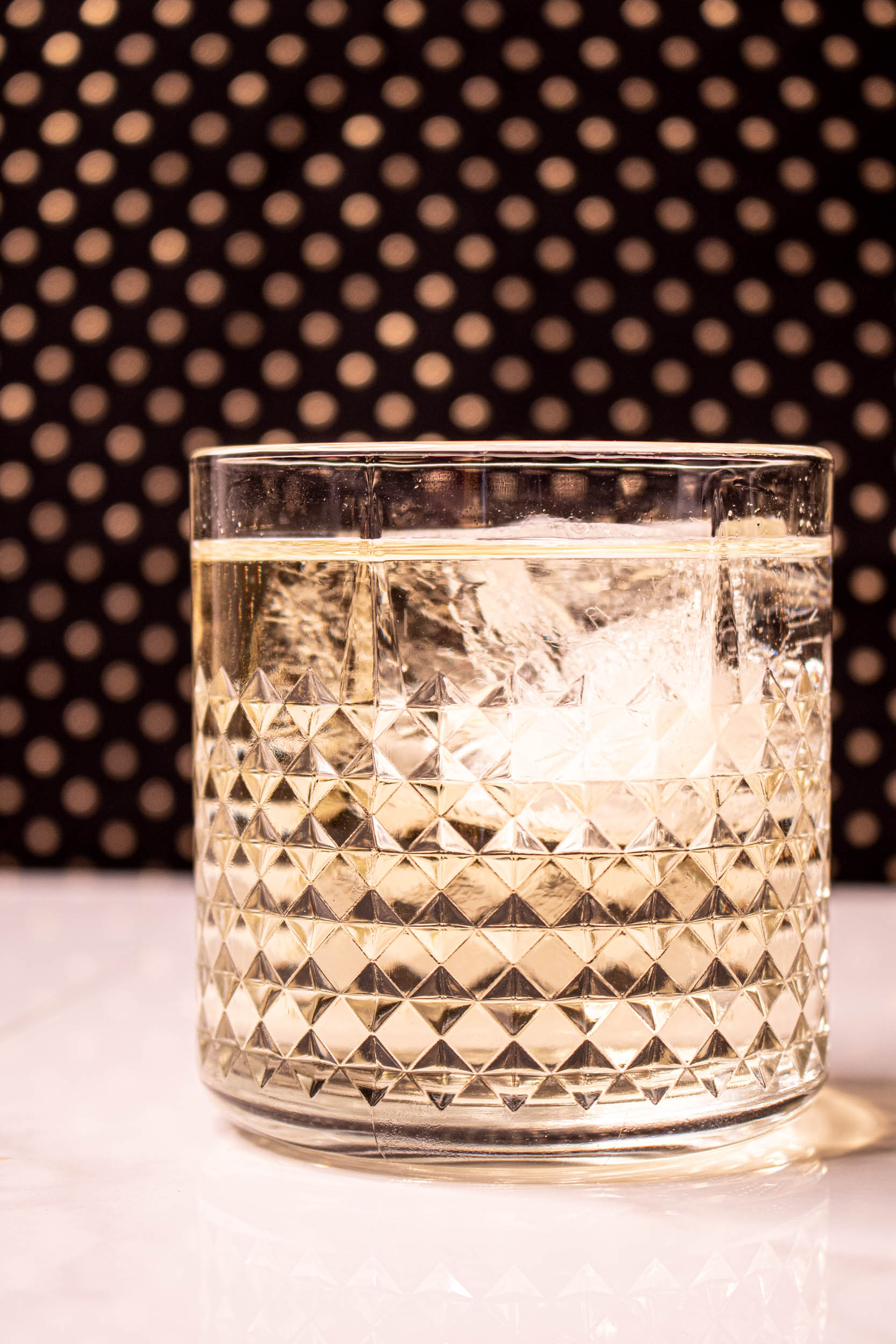
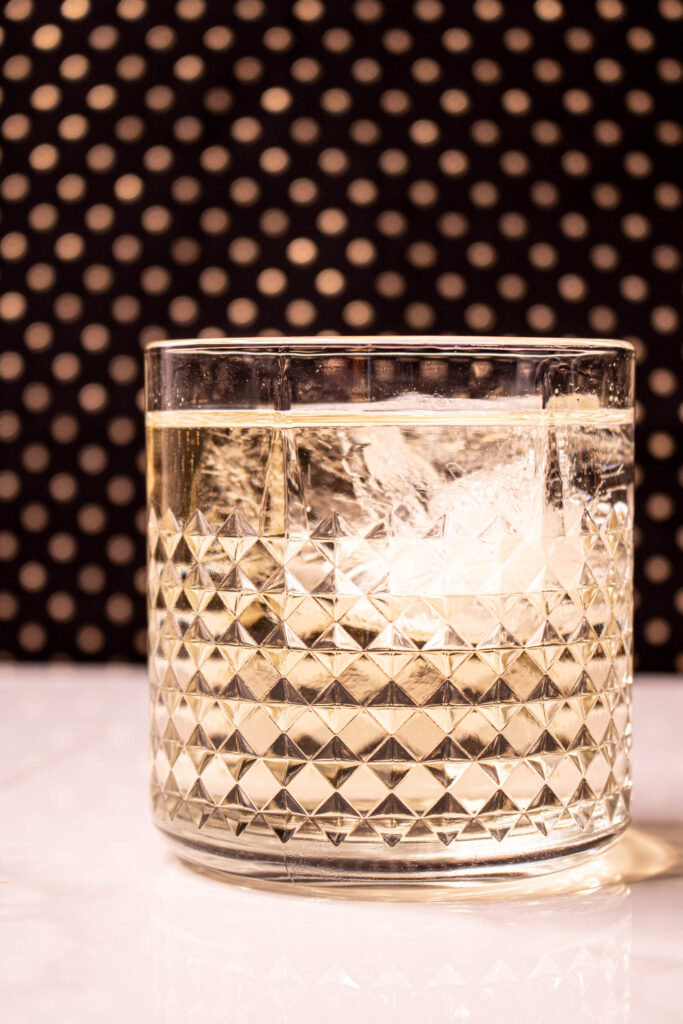
Highball Cocktail

The Highball is one of the proto-cocktail templates that underpins a variety of drinks from the Americano to the Cuba Libre to the Gin and Tonic.  The concept is simple, spirit and sparkling water.  Adding citrus and you can end up with a Buck, Collins, or Rickey.  While the origins appear to be around the turn of the twentieth century, the exact story is lost to time.  What should it matter though, the Highball remains a delicious drink over a hundred years later.

Highball

Highball
2 oz
Whiskey
4 oz
Cold Seltzer
In a highball (or double rocks glass) add a large ice cube. Add whiskey over ice and wait 5 – 10 seconds. Add seltzer, stir once, and serve. No garnish.

The Highball is nearly completely dependent on the choice of whiskey used. Using Suntory Toki here, the elements of cereal notes are expanded with the seltzer, and allowing them to express themselves. This is a difference from the spices, touches of heat, and green apple skin that are present in the raw whiskey. The apple notes are now more subtle, and perhaps even slightly crushed or the flavor an apple cut over an hour ago. The caramel and spice present in the original now make up the background, and now add notes of minerality and toasted grain.  There’s even a really gentle floralness and elegance that expresses itself.   The highball is therefore and extension of the whiskey you start with.

Drink Notes & Recommendations

The Highball is base cocktail.  In it’s purest form, the highball is two things, a spirit and a non-alcoholic mixer.  The result is an endlessly riffable drink, including things like the Gin and Tonic, Bloody Mary, and Mimosa.  As the drink is so simple, there is no room for a spirit to hide, so high quality spirits are critical to execution.

  • Whiskey – This is the flavor of the highball.  If you start with a whiskey you don’t like, you’re unlikely to find that you like it significantly better in a highball.  Whiskey is a temperamental spirit and, prior to the rush to turn everything whiskey into cask strength expressions, common wisdom used to be to add a drop of water to your whiskey when served neat to help express the true character.   This thought process is founded in the idea that the molecules in the whiskey expand, opening up new flavors and smells.  A highball is a semi-similar though process, just on scale.  You’re adding a significant amount of neutral spirit, so expect the flavors to expand and change – but they will not get stronger.  Our general recommendation is to start at 4 oz of seltzer, and add or subtract from there (add for more complex / intense whiskeys, subtract for gentler bottlings)
    • Scotch – Highly peated scotches (like Laphroaig or Lagavulin) may require more seltzer, while other non-peated whiskeys like Glenlivet may require less.
    • Japanese Whiskey – These blends are generally closer to scotch in their flavor profiles, and should therefore be adjusted accordingly.  The expectation is that generally you shouldn’t see overwhelmingly peated expressions, so 4:2 ratios should work well.
    • Irish – Expect to follow similar 4:2 ratios compared with Japanese whiskeys.  Exceptions should be expected for finished whiskeys (in other barrels – like sherry or madeira)
    • Bourbon / Rye –  Unlike the other whiskeys list, expect to experience significant impacts from the base spirit (especially for bonded, barrel / cask strength).  These whiskeys can have strong profiles.  The goal is to balance them with the seltzer.
  • Seltzer – Seltzer is the purest form of carbonated water.  There are no minerals added (Club has additional minerals to mimic mineral water).  For the most control, use seltzer.  Club is an acceptable substitute, but note that the minerals added can adjust citrus and bitterness.


Posted in Classic Cocktails, Cocktails6 Comments on The Classics: Highball

Suntory Whiskey Toki

Posted on March 25, 2022March 21, 2022 by Nick
Suntory Whiskey Toki

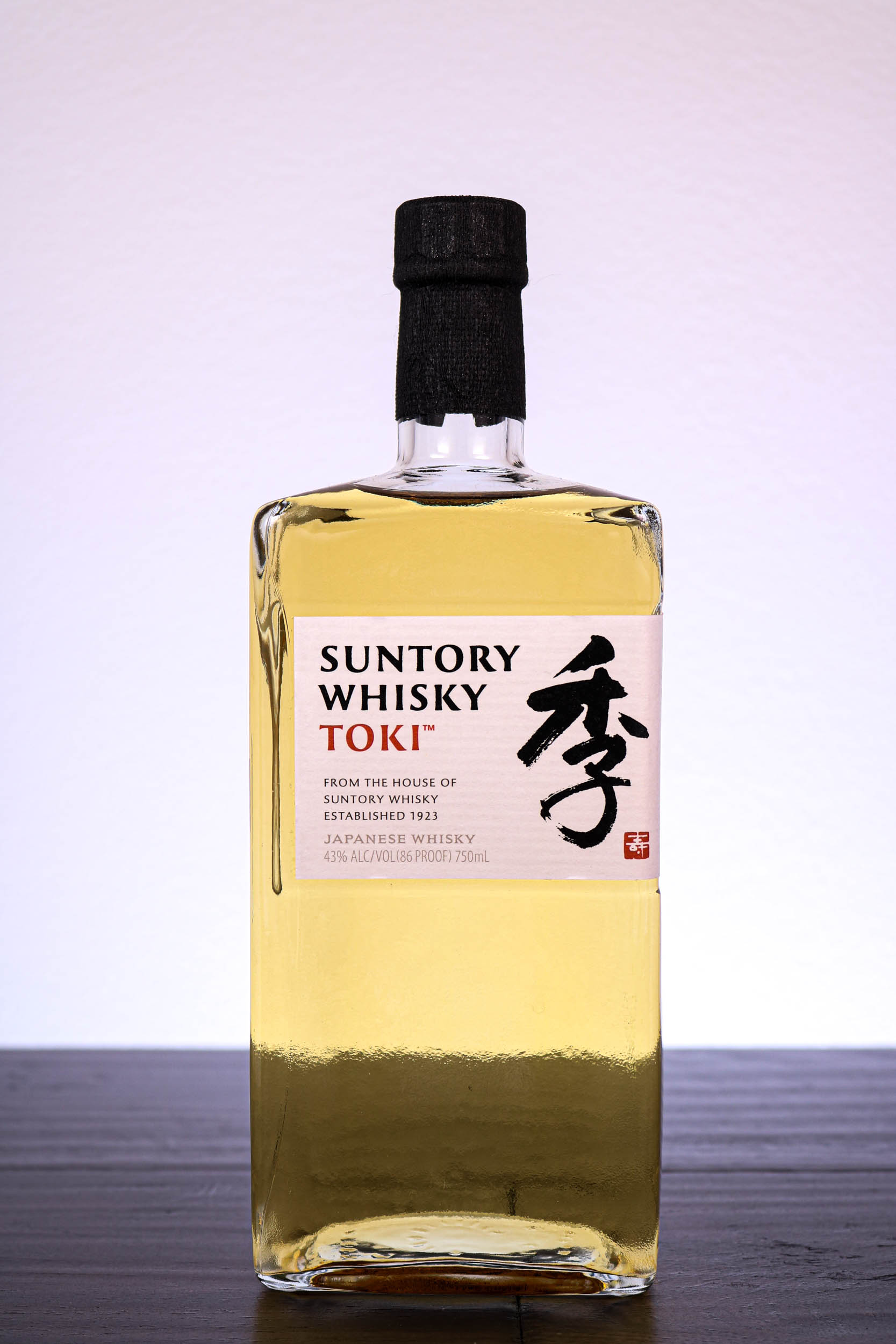
Suntory Whisky Toki

Suntory Whisky Toki – more commonly referenced as Suntory Toki – is best known for its sterling reputation of making elevated Highballs.  It’s made from a blend from Suntory’s three distilleries, Yamazaki, Hakushu, and Chita, primarily featuring the later two’s grain whiskeys.   Suntory is specifically focused on blending with the whisky, aiming to show what can be done with each of the distilleries’ spirits.  Unlike some of Suntory’s other highly sought after whiskies, you should be able to find Toki easily and at a price that won’t break the bank.  So how is it?

Suntory Whisky Toki

Sight:  Pale straw fringing into corn.

Smell:  Apple skins, malt, and spices open up with a hint of heat.  A strong floral note comes in and touches of orange marmalade join in.  Caramel and lemon have element notes in the background as well.

Sip:  The flavor is gentle, malted, with hints of honey and caramel.  Touches of wet slate, minerality, lemon pith, and flowers come in.    The body is light, slightly warm.   There are hints of spice, nut, and other elements toward the background.

Savor:  The ending picks up a certain amount of aged wood and malt.  There are elements of salinity and minerality, and caramel flavor.  Specifically caramel flavor because it isn’t a sweet caramel.

Suntory Whisky Toki is fine.  The flavor profile is gentle and subtle.   The blending of the whiskey has a good impact on how the flavors layer, although they aren’t particularly interesting or enticing.  As a neat whiskey, we’d recommend most other whiskeys.   Toki also isn’t normally associated with drinking neat.

In Cocktails

Suntory Whisky Toki is frequently referenced as one of the best whiskeys for use in a Highball.  In our experience, the highball brought out malt and cereal notes from the Suntory Toki.   The apple notes become more subtle, while the floral elements are given more room to operate.  Caramel and spice move into the background and work well with the minerality.  The Toki actually helps the drink become an extension of itself.  The subtle nature that helps it work in a highball is an indicator in this scenario that it plays better with other similarly gentle flavors.

In Review – Suntory Whisky Toki

Overall, Suntory Whisky Toki has a place in cocktails, but the rest of the value will be determined by the value you place on Japanese Whiskey.  Most classic cocktails do not call for Japanese Whiskey, and it isn’t the most versatile ingredient, working well in more subtle, gentle cocktails.    When served neat, it communicates much the same way, in an elegant and mild sort of way.  The price point puts it right in line with most entry level Japanese Whiskeys and it’s widely available, making it the most common choice.  All that said, we still recommend that try it before you buy it.


Posted in Japanese, Spirits, WhiskeyTagged Beam Suntory, Japan, SuntoryLeave a Comment on Suntory Whiskey Toki

The Classics: Chrysanthemum

Posted on March 21, 2022March 19, 2022 by Nick
The Classics: Chrysanthemum

Chrysanthemum Cocktail

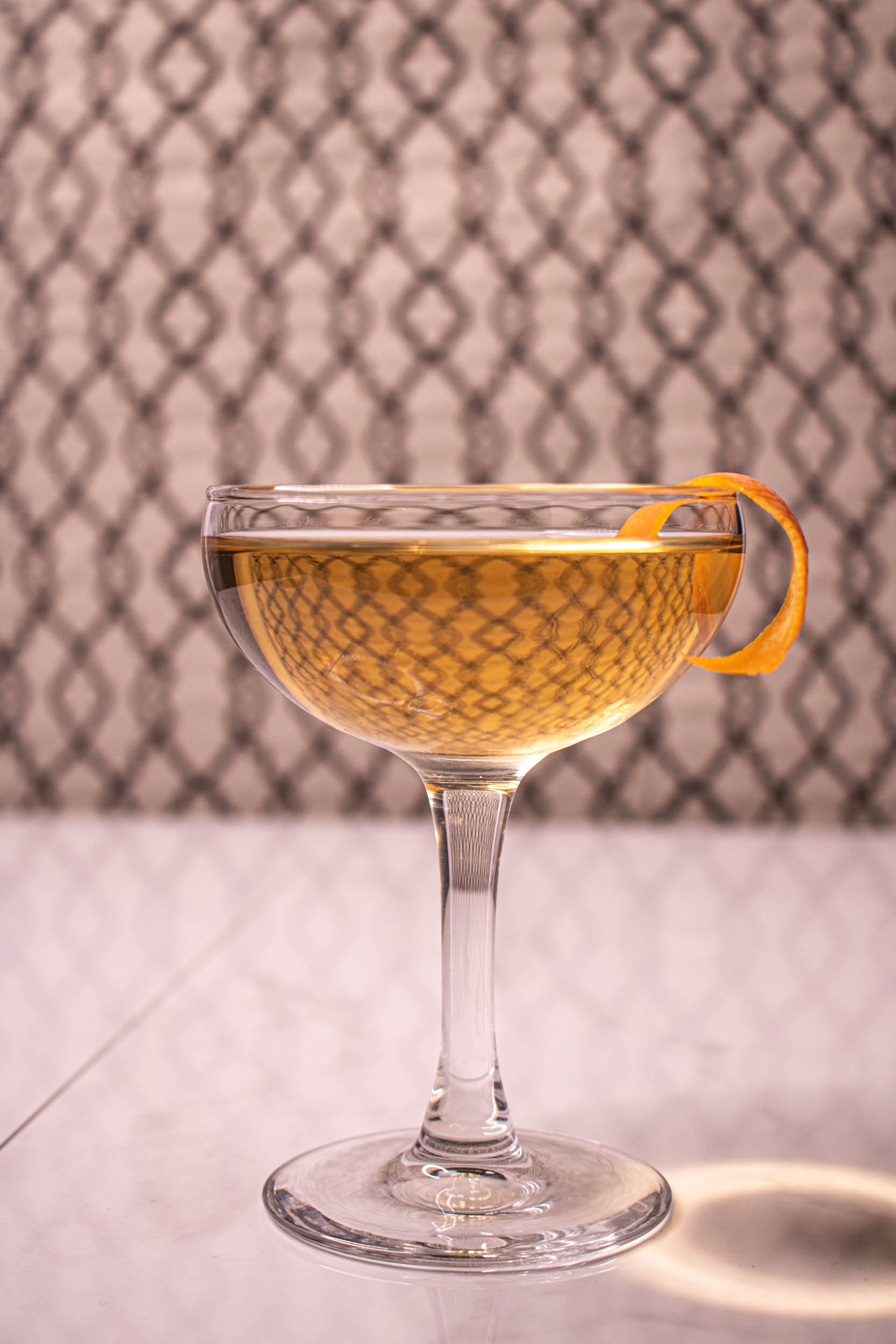
The Chrysanthemum is another cocktail that’s experienced some amount of recipe flux since it’s creation.  Reportedly the original was actually equally parts dry vermouth and Benedictine.  Most interpretations have turned this down even further, leading to a 2:1 ratio of Dry Vermouth to Benedictine.  At an ounce of Benedictine, this seems like a lot. Still, there are few cocktails that feature Dry Vermouth as the main ingredient, so this feels like it’s worth a spin.

Chrysanthemum

Chrysanthemum
2 oz
Dry Vermouth
1 oz
Benedictine
2 Dashes
Absinthe
Combine all ingredients in a mixing vessel. Add ice and stir. Double strain into a chilled coupe. Garnish with an orange twist.

The Chrysanthemum is sweet, herbal, and floral.  The start of the sip is nigh cloying with candy spiced sweetness that gives way into a mix of herbal notes. The herbs pick up some of the spice before bringing in the brightness of the wine.  The spices are amazingly layered, ranging from cinnamon to clove to nutmeg.  The flavor of the herbs are earthy, almost garigue like, with a green wormwood character. Overall, it’s a deeply flavored cocktail with a good layering that with its low ABV won’t put you down and out.

Drink Notes & Recommendations

Like all cocktails with limited ingredient sets, there’s not a lot of places to hide.  So the quality of these ingredients are important to the final outcome.  Regardless of the ingredients you use, you’ll note this drink is deeply on the sweet side of things.  This is largely due to the Benedictine, and the almost comical ounce of the ingredient. Some of the more modern takes on this drink counter this by adjusting the ratio of sweet vermouth to 2 ½ oz while reducing the Benedictine to ½ oz.

  • Dry Vermouth – There are few drinks that call for Dry Vermouth as the primary ingredient.  As such, consider one of a high quality such as Dolin or Noilly Prat.
  • Benedictine – Due to the herbal notes and honeyed sweetness that go into this brandy based liqueur, we don’t recommend swapping this for anything else.  Similar to certain other classics, this is both a specific liqueur and a brand recommendation.
  • Absinthe – The amount of absinthe is low in this drink, but you can think of it similarly to bitters in an Old Fashioned.  As a result, your choice of absinthe is your seasoning of choice or whatever you happen to have on hand.  Our default absinthe of choice is St. George Absinthe Verte.
Posted in Classic Cocktails, CocktailsLeave a Comment on The Classics: Chrysanthemum

Empress 1908 Gin

Posted on March 18, 2022March 18, 2022 by Nick
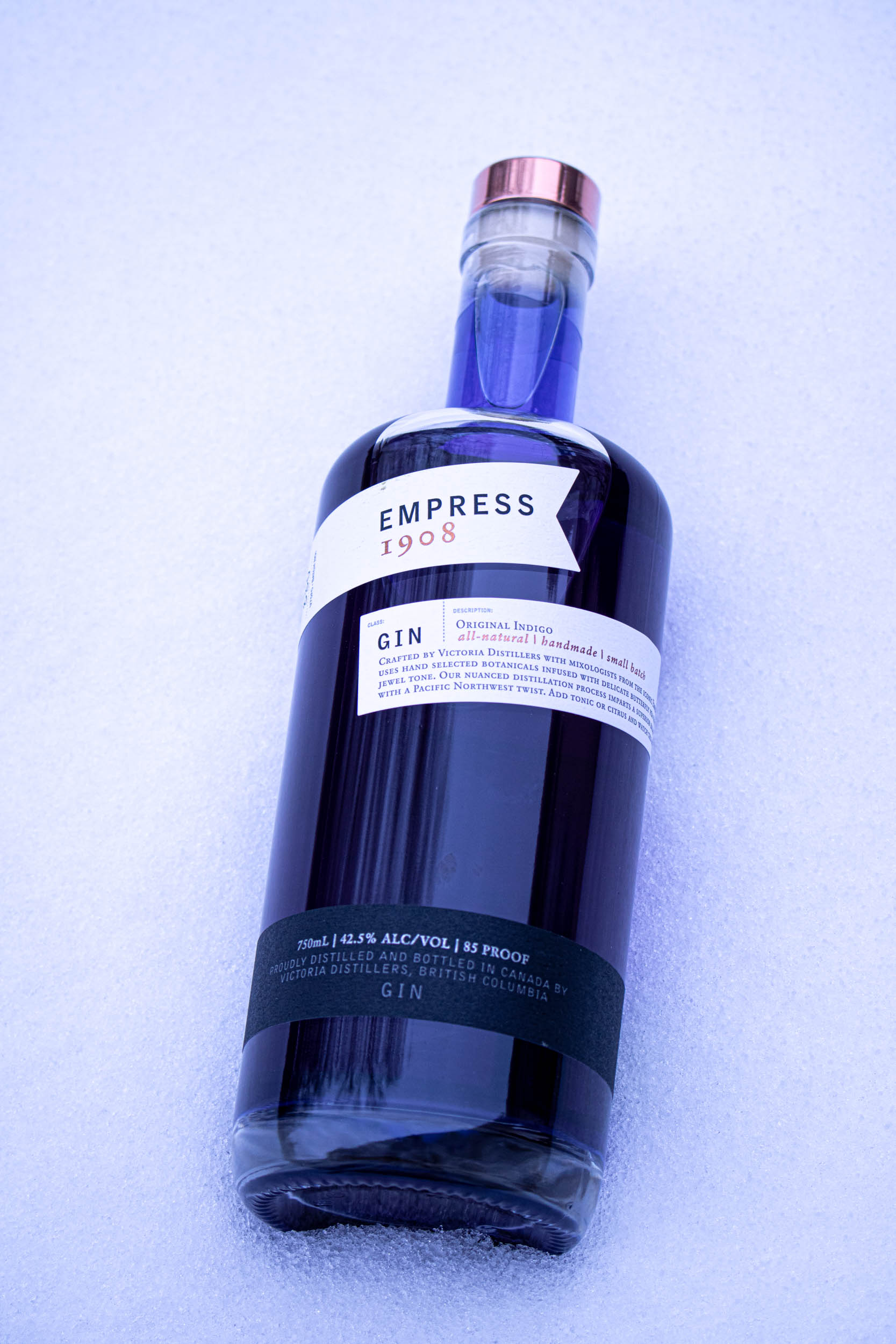
Empress 1908 Gin

Empress 1908 Gin

Handcrafted by Victoria Distillers in British Colombia, Empress 1908 Gin is a contemporary style gin that is infused with butterfly pea blossoms.   With the use of this particular tea the gin harnesses one of the hottest trends in cocktails over the last couple years.  The idea is that when acid touches the blue butterfly tea, it turns pink.  The result is a product that seeks to balance contemporary gin with color in a package to make cocktails live out loud.  So does it pull it off?

Empress 1908 Gin

Sight:  Obviously, it is a blue to violet hue.  The color is strikingly close to some Creme de Violet.

Smell:  The nose starts out perfumed with roses and violets, giving way to juniper and citrus peels.  An earthy note laces through the background, fringing into asparagus and herbs.   A slight spice lingers around the edge.

Sip:  The start is smooth and a hint sweet.  The palate dries out, picking up rose and floral notes, touches of earth, green herbs, and plenty of citrus ranging from lemon oil to grapefruit.  Coriander and juniper come up from the depths to tie everything together and grab the reins.

Savor:  Juniper, earthy green vegetables, and coriander linger on the finish.

Empress 1908 Gin is not overly aggressive or floral, but does deliver plenty of citrus and juniper with a floral and earthy backdrop.  The contemporary style’s earthiness is clearly a result of the butterfly pea blossoms that provide the indigo color.  As contemporary gin styles go, the spice of coriander and the citrus nearly even things up with the juniper.  The net result is a balanced gin that’s got slightly unique bent.

In Cocktails

In a Martini Empress 1908 Gin shows up to play background.  The earthiness comes through with plenty of grapefruit and juniper.  The vermouth tangos across center stage giving it’s herbal character and bright wine notes a starring role that hangs out on stage.    The biggest pops come from the citrus oils and vermouth vinous notes.   The result is a good martini that doesn’t quite demonstrate exceptionalness.  That said, we find that some of the floral and citrus notes come out better in other applications, where the complexity doesn’t necessarily play a duet, but part of an ensemble, like our Flowers Are Expensive.

In Review – Empress 1908 Gin

Empress 1908 Gin is beautiful to look at and has a nice flavor profile.  The cost isn’t exactly on the low end though, coming in at close to $40.  Butterfly Pea Blossom Tea is pretty, but it’s also earthy, and in this application, it doesn’t bring enough beyond color to make it worthwhile.  The contemporary flavors don’t end up significantly more interesting than Aviation, which comes in at a significantly cheaper $25.  If you absolutely must have a bottle for the color, feel free to pay the premium.  Otherwise, consider buying your own Butterfly Pea Tea – like this one we’ve used in the past from Amazon.

Posted in Contemporary, GinTagged British Columbia, Canada, Empress 1908, Sidney, Victoria DistillersLeave a Comment on Empress 1908 Gin

The Classics: Cameron’s Kick

Posted on March 14, 2022June 9, 2022 by Nick
The Classics: Cameron’s Kick

Cameron's Kick Cocktail

Cameron’s Kick first appears in the early 1920’s and, if you’ll believe this, promptly leaves out exactly who Cameron is or why the drink bears that name.  Instead, the author Harry McElhone elaborates on the fact that the orgeat syrup in this case must be made with almonds.  Having tried the cocktail both with syrups containing almond, and those that do not, we can say he’s right, although we do wish he might have been able to elaborate a bit more on the drink’s construction.  This is as this particular cocktail is decidedly unusual for the time period, featuring a split base of both Irish and Scotch Whiskey.

Cameron’s Kick

Cameron’s Kick
1 oz
Irish Whiskey
1 oz
Scotch Whiskey
¾ oz
Lemon Juice
½ oz
Orgeat
Combine all ingredients in a shaker vessel. Add ice and shake. Double strain into a chilled coupe. No garnish.

Cameron’s Kick pulls in the nuttiness of the orgeat – but despite a half an ounce it isn’t super sweet. The cereal and grain notes from the whiskeys pull it in and they catch up on the backside with a fruitiness that starts kind of pome fruit but moves into that cherry-almond sweetness before ending with a hint of smokiness on the finish.  The uniqueness is pleasant, balanced, and refreshing.

Drink Notes & Recommendations

We made an inordinate number of Cameron’s Kicks in testing the impact of multiple different orgeat syrups.  Having done so, we can attest that while the kick is primarily determined by the whiskey you choose, the choice of orgeat ends up dictacting a lot of how the drink stitches together.  As said, for best results, use something made with actual almonds.

  • Irish Whiskey – We really liked something a bit more elegant here, a task that Knappogue Castle pulled off in a stellar fashion.  You could also use something a bit bigger for a kick, but floral and fruit notes play wonderfully with the orgeat.
  • Scotch Whiskey – While Great King St. Artist’s Blend was lovely and offered a good amount more apple, grain, caramel, and a hint of smoke, we really loved Glenlivet 12.  The addition of the pineapple and vanilla notes really sing here.  Really, the choice of scotch here is all personal preference, but there’s very little room for it to hide in this drink.  Experiment to find what works best for you (like adding a bit of smokiness with a big Islay)
  • Orgeat – We tried everything from Fee Brothers to Small Hand Foods orgeats and found a surprising amount of variation.  We can – with some confidence, inform you that you should completely avoid Fee Brothers Orgeat here.  It’s artificial tasting, and rather unpleasant.  The best in our testing were Ferrera Orgeat and Small Hand Foods.  While Small Hand is more expensive, there’s a true nuttiness here (although it is more subtle).  Ferrara also includes real almonds, but has a slightly cherry like artificial note that flirts around the edges.  However, you get more Ferrera (almost triple) for about half the cost of Small Hands.
  • Lemon Juice – Use fresh squeezed for best results.
 

Posted in Classic Cocktails, Cocktails6 Comments on The Classics: Cameron’s Kick

Clover Picking

Posted on March 11, 2022March 15, 2022 by Nick
Clover Picking

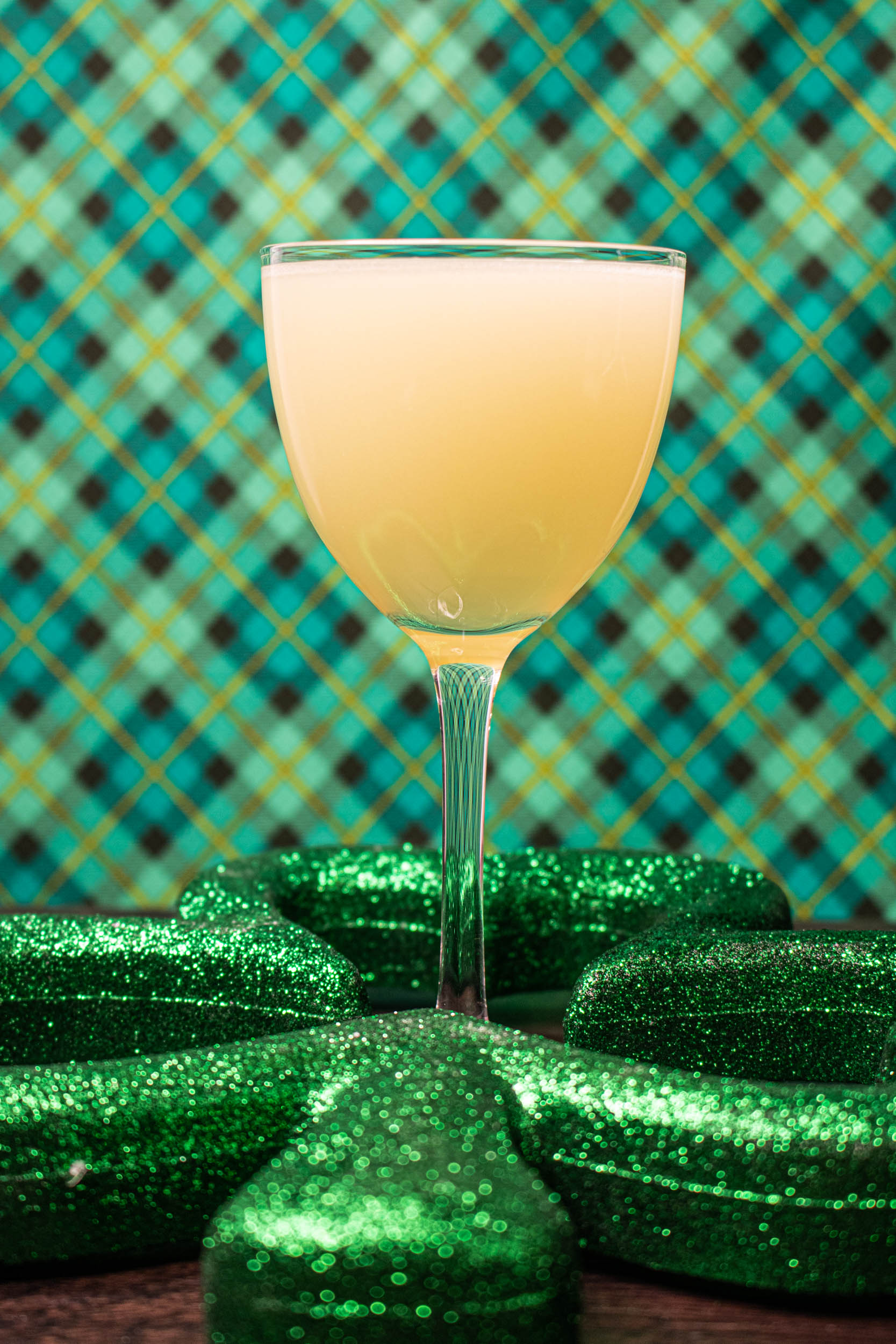
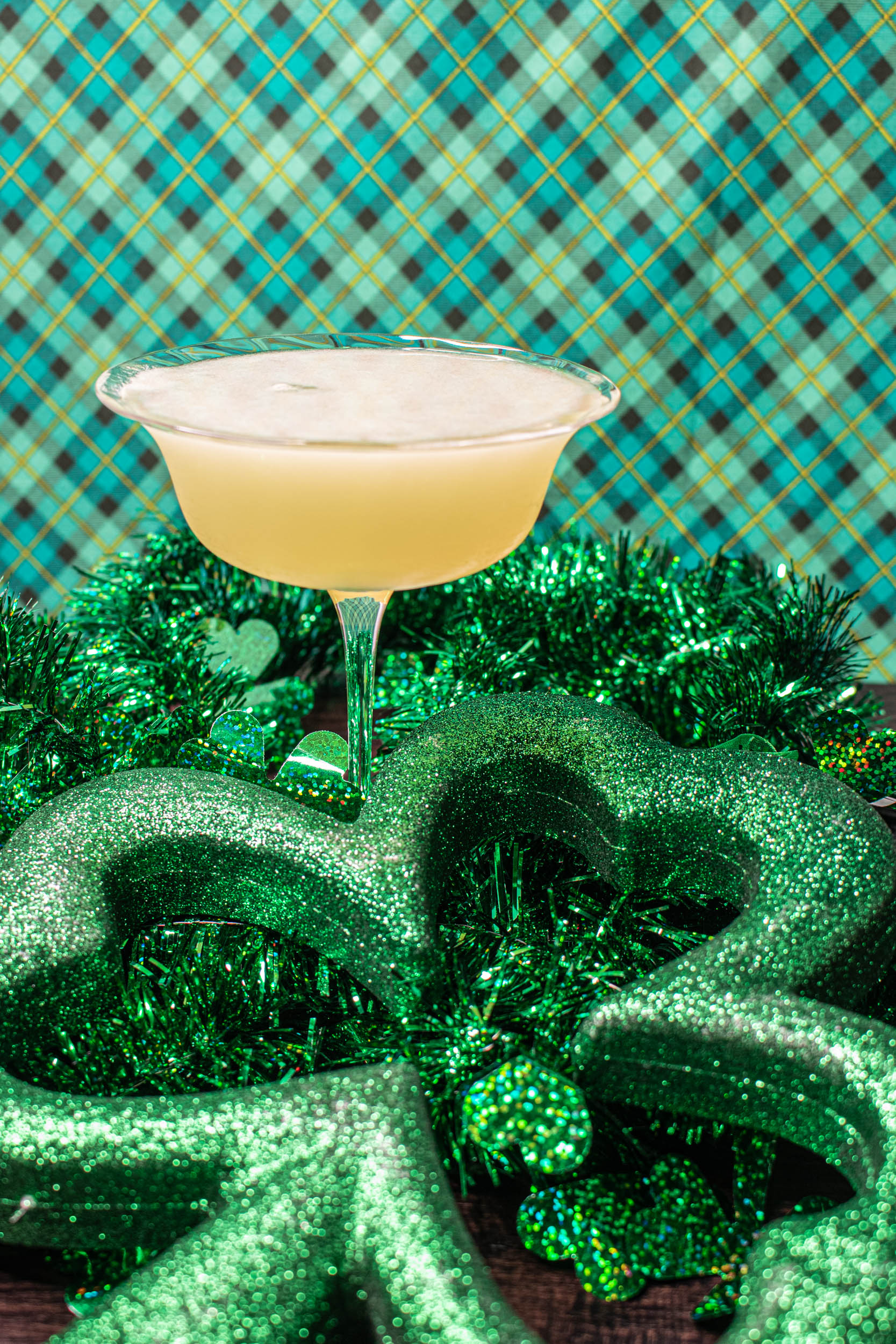
Clover Picking Cocktail

When we first tried the Four Leaf Clover, the initial result was surprising to my fiancée.  It was a great reminder that everyone’s palate is different, and so we made some tweaks by increasing the Irish whiskey to help it stand out.  The result was something surprisingly creamy and (after tasting them side by side), equally tasty in its own right.  The end is a complimentary pair of cocktails, with Clover Picking being the boozier, but surprisingly gentler cousin.

Clover Picking

Clover Picking
1 ½ oz
Knappogue Castle 12 Year Irish Whiskey
¾ oz
Green Chartreuse
¾ oz
Stirrings Ginger Liqueur
¾ oz
Lemon Juice
Combine all ingredients in a shaker. Add ice and shake. Double strain into a Nick & Nora glass. No garnish.

Clover Picking is smooth, sweet, mellow, creamy, and lively. The drink starts off with notes of lemon, apples, spicy ginger, and herbs. The lively nature of the drink gives touches of caramel and floral notes. The slightly creamy mouthfeel is enticing and begs another sip. The finish lingers lengthily, and continues to deliver notes of the whiskey, ginger, and herbs.

Drink Notes & Recommendations

Clover Picking is designed as an easy going extension of our Four Leaf Clover.  The riff is designed to help give the Irish Whiskey a more prominent place in the cocktail.  The extra body ends up providing a lift to the amount of texture as well, giving a slight creaminess to the drink.

  • Knappogue Castle 12 Year Irish Whiskey  – Is elegant and provides a great base for this cocktail.  The green apple and caramel notes work particularly well here.  If you can’t find it, we found the Dubliner is a nice option as a substitute.
  • Green Chartreuse – Green Chartreuse is a 400 year old formula of apline herbs and secret ingredients.  The result is a unique liqueur that’s critical to a wide variety of cocktails, and one we have a hard time recommending a substitute for.  While it is expensive, we recommend the investment.
  • Stirring’s Ginger Liqueur – Stirring’s is a spicy and ginger forward liqueur.  We enjoy it for it’s price point, but feel free to substitute another ginger liqueur if you can’t find it.
  • Lemon Juice – As always, we highly recommend using fresh squeezed lemon juice for best results.
Posted in Cocktails, Original CocktailsLeave a Comment on Clover Picking

Four Leaf Clover

Posted on March 7, 2022March 8, 2022 by Nick
Four Leaf Clover

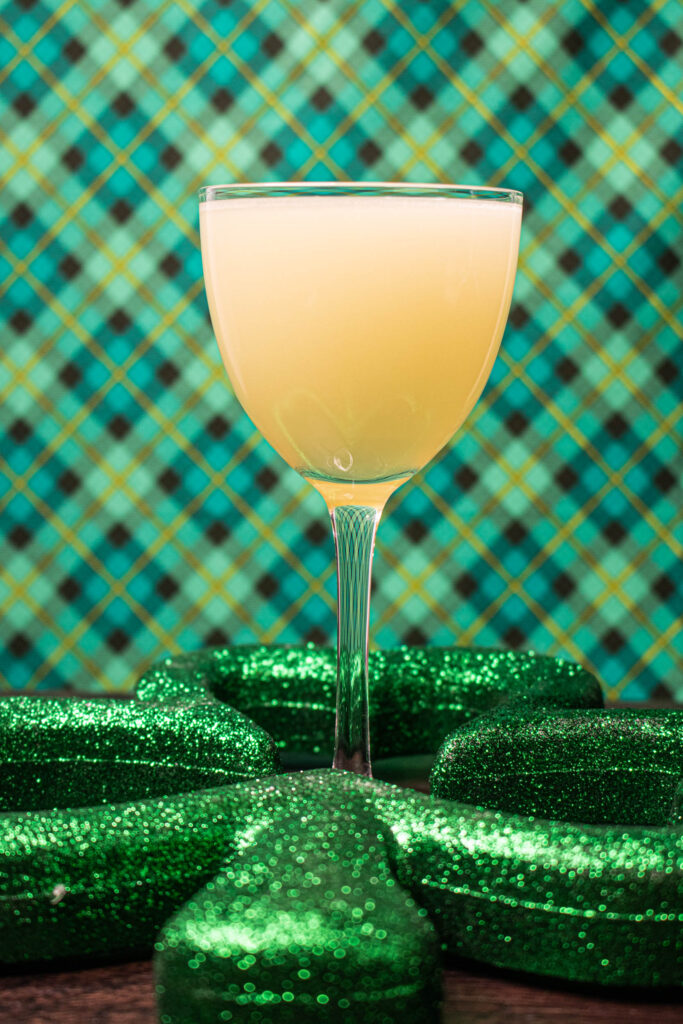
Four Leaf Clover Cocktail

Irish Whiskey generally is gentler than bourbon or rye, and somewhat similar to scotch in its character.  This can pose challenges when trying to find ingredients that provide the tensions to create balance.  We wanted something that emphasized this balance, but could also give a hat tip to some of the imagery that plays heavily into St. Patrick’s day.  We achieved both in our Four Leaf Clover cocktail, which balances four different ingredients to create something more than the sum of its parts – and that’ll still make you feel lucky.

Four Leaf Clover

Four Leaf Clover
¾ oz
The Busker Triple Cask Triple Smooth
¾ oz
Green Chartreuse
¾ oz
Stirring’s Ginger Liqueur
¾ oz
Lemon Juice
Combine all ingredients in a shaker. Add ice and shake. Double strain into a chilled coupe. No garnish.

The Four Leaf Clover is spicy, bright, sweet, and electric. Just like finding a four leaf clover, it starts with rush of excitement. Caramel, light grain, and sweet herbs lead things off, before ginger and spice kick in. The brightness throughout leaves an electric current across your tongue. The ending lingers with ginger and herbs and just a hint of stone fruit.

Drink Notes & Recommendations

Four Leaf Clover Cocktail - Head On

Modeled after the Last Word, balance is critical in this drink, and it needs a firmer Irish whiskey to achieve the balance.  We used The Busker Triple Cask Triple Smooth here because of the weight and powerful flavors that help to stand up to the brightness of the other flavors.

  • Busker Triple Cask Triple Smooth  – This Irish whiskey brings power of a rich caramelized character to the drink, helping to offset herbal notes and the spice of the ginger.  The sweetness gets to shine with the actual sugar from the liqueurs, and adds another dimension.
  • Green Chartreuse – Green Chartreuse is a 400 year old formula of alpine herbs and secret ingredients.  The result is a unique liqueur that’s critical to a wide variety of cocktails, and one we have a hard time recommending a substitute for.  While it is expensive, we recommend the investment.
  • Stirring’s Ginger Liqueur – Stirring’s is a spicy and ginger forward liqueur.  We enjoy it for it’s price point, but feel free to substitute another ginger liqueur if you can’t find it.
  • Lemon Juice – As always, we highly recommend using fresh squeezed lemon juice for best results.
Posted in Cocktails, Original Cocktails1 Comment on Four Leaf Clover

Knappogue Castle 12 Year Irish Whiskey

Posted on March 4, 2022February 13, 2023 by Nick
Knappogue Castle 12 Year Irish Whiskey

Knappogue Castle 12 Year Irish Whiskey

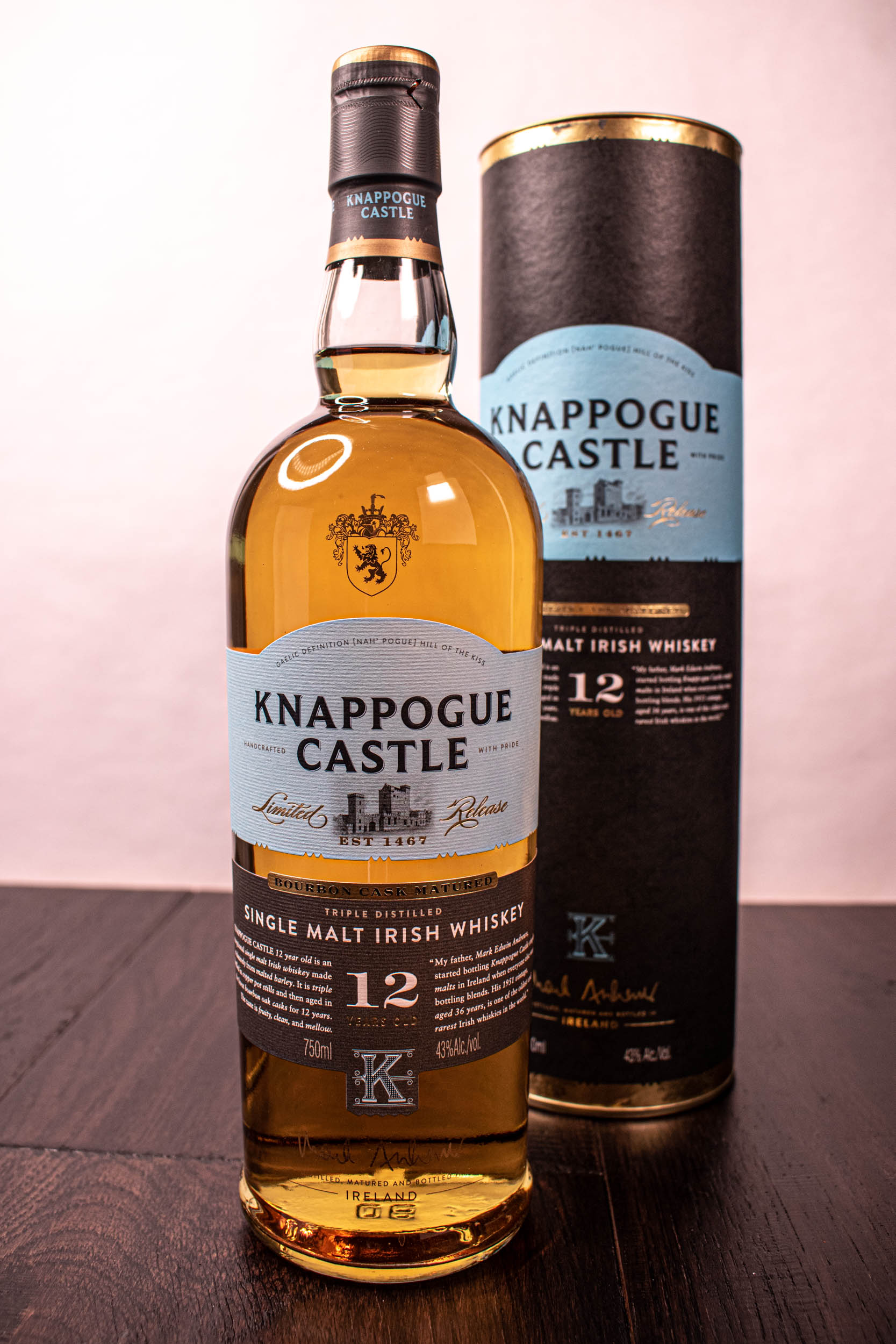
Our track record with Irish Whiskey has felt like a long and winding road.  We started with Jameson, which was fine.  Moved on the Dubliner, which felt like an improvement, before going to the Busker, which seemed debatably better.  That said, none of them ever quite hit wow.  So when the opportunity to try Knappogue Castle 12 Year Irish Whiskey came up, I was excited.  Not only does it have a good reputation, but it was one of the original bottles in Death & Co’s book.  So does it live up to the hype?

Knappogue Castle 12 Year Irish Whiskey

Knappogue Castle 12 Year Irish Whiskey is triple distilled using copper pot stills and aged 12 years in ex-bourbon casks.  Unlike the other Irish whiskeys we’ve covered so far, it is a single malt instead of a blend.

Sight:  14k Gold to Hay.

Smell:  The nose has a bit of heat to it, but pulls in vanilla, cream, touches of bourbon casks, and pears.  The nose evolves into spice, apple blossoms, heather, and other floral notes.   Caramel and cereal notes begin to crawl out with a bit of powdered sugar or cotton candy.

Sip:  The palate starts off light and becomes slightly creamy.   It opens up into apples, pears, banana, caramel, powdered sugar, butterscotch, and hints of oak with spice.  The butterscotch leans toward caramel, and works well with some of the heather characteristics that hide in the background.  There is also a hint of charred sugar as well (as though roasted over a campfire)

Savor:  The ending instantly perks up into crisp green apples and cereal notes.  Things shift into some of the oak spices and grain notes with a linger of charred marshmallow.

Knappogue Castle 12 is easy going and more fruity than it seems.   The notes of green apples and pears really live throughout this whiskey, and provide it with a stable core to build butterscotch and sugar flavors over.  Despite that it isn’t sweet, and it doesn’t try to overwhelm the imbiber.  The biggest ding against it the slightly aggressive alcohol forward nose, but overall it’s a wonderfully simple and easy going Irish whiskey.

In Cocktails

Knappogue Castle 12 Year Irish Whiskey is gentle and add it’s delicate cereal notes, hints of heather, and apple elements to the background of Cameron’s Kick.  The gentle character adds an underlying elegance that isn’t front and center, but steps in when it needs to.  The middling alcohol content (A.B.V. 43%) allows it to also add some good weight and texture without adding heat.  It almost adds that creaminess which is lovely.

In Review – Knappogue Castle 12 Year Irish Whiskey

Knappogue Castle 12 Year Irish Whiskey is heading into a higher echelon of whiskey at $40, but provides a good amount of character for the price.  The character of the creaminess is part of the standout nature of this whiskey.  The fruitiness gives it a lot of flavor that doesn’t get overwhelmed by the bourbon aging either.  Overall, there’s a lot to like here, and it currently represents our favorite Irish whiskey as of writing this.

Posted in Irish, Spirits, WhiskeyTagged Ireland, Knappogue, Knappogue Castle, Single Malt2 Comments on Knappogue Castle 12 Year Irish Whiskey

The Classics: Sazerac

Posted on February 28, 2022February 22, 2022 by Nick
The Classics: Sazerac

Sazerac Cocktail

The Sazerac is one of the first cocktails to appear and formally be recognized.  A product of the New Orleans environment, the Sazerac demonstrated local ingredients giving spin to a drink.  This relative of the old fashioned eschewed whiskey for cognac, and utilized the local bitters and sugars to drive it’s character.  The result is something unique, that in of itself ended up undergoing more than a few changes.

Sazerac

With that said, we’re going to start with the very original, pre-phylloxera Sazerac.  This drink is made with absinthe, cognac, and bitters.  We’ll discuss the modern variants below.

Sazerac
2 oz
Cognac
Barspoon
Rich Demerara Syrup
3 Dashes
Peychaud’s Bitters
2 Dash
Angostura Bitters
Rinse
Absinthe
Rinse a chilled rocks glass with St. George Absinthe Verte. Dispose of the excess or set aside in a glass for later use. Combine all remaining ingredients in a mixing vessel. Add ice and stir. Double strain into the absinthe rinsed rocks glass. Express a lemon twist over the glass. Discard the lemon twist, and serve.

The original Sazerac is herbal, spiced, and complex with just a hint of sweetness.  This is a stiff drink, as there is no ice to continue dilution and there’s pretty much nothing that isn’t liquor.  The result is a celebration of the perfume and fruit notes of cognac laced with the herbal woody notes of the absinthe.  The lemon adds a freshness to the nose, and the anise notes from the Peychaud’s balance beautifully against the spices of the Angostura.  The light sweetness is just enough to balance and entice the drinker into having another.

Rye or Cognac in Sazerac?

The original Sazerac’s single largest shift in identity occurred thanks to the phylloxera outbreak in Europe.  As a result of the destruction of hundreds of thousands of hectares of grape vines by this tiny parasite, Cognac’s supply was decimated.  Needing to substitute, the residents of New Orleans transitioned to a readily available alternative, rye whiskey.   It just happens to work perfectly with the template, adding spice and oaky notes that the work just as well with the absinthe and bitters.

Many modern interpretations of the Sazerac therefore use the same template, simply replacing cognac with rye.  While this makes a delicious Sazerac, there is another option.  Use both!  For best results, we recommend using 1 1/2 oz of rye whiskey to 1/2 oz of cognac.

Drink Notes & Recommendations

As mentioned, the biggest decision you need to make is whether you intend to have a truly classic cognac based Sazerac, or to enjoy the more modern updated variation.  Beyond that, the process to make either is the same.

  • Cognac – There’s no where to hide in this cocktail, so good quality spirits are a must.  For cognac we recommend Pierre Ferrand 1840.
  • Rye – Again, the quality of your rye is important.  More herbal ryes will escalate the pairing of Peychaud’s and absinthe, while more spice forward ryes will compliment the demerara sugar and Angostura spices.  Play around and see what you like best, but we recommend Rittenhouse rye here.  Don’t be afraid to consider bourbon as well, such as Wild Turkey 101 or 1792 Small Batch.
  • Absinthe – We recommend using absinthe here, and not a pastis.  Our go to is St. George Absinthe Verte.  The official guide from New Orleans also suggests using New Orleans own Herbsaint instead (which should be considered an acceptable substitute)
  • Peychaud’s Bitters – These are the standard for any Sazerac.  You can purchase them at most well appointed liquor stores or through Amazon*.
  • Angostura Bitters – These are the gold standard of bitters.  You should have a bottle in your bar, and you can purchase them most grocery stores or Amazon*.
  • Rich Demerara Syrup – You can muddle a demerara sugar cube in place of the syrup, but we find this gives a better texture.
    • To make: Combine 2 parts Demerara Sugar to 1 part water and bring to a simmer stirring over high heat.  Remove from heat once the sugar has completely dissolved.  Allow to cool and bottle.  Refrigerate.   The high sugar content will work to inhibit bacterial growth for an extended duration – throw out if any clouding or mold develop.
  • Lemon Twist – Unlike an Old Fashioned where you include the citrus twist, you discard the lemon twist after expressing here.
  • Ice – This drink is served neat.  Keep the ice in the mixing vessel.


* – Amazon links contain affiliate links that may result in First Pour Cocktails receiving a portion of the sale.  These commissions help us keep researching new drinks and pay for the webhosting (which as of writing this, is a loss every year)!


Posted in Classic Cocktails, Cocktails1 Comment on The Classics: Sazerac

Barrell Seagrass

Posted on February 25, 2022February 15, 2022 by Nick
Barrell Seagrass

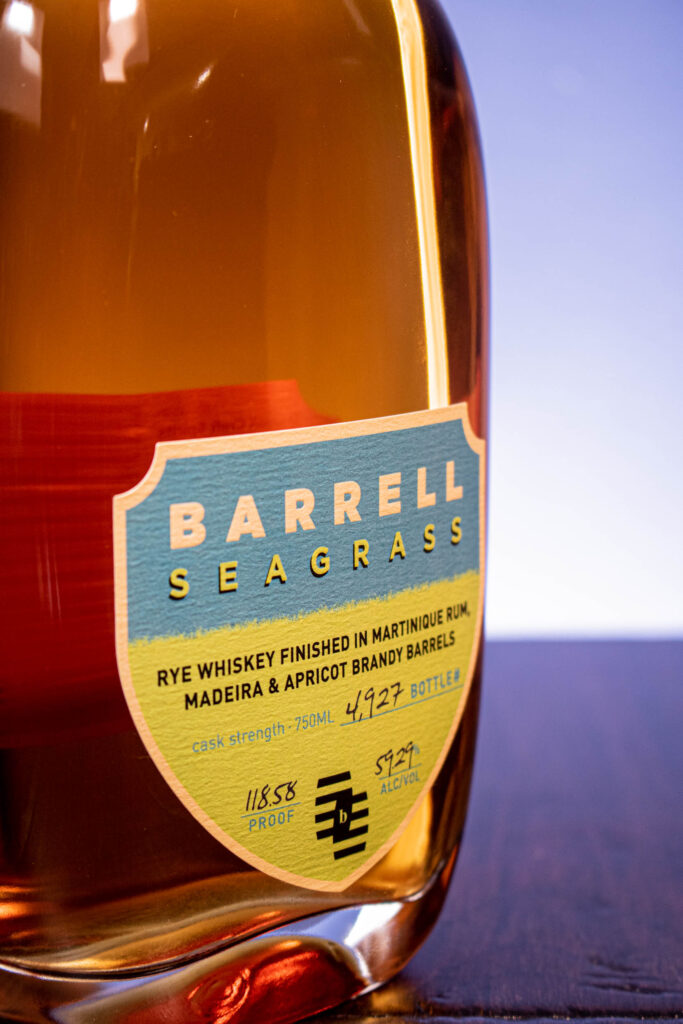
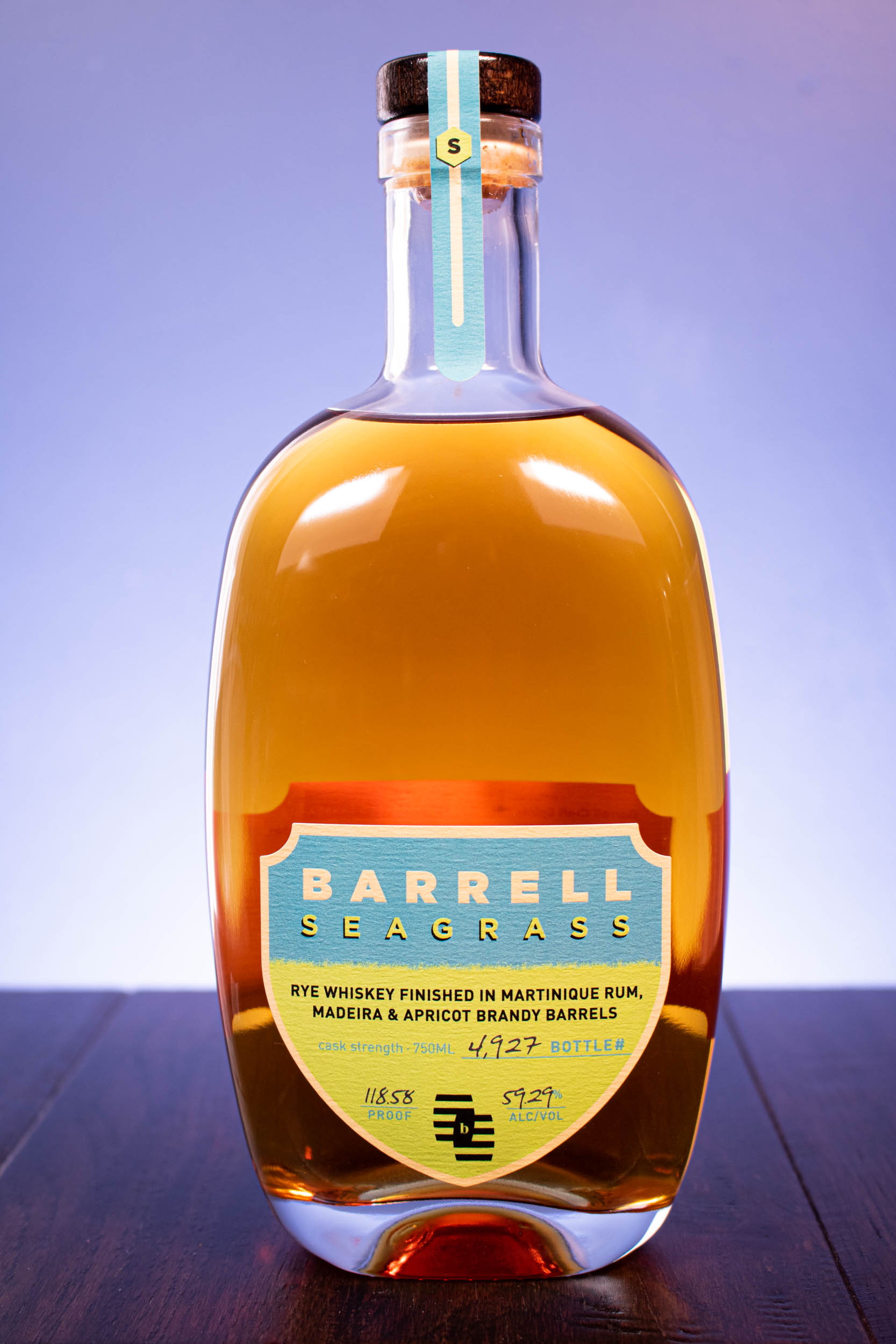
Barrell Seagrass Label

Barrell Seagrass was one of those polarizing whiskeys that made a lot of noise from reviewers over the past year.  Consistently ranking highly, this Rye Whiskey is finished in Martinique Rum, Madeira, and Apricot Brandy Barrels for a one of a kind flavor.  The result of this finishing is a character nothing quite like the rye whiskeys most people are used to.   People have ranged from gushing to confused as a result, but most admit that it’s more of a flavor choice and price point than any actual defect with the whiskey.

Professional whiskey enthusiast Fred Minnick agreed, naming one of Barrell Seagrass’ one of his top 2 American whiskey of 2021.   As result, Barrell Seagrass has been flying off the shelves, so it is worth the chase?

Barrell Seagrass

Barrell Seagrass is a blend of American (distilled in KY, IN, and TN) and Canadian rye whiskeys.  These sourced whiskeys are then finished in the Martinique rum, Madeira, and apricot brandy barrels before being blended to make the distinctive flavor of Barrell Seagrass.  As a result, proof varies between batches.  This batch comes in at 118.58 proof.

Sight:  Deep copper

Smell:  Apricot and bubblegum come floating out with a good waft of heat.  The apricot is sort of malleable, giving way to an apricot compote with a spiced note.  Grassy notes with a touch of mint come in.  The nose fringes into candy, almost like gummy bears laced with elderflower.  The nose is very perfumed.

Sip:  The palate is smooth and slightly sweet.  The flavor of candied and dried apricot starts things off, before opening into spiced oak notes and a touch of grass.  There’s a bittersweet almond and cocoa note that hints at the fringe.    Grapefruit and elderflower come toward the tail and leave the ending with a floral character.

Savor:   The ending brings in a wet stone, fresh rain on wood notes, and laces with grassy element, nuts and spices.  The finish continues on with touches of unripe apricots and grapefruit pith.

Barrell Seagrass is distinct and unique thanks to the finishing process.  The flavors are very well layered and balance between sweet, floral, and earthy.  Apricot standouts out here, giving a perfumed character that runs all the way through the whiskey.  The floral and nutty notes, combined with citrus makes for an exciting mix of flavors that keeps each sip evolving.  Martinique rum also lends the earthy and funky flavors that make it hard to pin down what flavor is leading.  Overall, the finishing job is tremendous, and it’s excitingly well done.

In Cocktails

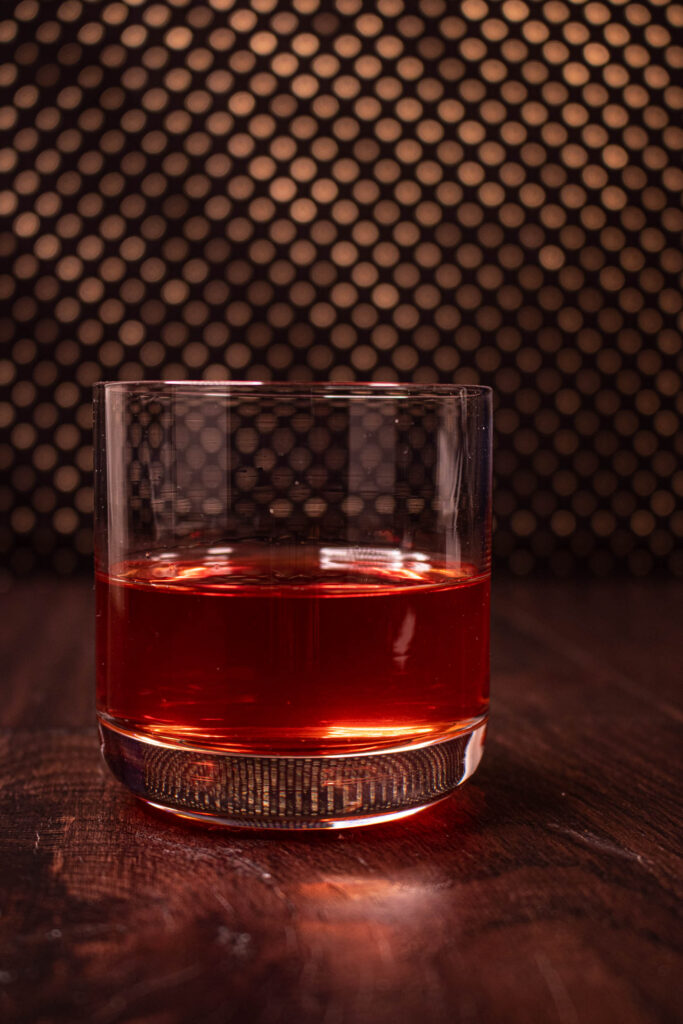
In a Manhattan,  the apricot sweetness comes through front and center.  It mingles with the grassy rhum notes and slightly minty rye notes to vibe with the herbal notes in the vermouth.  The juicy red berry and caramelized notes of the vermouth bring an additional level of fruitiness.  Finally a crazy floral streak runs right through the middle to brighten and perfume the whole drink.  Spice and apricot round things out for a long finish.  Overall, it’s a wild Manhattan, but probably not the best use of a high end finished rye.

In Review – Barrell Seagrass

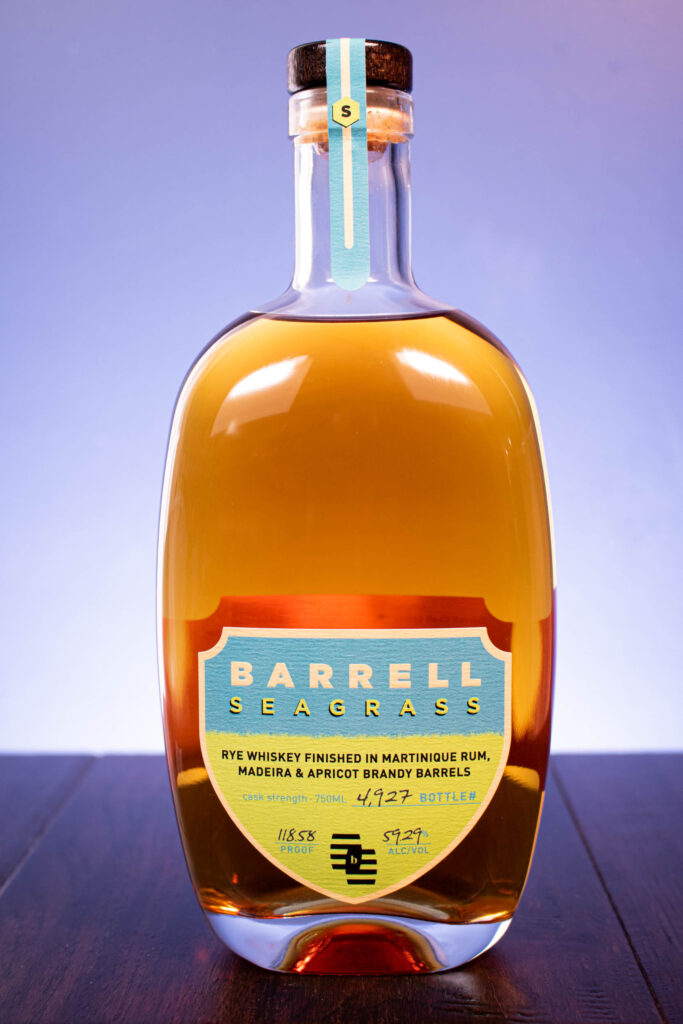
Barrell Seagrass Label

Barrell Seagrass is priced at $80 – $90.  The price is undoubtedly high, but the quality of the product matches in this case.  From a cocktail enthusiast’s perspective, Barrell Seagrass offers an opportunity to make supercharged, superstar unique cocktails – but the price is prohibitive to experiment with.  For standard classic cocktails, you’ll want to go with something more traditional like Wild Turkey Rare Breed Rye or Pikesville, or even Rittenhouse.  However, none of those will be anywhere near the unique sipping experience that Barrell Seagrass offers.  This is a must try (and perhaps a try before you buy for a full bottle.)

Posted in Finished Rye, Rye, SpiritsTagged Barrell, Canada, Indiana, Kentucky, TennesseeLeave a Comment on Barrell Seagrass

Posts navigation

Older posts
Newer posts
  • About
  • Cocktails
  • Contact
  • Privacy Policy
  • Sample Policy
© First Pour Cocktails 2019-2021 | Theme FPCtails by Nick Rinaldi
Manage Cookie Consent
To provide the best experiences, we use technologies like cookies to store and/or access device information. Consenting to these technologies will allow us to process data such as browsing behavior or unique IDs on this site. Not consenting or withdrawing consent, may adversely affect certain features and functions.
Functional Always active
The technical storage or access is strictly necessary for the legitimate purpose of enabling the use of a specific service explicitly requested by the subscriber or user, or for the sole purpose of carrying out the transmission of a communication over an electronic communications network.
Preferences
The technical storage or access is necessary for the legitimate purpose of storing preferences that are not requested by the subscriber or user.
Statistics
The technical storage or access that is used exclusively for statistical purposes. The technical storage or access that is used exclusively for anonymous statistical purposes. Without a subpoena, voluntary compliance on the part of your Internet Service Provider, or additional records from a third party, information stored or retrieved for this purpose alone cannot usually be used to identify you.
Marketing
The technical storage or access is required to create user profiles to send advertising, or to track the user on a website or across several websites for similar marketing purposes.
  • Manage options
  • Manage services
  • Manage {vendor_count} vendors
  • Read more about these purposes
View preferences
  • {title}
  • {title}
  • {title}